
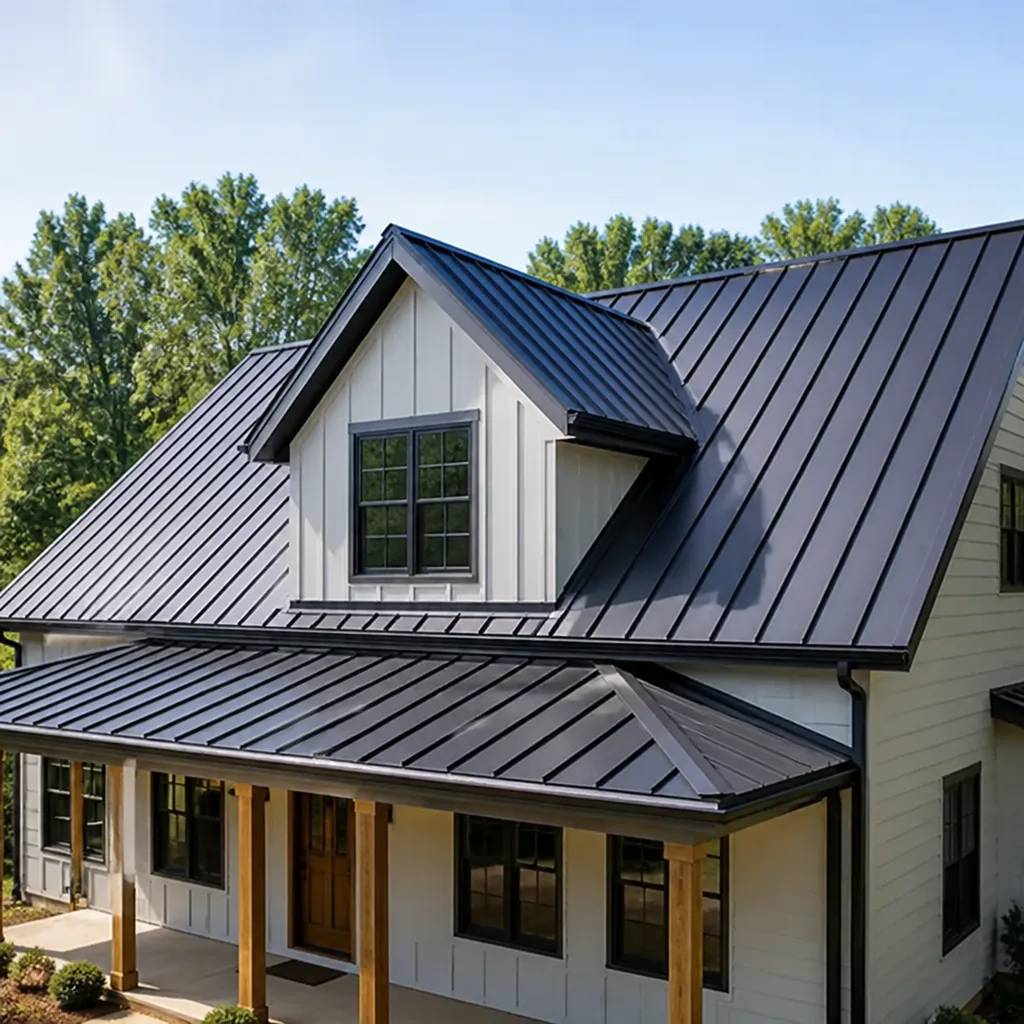
 Metal roofing
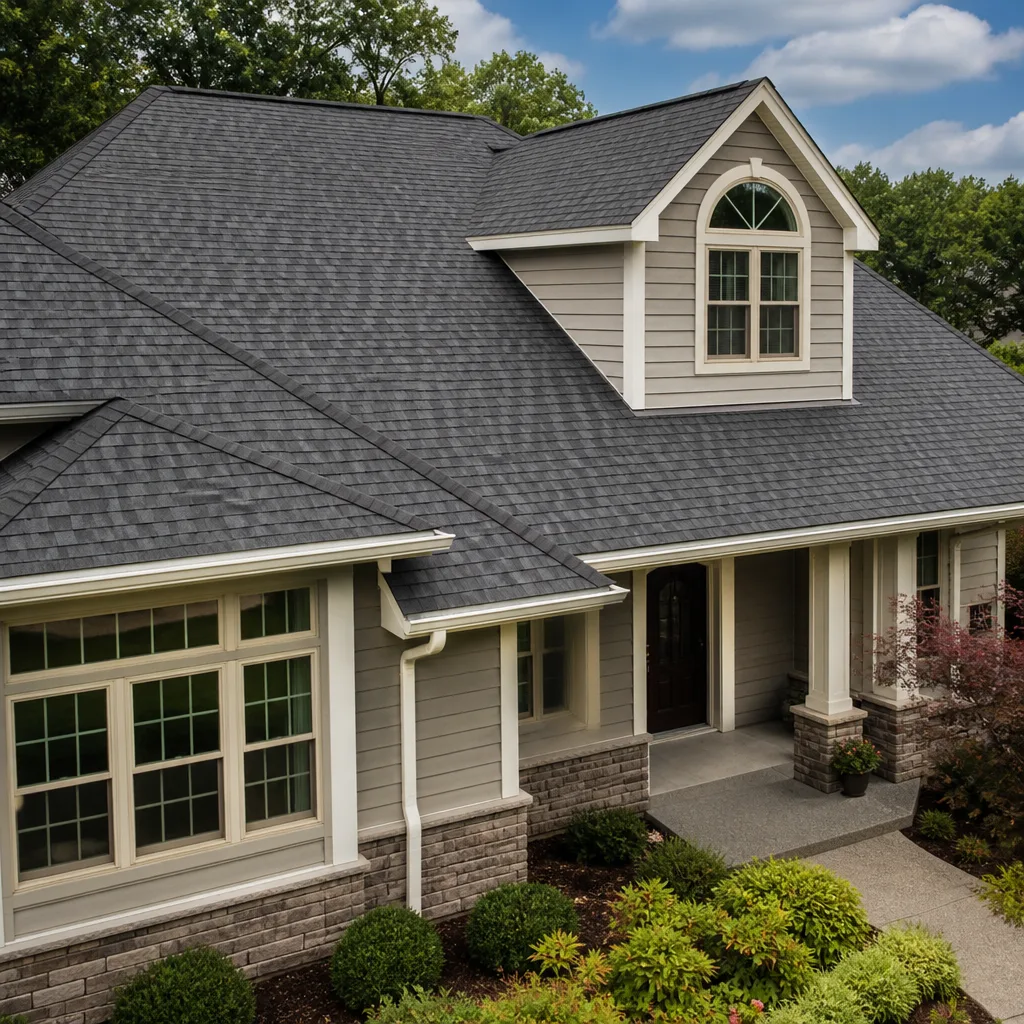
 Architectural shingles
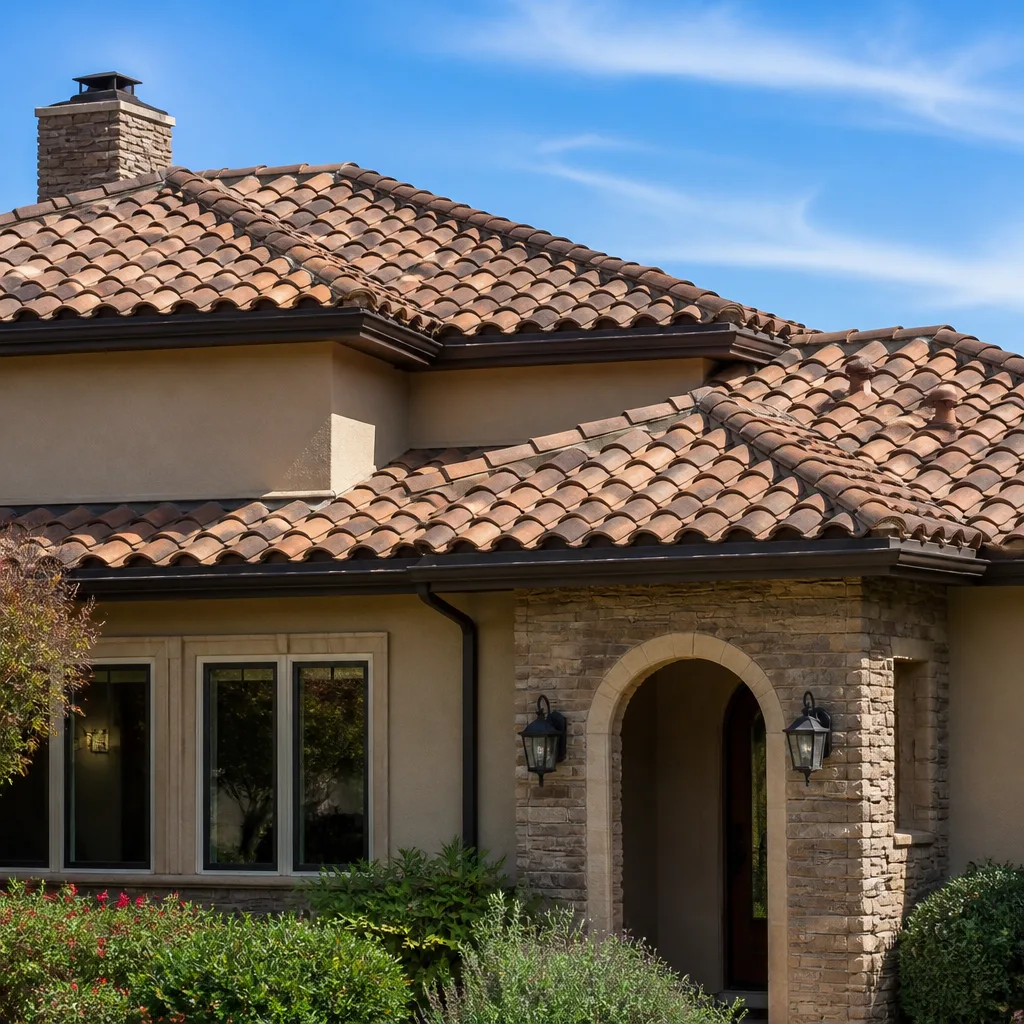 Tile roofing
 GAF
GAF Owens Corning
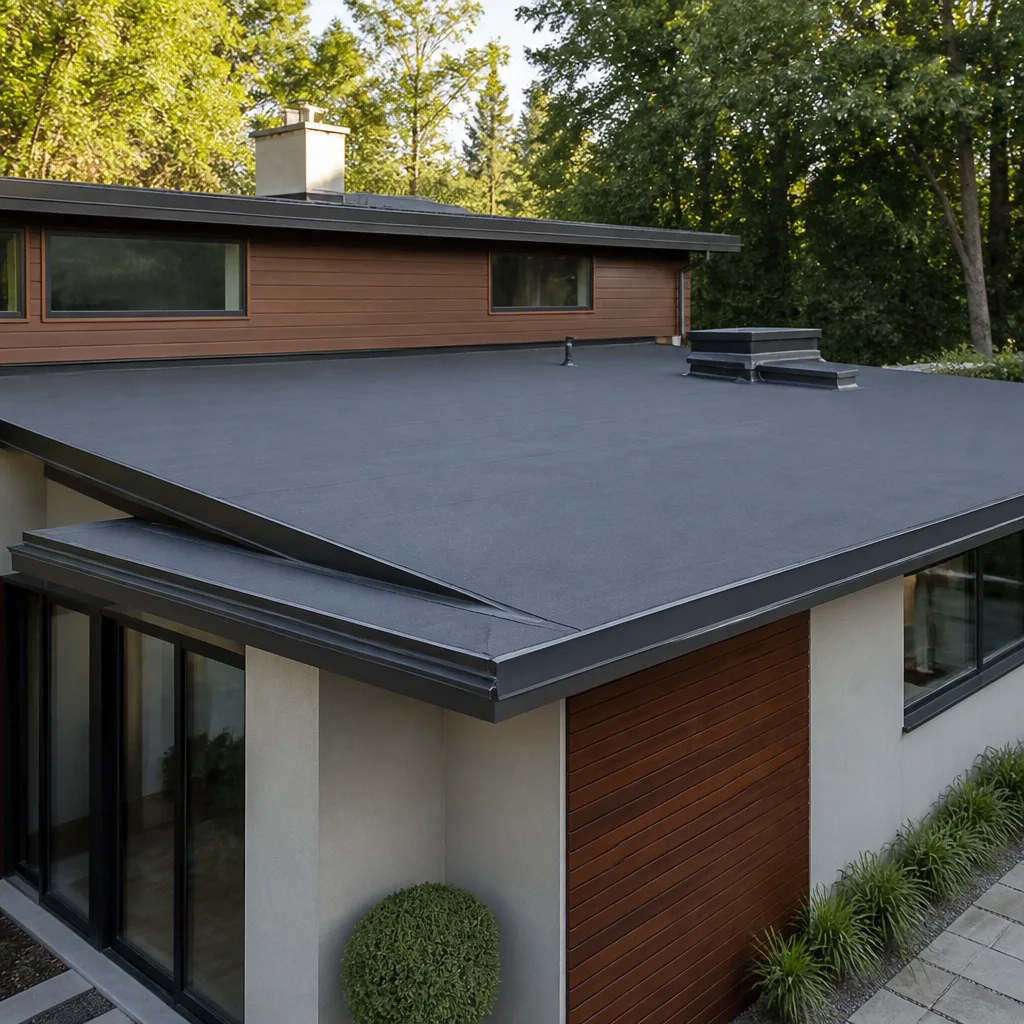 Flat & low-slope
Free roof inspection with deck photos before we talk money - GAF and Owens Corning certified installation
Tamko Flashing Replacement: The Los Angeles Owner’s Guide
Tamko flashing replacement in Los Angeles typically runs $380 to $720 installed for a standard pipe boot, chimney step, or valley flashing section, and we stock Tamko-compatible flashing on our trucks for same-visit swaps on most single-family homes. You’ll usually discover the flashing failed the way most LA homeowners do: a water stain on the ceiling after the first real rain of the season, or granules collecting in your gutter below the pipe boot and a slow drip you chalked up to condensation for months. Flashing is the unsung part of a Tamko roof system. When it holds, you never think about it. When it splits, lifts, or rusts through, water finds the gap fast, and by the time you see the stain, the repair has usually moved beyond caulk.
We’re an independent roofing company in Los Angeles. We install and repair Tamko shingle systems and stock matching flashing, but we’re not affiliated with Tamko, the manufacturer. What that means for you: real-world answers about how Tamko flashing behaves in our specific climate, not a warranty brochure.
Which Tamko Models This Applies To
Tamko’s current Los Angeles market lines are Heritage, Heritage Premium, Elite, Titan XT, and StormShield. The flashing we replace ties into all of them, but there’s a compatibility detail worth knowing: Tamko’s Heritage series uses a standard 3-tab-to-architectural transition where the step flashing needs a 4-inch vertical leg minimum, while Titan XT’s thicker profile often requires step flashing with a 5-inch vertical leg to clear the shingle butt properly. We measure, not guess. That spec difference is one reason a flashing that worked on your neighbor’s house might be the wrong size on yours, even if both roofs “look the same” from the street.
If you’re checking a part yourself: look at the roof side during daylight, find the pipe boot or the valley, and look for the embossed marking. OEM Tamko flashing carries a small “T” stamp on the metal base. If it’s not stamped, it’s aftermarket, which isn’t a problem if the gauge and leg height match. We stock both OEM Tamko parts and quality aftermarket equivalents in 26-gauge and 28-gauge galvanized, plus pre-finished colors matched to current Tamko shingle palettes. For older Tamko shingles where the exact color is discontinued, we can order and powder-coat to match.
Styles & brands we work with
Signs Your Tamko Flashing Replacement Is Failing
- Water stain on the ceiling below a roof penetration (pipe vent, chimney, skylight). This is the classic. The flashing isn’t creating the leak, it’s failing to redirect water around the penetration. In Los Angeles, it often takes a heavy storm to expose it because our light rains evaporate before they penetrate.
- Lifted or curled flashing edge where the metal meets the shingle. Tamko’s asphalt shingles expand and contract through our hot-dry to cool-damp cycles. Over a decade or more, that movement works the flashing loose, especially on unshaded south-facing slopes.
- Rust streaks or pinholes on the flashing surface. Salt air near the coast, condensation cycles, and occasional acid rain all attack flashings. Galvanized flashing in coastal Los Angeles neighborhoods like Playa del Rey or San Pedro often fails 5-7 years sooner than the same part inland in the Valley.
- Granules collecting in the gutter directly below a pipe boot or valley. This signals the shingle around the flashing is degrading, which usually means the flashing bond underneath is compromised too. By the time granule loss is visible, the flashing sealant has typically hardened and cracked.
- You can see daylight through the flashing from inside the attic. If you see it, water has been getting through it. This is the point where caulk won’t save it; the metal or the seal needs replacement, not a band-aid.
See the difference
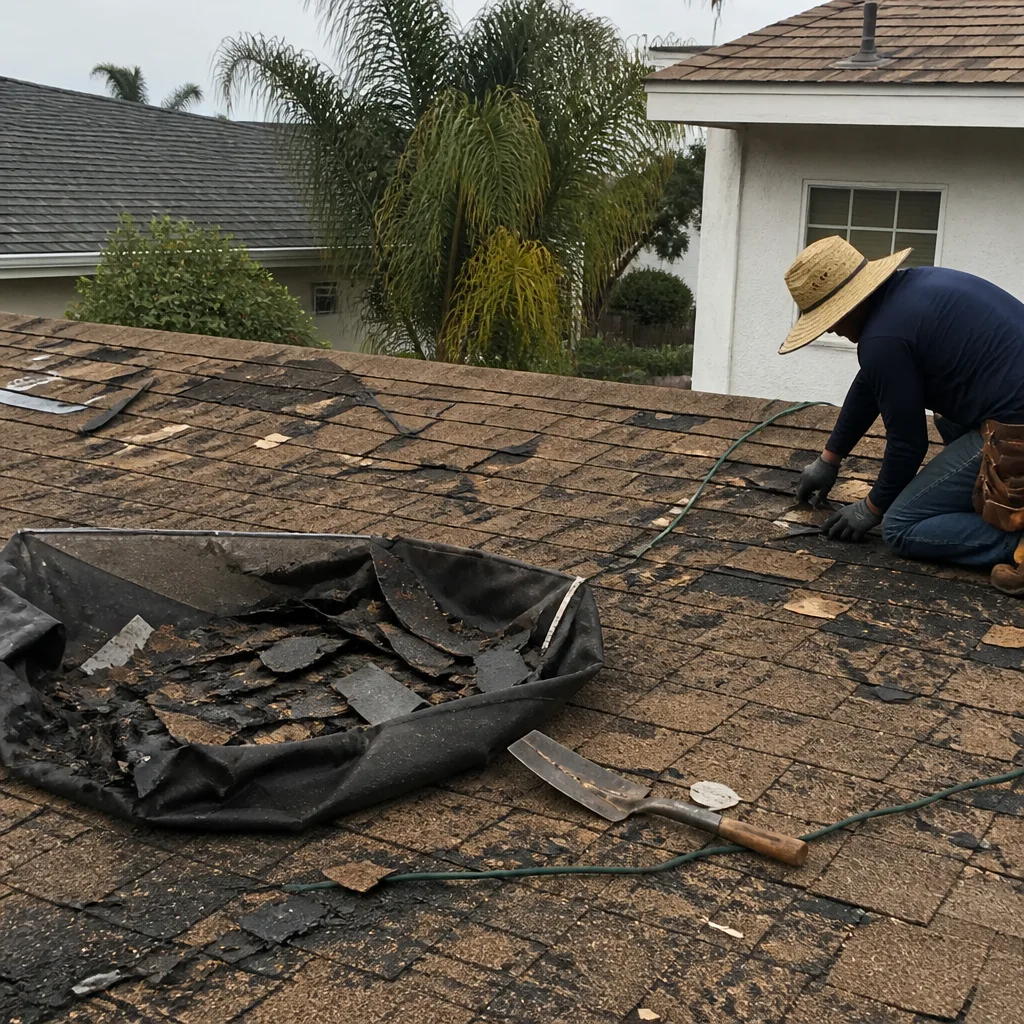 Before
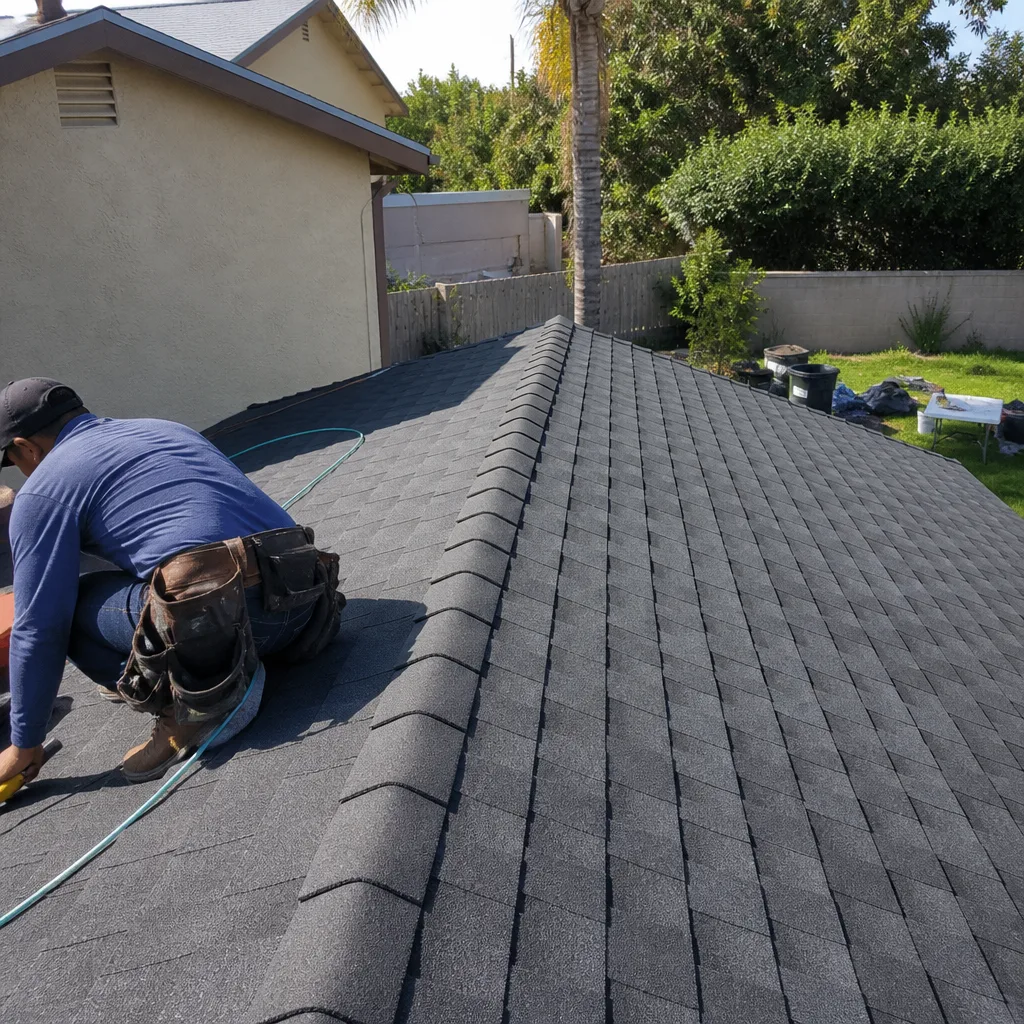 After
After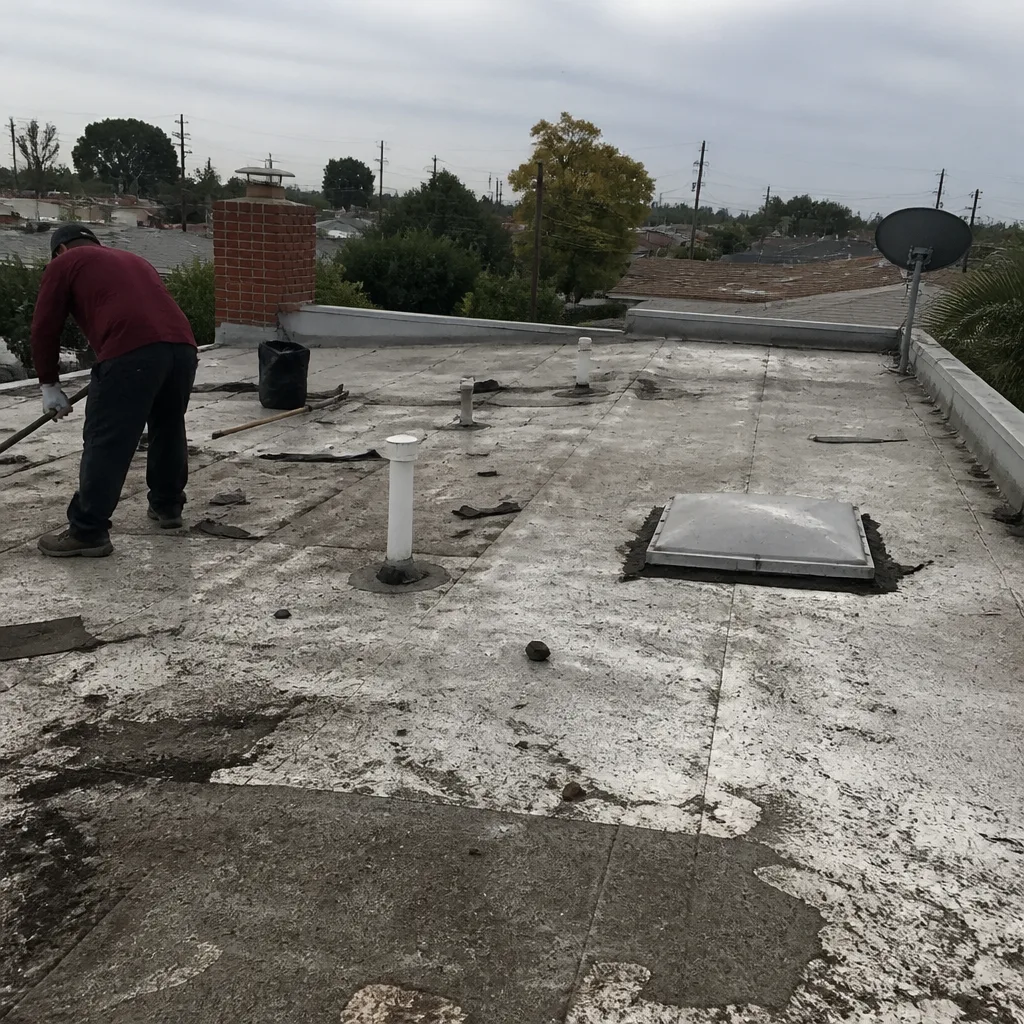 Before
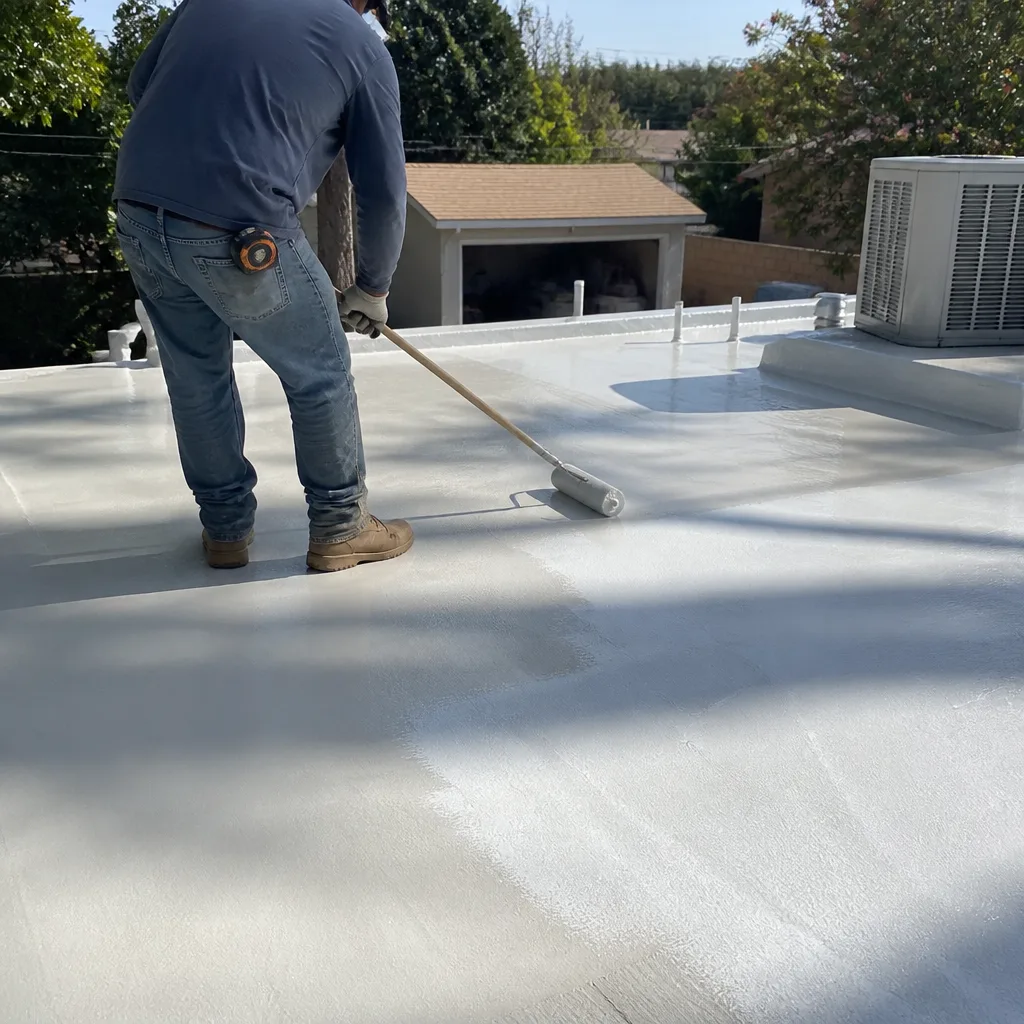 After
After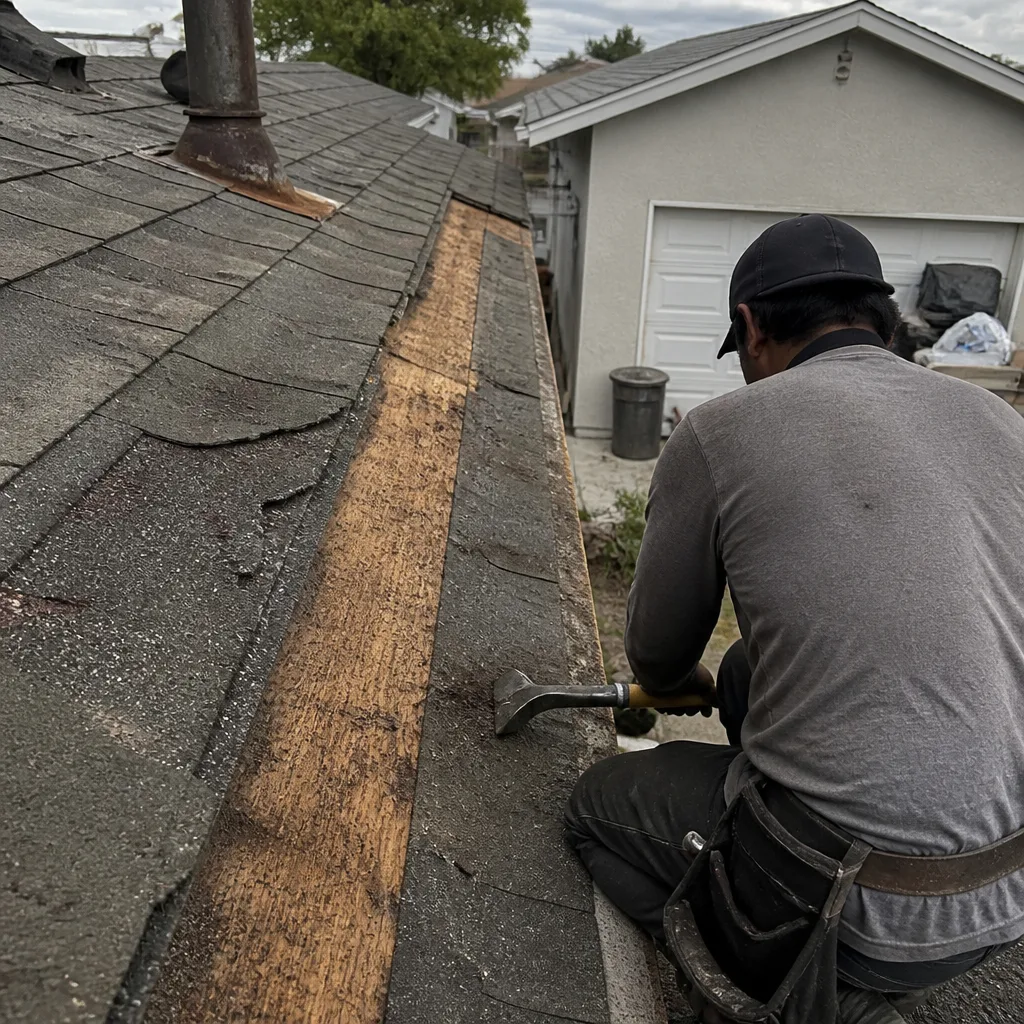 Before
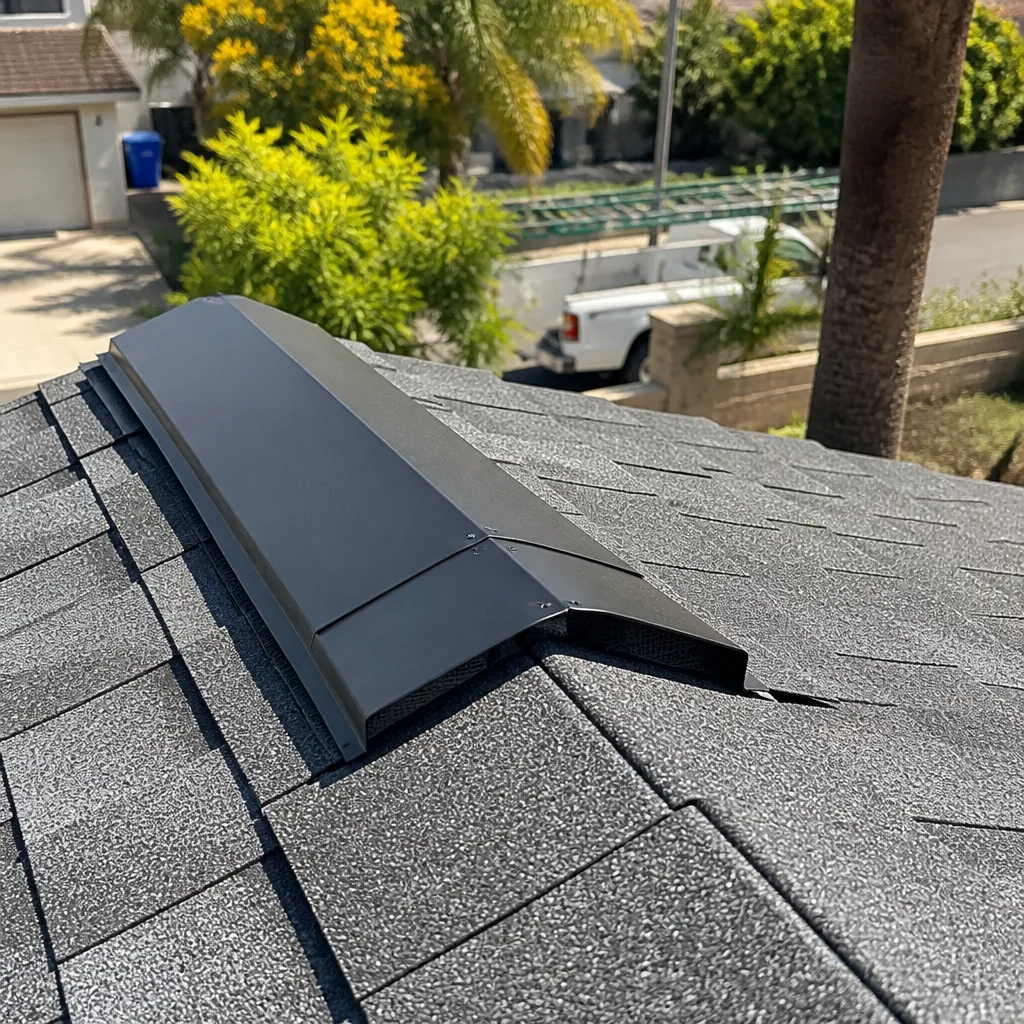 After
AfterReplacement Cost & What’s Included
In Los Angeles, Tamko flashing replacement for a single pipe boot runs $380 to $520 installed. Step flashing along a chimney or wall intersection typically runs $650 to $850 for a 10-to-15-foot run. A full valley flashing replacement starts around $700 on a single-story and climbs from there on steep pitches or two-story access. The range is driven by roof pitch, how many shingle courses we have to lift around the flashing, and whether the decking beneath is still sound once we get it open.
Every Mercer Roofing estimate is a written line-item price before any work starts. You see the flashing part number, the labor hours, the sealant and underlayment costs, and the disposal fee. The price on that sheet is the price on the invoice. No change orders, no “we found more damage once we opened it up” surprises unless you approve additional work in writing first. The replacement is covered by our 365-Day Done Right Promise: if the flashing leaks or the seal fails within a year, we come back and make it right at no charge.
DIY or Call Us?
You can safely check a few things from the ground or a ladder: look for lifted flashing edges, visible rust, and missing shingle tabs around the penetration. What you shouldn’t do is climb onto a Los Angeles roof to replace flashing yourself. Most of the flashing failures we see are on second-story slopes, and the angle of a LA roof plus the heat-slicked shingle surface makes for genuinely dangerous footing. We’ve also repaired too many DIY flashing “fixes” where the homeowner used roofing tar and a prayer, sealed the wrong edge, and trapped moisture against the decking. Flashing replacement involves lifting shingle tabs, re-nailing at the right depth, and sealing with the correct material for Tamko’s asphalt composition. Get it wrong, and you turn a $500 repair into a $2,000 decking job. If you want a pair of eyes on it, call (213) 521-8272, and we’ll give you an honest assessment, even if that assessment is “you don’t need us yet.”
FAQs
Tamko flashing in Los Angeles typically lasts 12-20 years, with faster failure near the coast or on unshaded south-facing roof slopes. The flashing metal itself can last longer, but the sealant bond between the flashing and shingle is what breaks down first in our heat and UV exposure. If your roof is over 15 years old, a flashing inspection is worth doing before the next rainy season. Call (213) 521-8272 for a free estimate.
Flashing can sometimes be repaired if the metal is intact and only the sealant has failed, but once the metal is rusted through or the flashing leg is bent beyond service, replacement is the only fix. We’ll always show you the damaged part before we recommend a replacement, so you can see exactly what’s failed. If it’s repairable, we’ll quote the repair honestly and skip the upsell.
A standard pipe boot flashing replacement in Los Angeles takes 2 to 4 hours including set-up, shingle removal around the penetration, new flashing installation, sealing, and clean-up. Valley or chimney flashing work can take a full day depending on the run length and roof pitch. We’ll give you a clear time window on the written estimate before work starts.
We stock the most common Tamko pipe boots, step flashing sizes, and valley flashing lengths on our trucks in Los Angeles, so most replacements happen on the first visit. For discontinued colors or unusual sizes, we order OEM or have the flashing powder-coated to match, which typically adds 3-5 business days. Call (213) 521-8272 and we’ll tell you exactly what’s on the truck.
Written by Grant Whitlock, Owner, Mercer Roofing Co at Mercer Roofing Co Los Angeles, serving Los Angeles and nearby areas.