
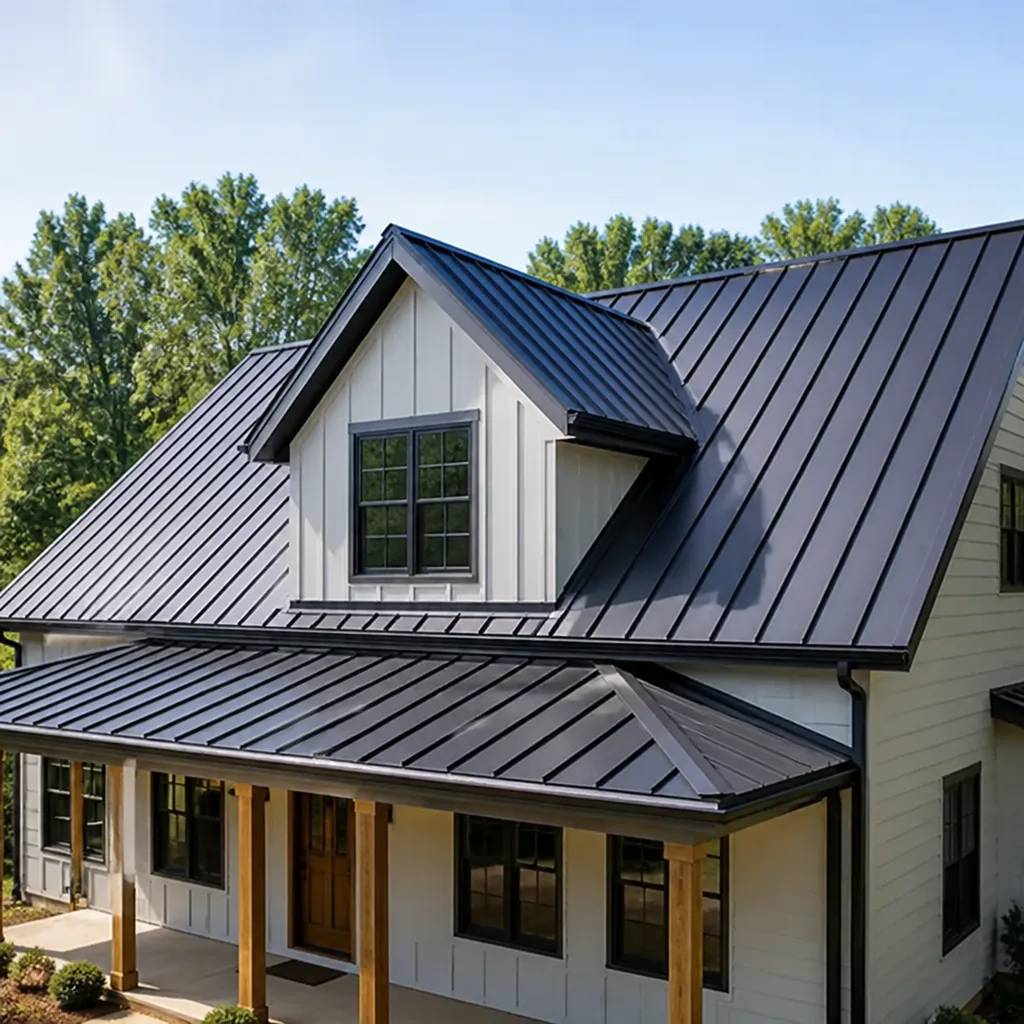
 Metal roofing
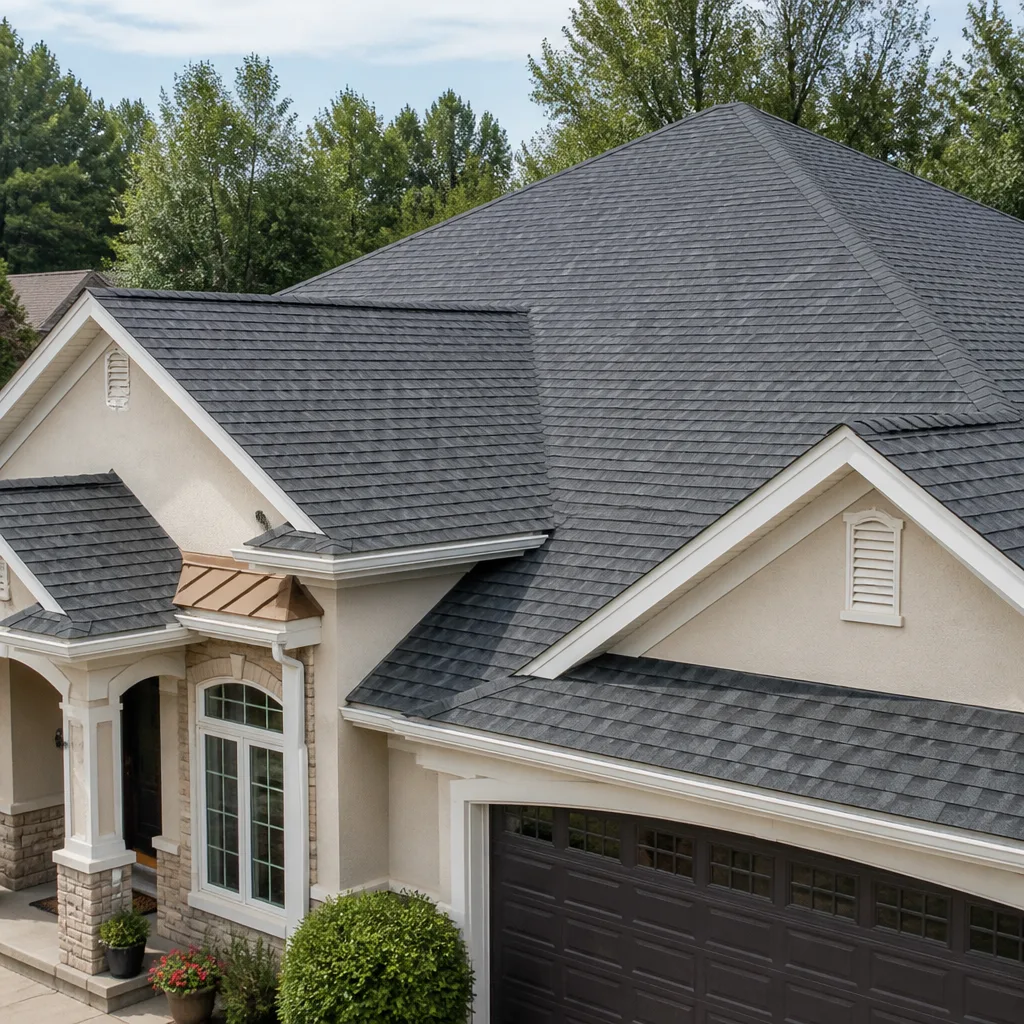 Architectural shingles
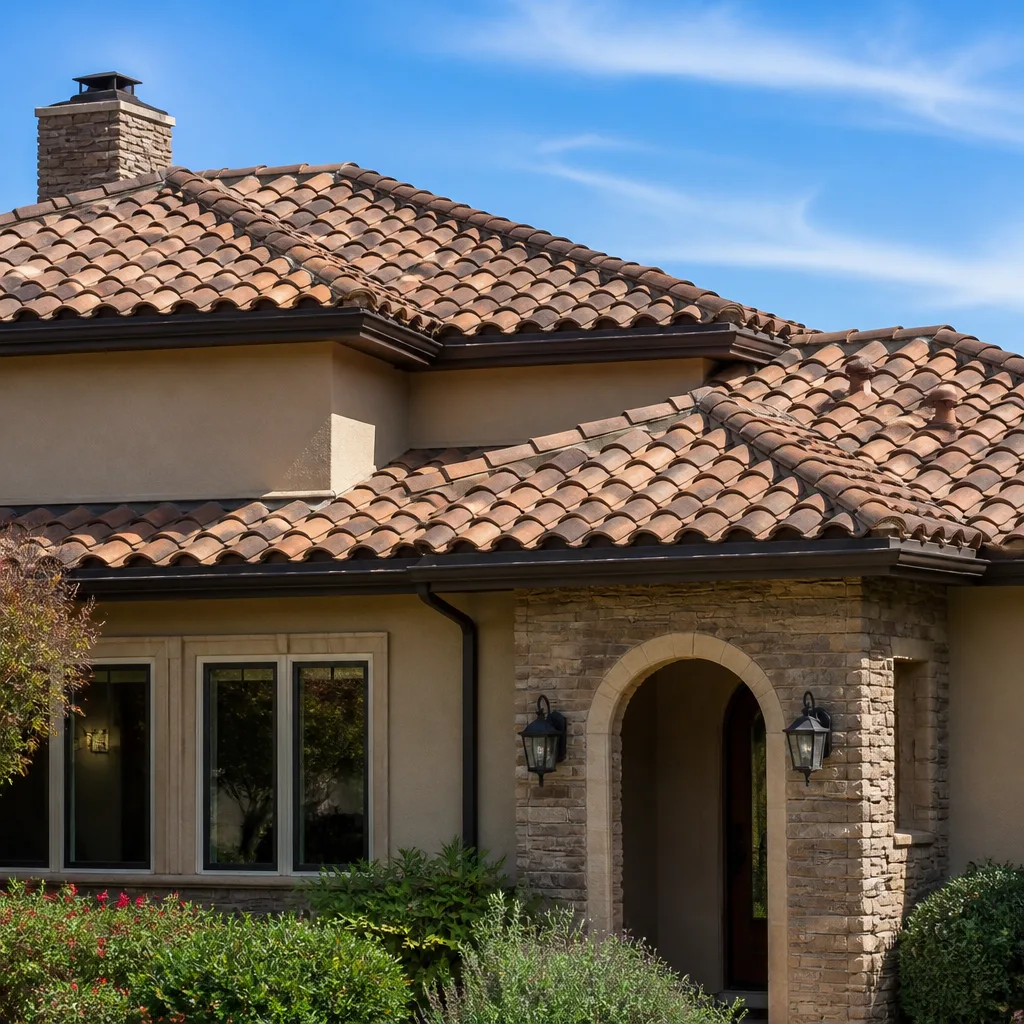 Tile roofing
 GAF
GAF Owens Corning
 Flat & low-slope
Free roof inspection with deck photos before we talk money - GAF and Owens Corning certified installation
Fast, Reliable Roof Installation Across Koreatown
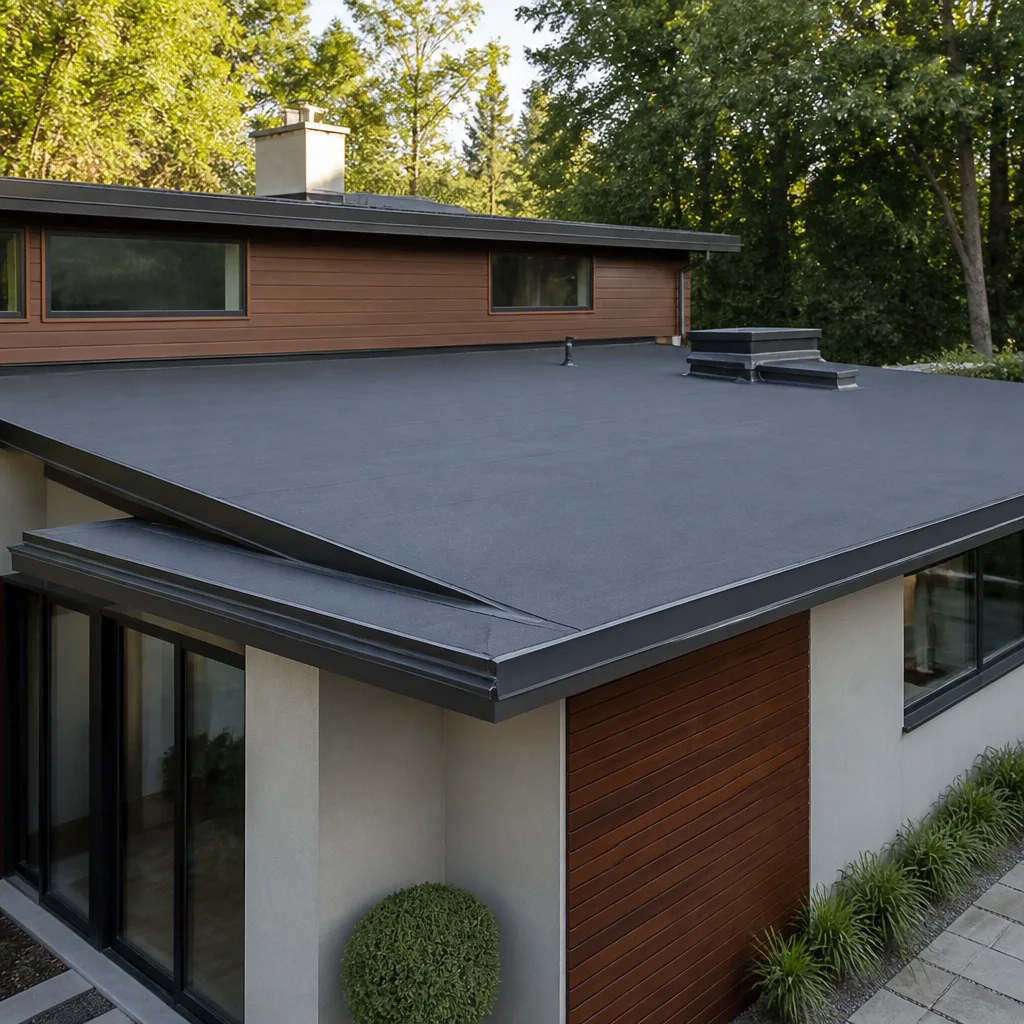
Roof installation in Koreatown means working with flat and low-slope roofs on buildings that are, in many cases, ninety to a hundred years old. A full replacement on a 1920s brick apartment building or storefront does not look anything like a shingle job in the Valley. It involves torch-down or modified bitumen systems, parapet wall detailing, and often a crane staged in a narrow alley. Mercer Roofing Co Los Angeles handles that work every week. Our Roof Installation team understands how these buildings were originally constructed, where they fail, and what it takes to bring them up to current code without damaging the units on either side. If you own a building in Koreatown and the roof is showing its age, call (213) 521-8272 for a written estimate before the next heavy rain.
Why Mercer Roofing Co Los Angeles Is Koreatown’s Preferred Roof Installation Company
We have torn off roofs on Wilshire Boulevard storefronts, on walk-ups off of Vermont, and on apartment blocks near the Wiltern. The work is different here. Buildings share parapet walls, which means a leak in your roof can travel sideways into the restaurant next door or the apartment one floor down. We coordinate with neighboring owners before work starts and protect their rooftop equipment during the job. That is not a courtesy; it is the only way to do a Koreatown roof replacement without creating a dispute.
Every technician who arrives at your building is background-checked, identity-verified, and in a clean, marked uniform with a photo ID badge. Before the visit, you get the tech’s name and photo sent to you. That is the Threshold Verified standard we operate under, and it is a hard requirement for every Mercer Roofing location. We are part of the Threshold Group family, founded in 2000, and each location is independently owned and operated.
Grant Whitlock leads our Los Angeles operation, and he reviews every Koreatown roof estimate personally before it goes out. When you call (213) 521-8272, a live person answers, not a voicemail or a callback form. The written price you receive before any work starts is the price you pay. There are no change orders hiding behind the phrase “we found something.” If we find something unexpected once the old roof is off, you get a written line item and your approval before we touch it.
Styles & brands we work with
Tile Roof in Koreatown
Tile roof work in Koreatown is less common than flat roofing, but it does come up on the handful of 1920s Spanish Revival and Mediterranean-style apartment buildings scattered through the neighborhood, particularly near the eastern edge of Koreatown and around the neighborhoods flanking Hoover Street. When a tile roof here fails, it is usually not the tile itself. The underlayment beneath the tile has rotted after decades, or the flashing at a chimney or parapet joint has separated. We remove the tile, inspect the decking, replace the underlayment, and reset the tile where it is still sound. A tile roof repair or partial replacement in Koreatown typically runs $2,800 to $6,500 depending on the roof area and the condition of the existing decking.
When tile underlayment fails
Older tile roofs in Koreatown were often set over hot-mopped felt or early asphalt underlayment that was never designed to last eighty years. Once that layer cracks, water reaches the decking, and the rot spreads quietly beneath tiles that still look fine from the street. We find this on pre-war buildings where the roof has never been fully opened. The fix means pulling tile section by section, replacing the underlayment with a modern synthetic, and reinstalling with new fasteners.
Matching 1920s Spanish Revival tile
Koreatown has some genuinely beautiful clay tile work, and we do not recommend replacing it with something generic. We source salvage and reproduction tile to match the original profile and color on historic-style buildings. If you want to preserve the look of a 1920s courtyard building, we will quote it that way and tell you exactly what the tile portion costs separately from the structural work.
Roof Ventilation in Koreatown
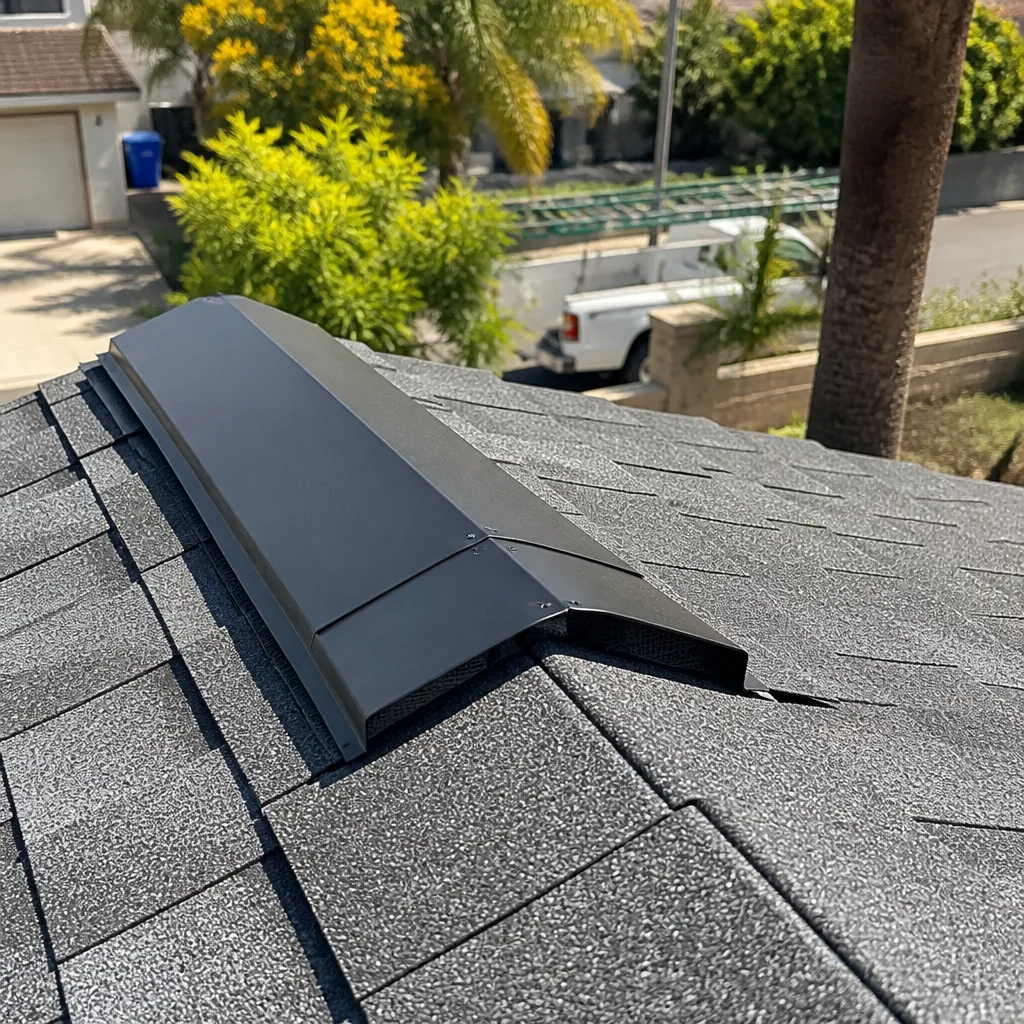
Roof ventilation on a flat Koreatown roof is a different animal than ridge vents and soffit vents on a pitched roof in the suburbs. Many of the 1920s and 1930s buildings here were built with almost no ventilation at the roof level. That trapped heat is one reason older torch-down membranes alligator-crack so badly in August. Adding proper roof ventilation on a flat roof means installing vents through the membrane, often near the parapet or at the low points where heat accumulates, and sometimes pairing them with intake vents at the eave or through the side wall. Expect to pay $350 to $900 per vent installed on a Koreatown flat roof, with most buildings needing several.
Ventilation for torch-down roofs
A torch-down or modified bitumen roof on a Koreatown commercial building can reach well over 140 degrees on the surface in July. Without vents, that heat works its way down into the building and shortens the life of the membrane itself. Installing mushroom vents or turbine vents through the roof membrane gives the air somewhere to go. It is a small investment against a full membrane replacement in year twelve instead of year twenty.
Attic and cavity ventilation on mixed-use buildings
Some Koreatown mixed-use buildings have a small attic or chase space between the roof deck and the ceiling below. When we open that space up, we often find it was never vented at all. Adding cross-ventilation there reduces cooling load in the units below and helps prevent condensation that rots the underside of the decking. We include this in our roof estimates when we see that configuration from the access hatch.
Trusted Brands We Service in Koreatown
We install and repair roofing systems using manufacturer-recognized materials from GAF, Atlas, and Tamko, among others. On flat Koreatown roofs, GAF modified bitumen and Atlas torch-down systems are the workhorses, and we keep common components in our local stock so a roof replacement on a commercial strip does not stall waiting for a shipment. On the rare pitched or mansard sections on Koreatown buildings, we use Tamko and Atlas shingle lines. Every installation we do includes the manufacturer’s material warranty alongside our own written workmanship guarantee.
See the difference
 Before
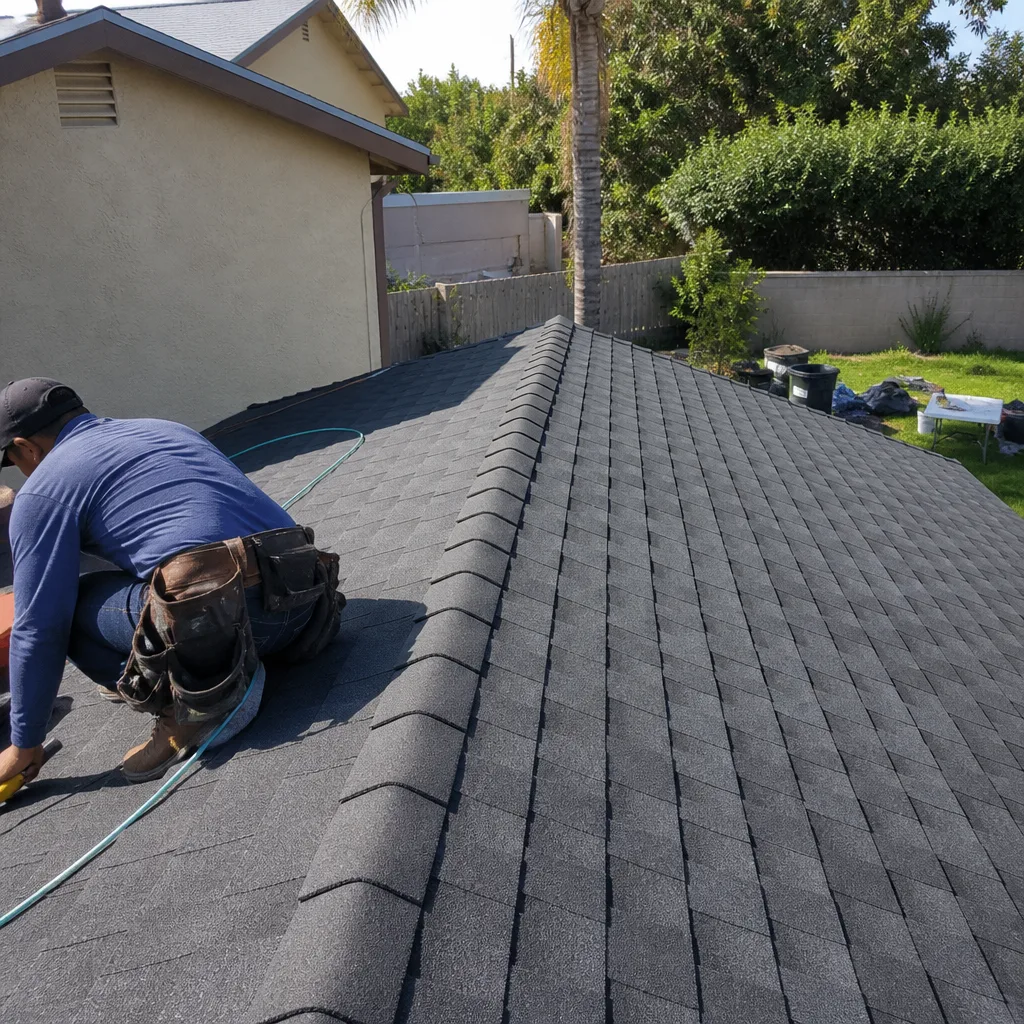 After
After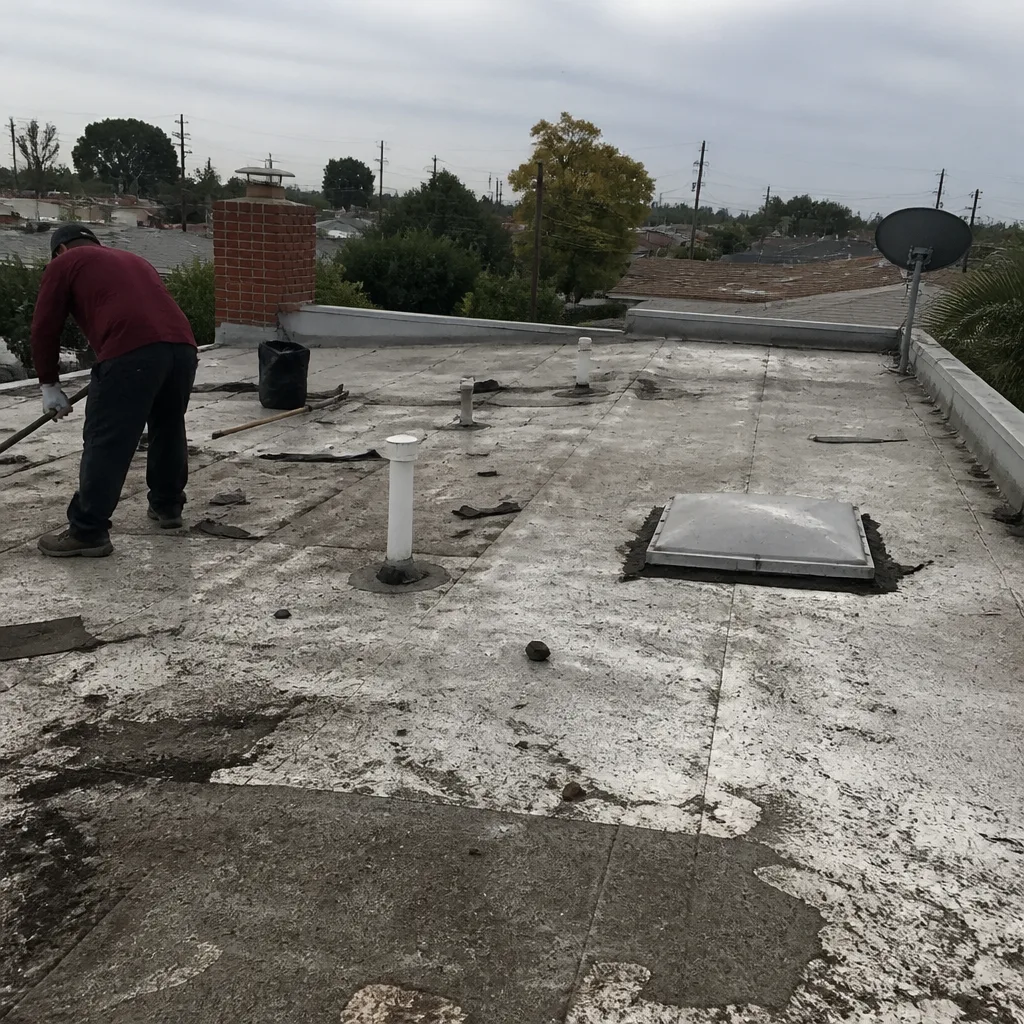 Before
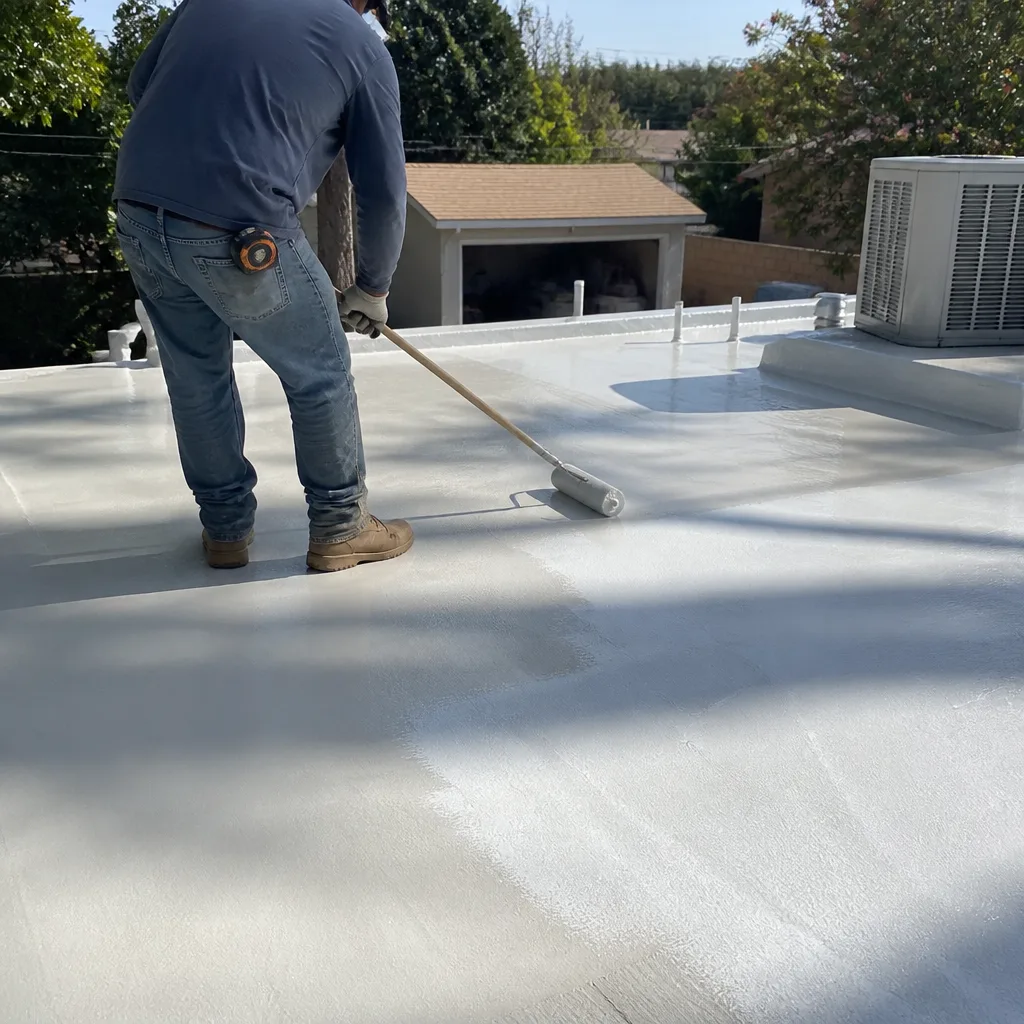 After
After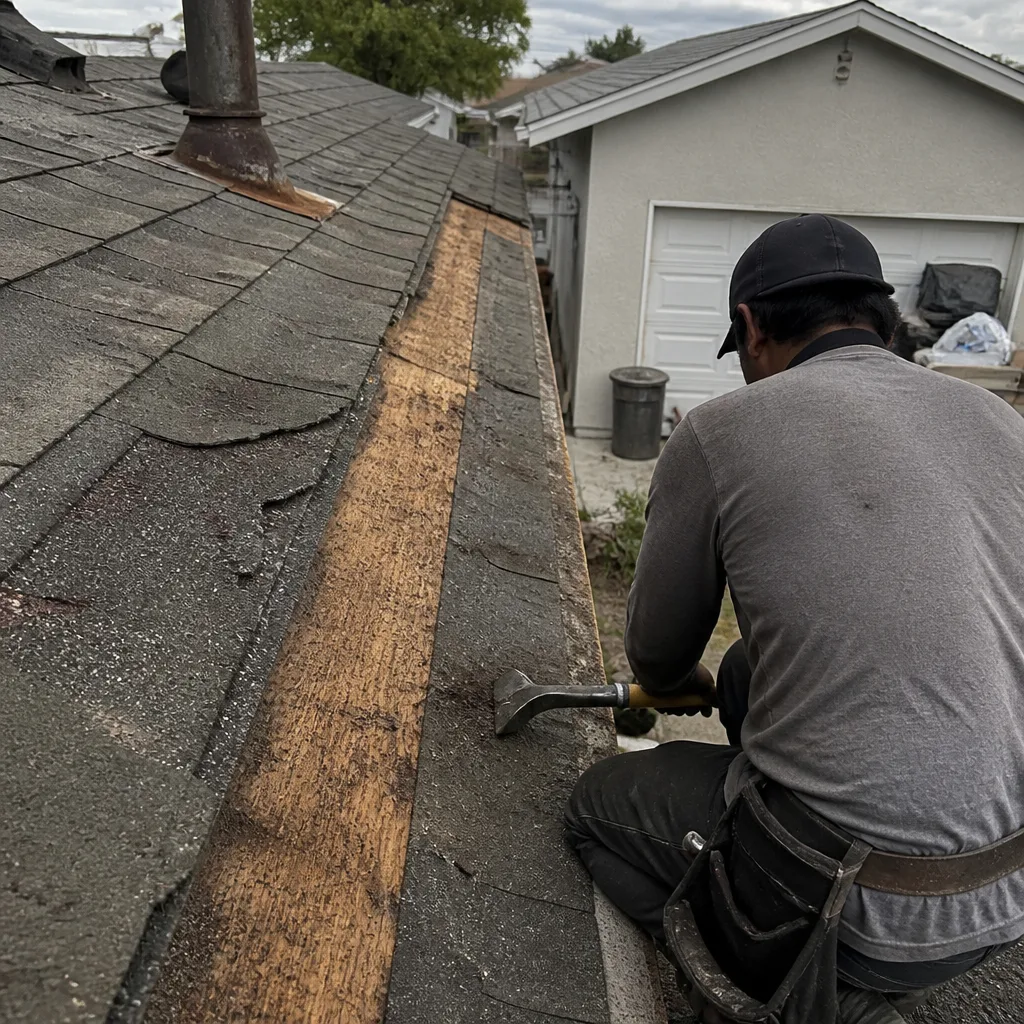 Before
 After
AfterCommon Roof Installation Problems We See in Koreatown Homes
- Shared parapet leaks that travel sideways. On Koreatown rowhouses and attached commercial strips, water enters at one building’s parapet cap, runs horizontally inside the wall, and drips out two units away. We trace the leak to its actual entry point, not just where the stain shows on the ceiling.
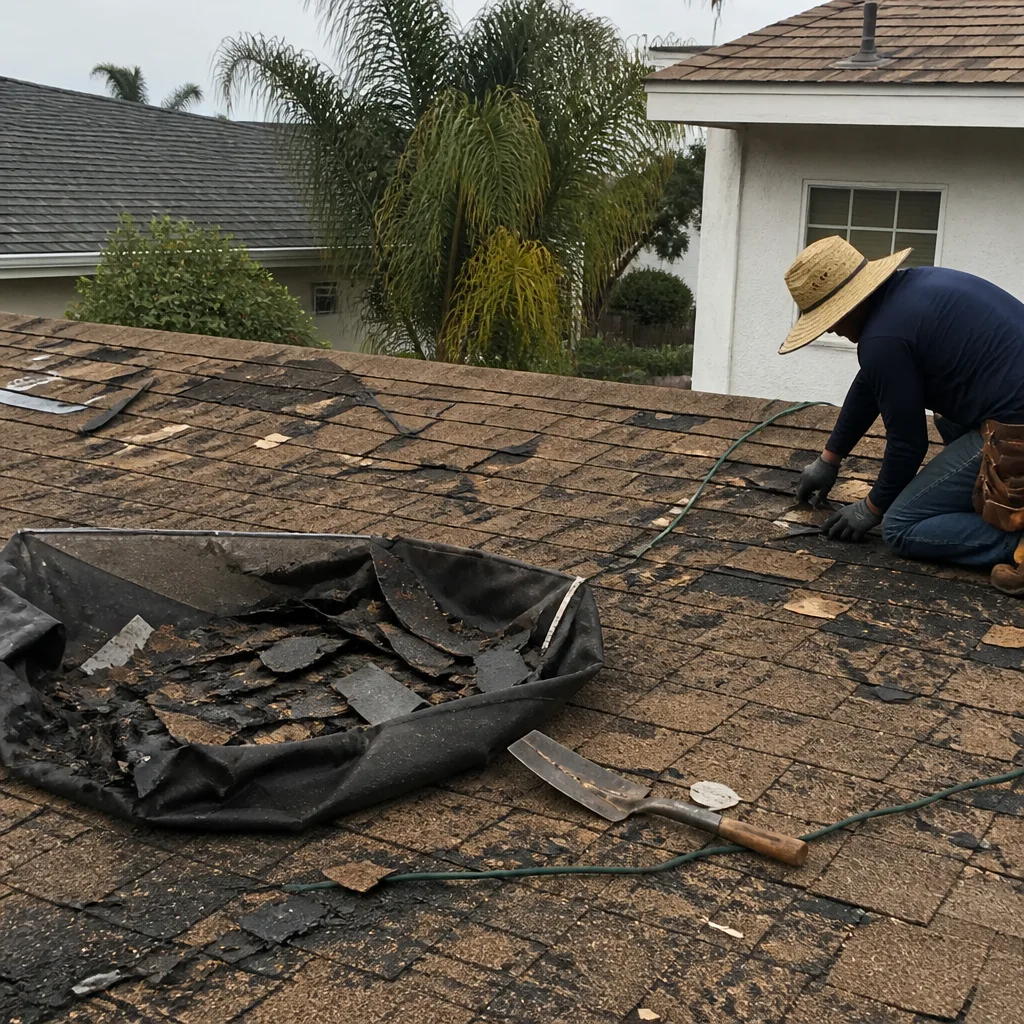
- Decades of layered roofing hiding rotted decking. We routinely find three or four layers of old built-up roofing stacked on Koreatown roofs because previous owners were quoted cheaper overlays instead of a full tear-off. A full replacement means removing all of it, exposing the decking, and replacing anything rotted before a single new ply goes down.
- Ponding water from undersized drains. Original 1920s roof drains were often too small even for the roof as built, and a century of debris has only made them worse. After heavy winter rains, ponding water sits for days on low-slope roofs and eats away at the membrane. We recalculate drain requirements and often add scuppers or enlarged drains.
- Open permits triggering unexpected code upgrades. Once we pull a permit on a Koreatown roof replacement, the city may require items that were not in the original quote: better insulation under the new membrane, improved drainage, or structural reinforcement at the parapet. We walk you through every one before work starts, and any added scope is priced and approved in writing first.
Pricing for Roof Installation in Koreatown, CA
A full flat-roof replacement on a Koreatown commercial building or apartment block typically runs $12 to $18 per square foot of roof area, including tear-off of the old roof, decking repair where rotted, new modified bitumen or torch-down membrane, flashing, and drainage work. For a 3,000-square-foot roof, that puts most jobs between $36,000 and $54,000 in this market. A smaller residential flat roof over a duplex or back unit runs proportionally less, usually $9,000 to $22,000 depending on the size, decking condition, and crane access. Tile roof repair, as noted, lands in the $2,800 to $6,500 range. Ventilation adds $350 to $900 per vent. These are Koreatown numbers, not national averages. Call (213) 521-8272 and we will walk the roof, put together a written line-item estimate, and walk you through exactly what drives the price on your building. The estimate is free.
We Also Serve Cities Near Koreatown
Mercer Roofing Co Los Angeles serves Koreatown and the surrounding neighborhoods, including Los Angeles, Burbank, South Gate, and Lynwood. If your building sits just outside the Koreatown boundary, you get the same Threshold Verified technicians, the same written pricing, and the same 365-Day Done Right Promise.
Serving Koreatown, CA - Our Local Coverage Area
We’re based in the Koreatown area and know this community well. Use the map below to see our service coverage - if you’re nearby, we can almost certainly help.
FAQs About Roof Installation in Koreatown
We inspect the parapet from both sides; where we can coordinate with the neighboring owner, we get permission to inspect their side of the shared wall as well. We replace the parapet cap or flashing so the junction is watertight across the full width of the wall. Before any work begins, we document the condition of the neighbor’s rooftop equipment and protect it during our tear-off and installation. If the leak is coming from their side, we will tell you that plainly and quote only the portion that is your responsibility. Call (213) 521-8272 if you are dealing with a shared-wall leak now; the inspection is part of the free estimate.
Common triggers are added insulation to meet current Title 24 energy requirements, larger roof drains or added scuppers to handle current rainfall calculations, and structural reinforcement if the existing decking does not meet load requirements for the new roofing system. On buildings where the roof is also occupied or used for HVAC, unit setbacks, and walkway pads may also be required. We identify which upgrades will apply to your building before we submit for permit, and we write every one of them into the contract as a line item, so the price is not a surprise later.
Yes on visible sections of the roof, and it matters on the mansard or parapet-visible portions of a brick building. We match repointing mortar color on brick parapets, use period-appropriate flashing materials where visible, and source reproduction tile when we are working on a Spanish Revival detail. On the flat roof surface itself, modern modified bitumen is the right call. It is not visible from the street. What you see is the parapet and edge detailing; we keep that true to the building’s original character.
We use a crane staged on the street when the building is truly inaccessible from the rear, and in many cases, we can carry materials through an interior stair or set a ladder directly from an adjacent roof with the property owner’s written permission. We scope the access issue during the free estimate, so the access cost is in your written quote before work starts. On crammed commercial strips, crane time is the single biggest variable, and we quote it as a fixed line item, not an hourly rate.
Yes if you want the new roof to last. The gravel traps moisture against the old membrane, hides cracks and splits, and adds dead load to framing that was never designed for it. We remove all of it, scrape the old roofing down to the decking, and install the new membrane on a clean surface. It is more labor up front, but it means the new roof actually bonds to the decking and we can see any rot before we cover it back up. Call (213) 521-8272 and we will give you a written price for the full tear-off.
On a commercial strip near Wilshire and Western, our crew tore off three layers of old built-up roofing from a 1930s brick storefront, exposing rotted decking and failed flashing at the shared parapet. We replaced the decking, installed GAF modified bitumen with proper drip edge and new metal flashing, and coordinated with the adjacent business to ensure no debris fell into their rooftop HVAC. That is the work Koreatown roofs actually need.
Written by Grant Whitlock, Owner at Mercer Roofing Co Los Angeles, serving Koreatown since our founding in 2000.