

Last updated October 17, 2026
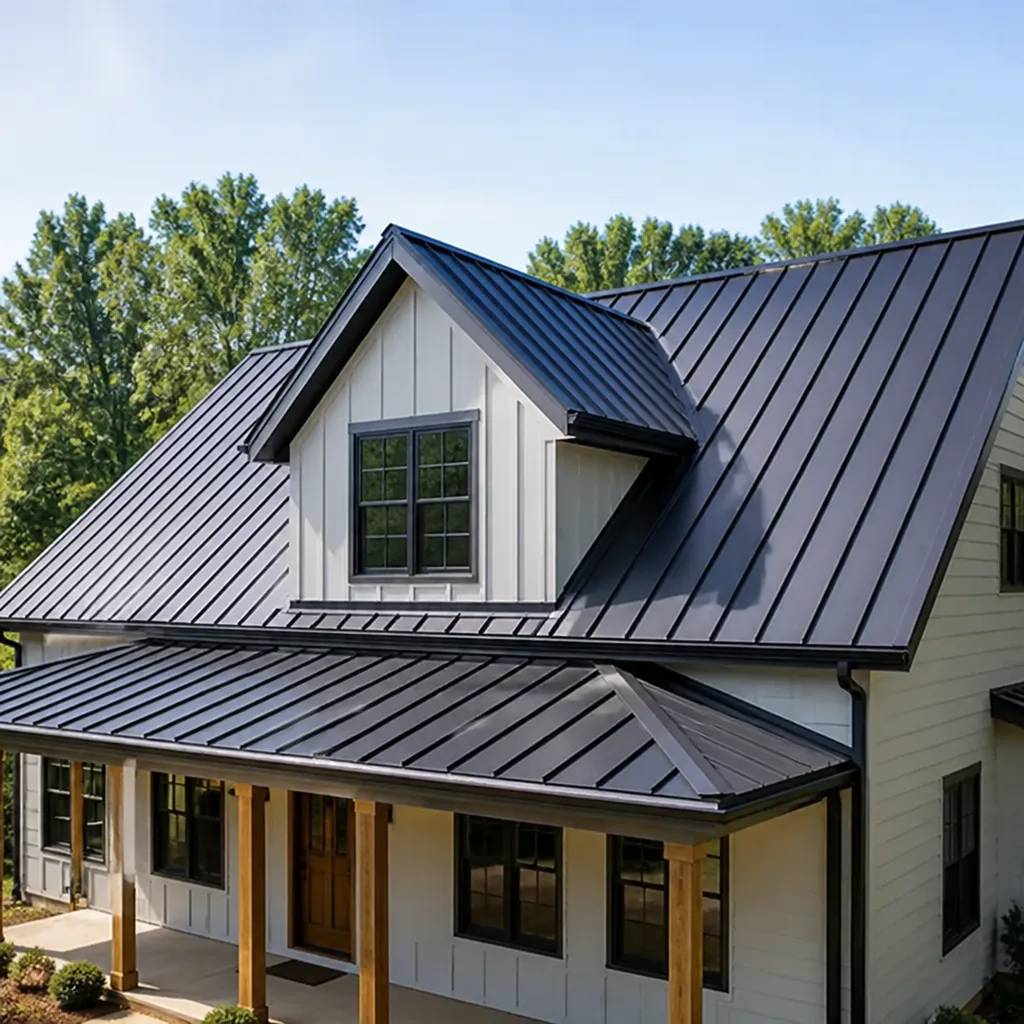 Metal roofing
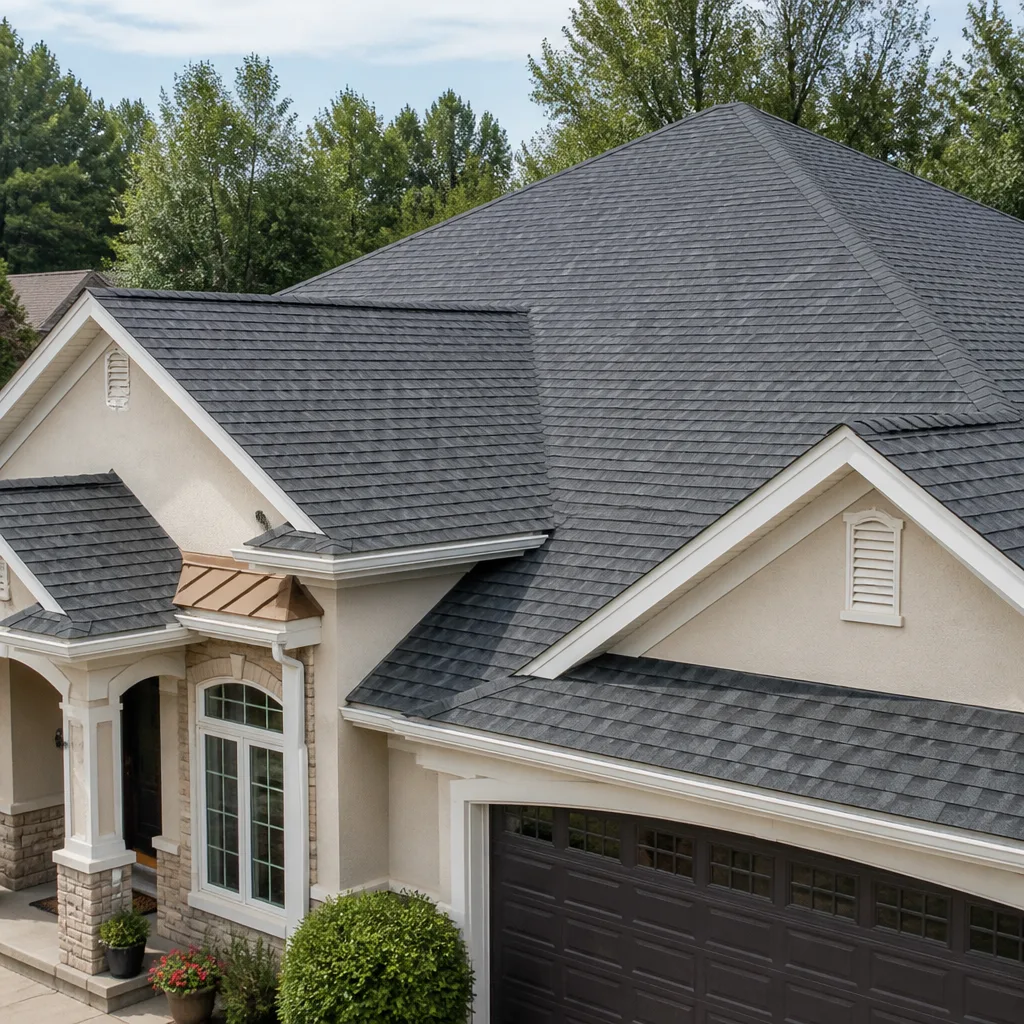 Architectural shingles
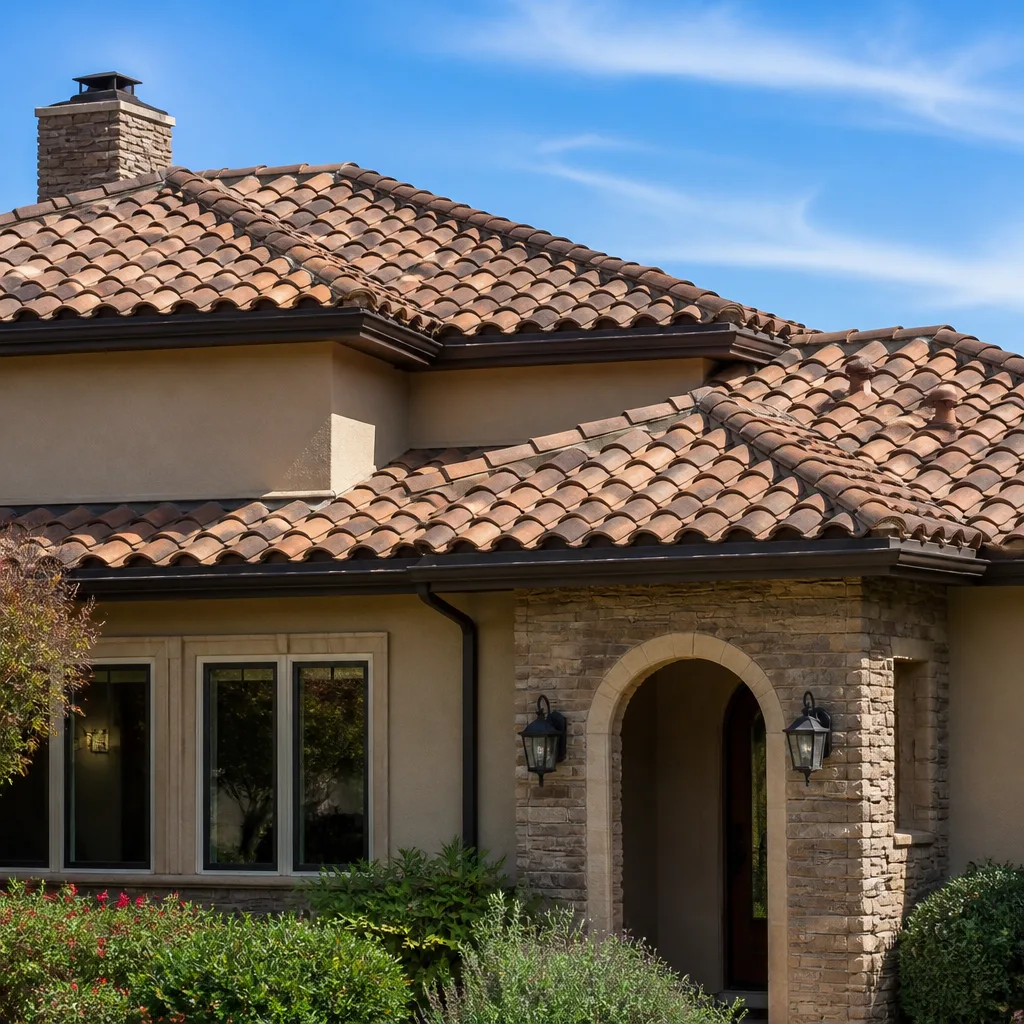 Tile roofing
 GAF
GAF Owens Corning
 Flat & low-slope
Free roof inspection with deck photos before we talk money - GAF and Owens Corning certified installation
Roofing Warning Signs: A Los Angeles Homeowner’s Reference Guide
Here’s a counterintuitive fact we’ve learned from thousands of Los Angeles roofs: by the time you see a water stain on your ceiling, your roof has been failing for months, sometimes a year or more. The stain isn’t a warning sign. It’s a confirmation. The actual warning signs were sitting on the roof surface long before any water made it through your decking, and most Los Angeles homeowners walked right past them. This guide works backwards from the roof surface itself, showing you the precursor signals that appear on shingles, tile, flashing, and sealant six to eighteen months before interior damage begins. If you learn to read these signs now, you can catch a $900 repair before it becomes a $14,000 replacement.
Styles & brands we work with
Quick Answer
The earliest roof warning signs in Los Angeles appear on the roof surface itself: granule loss collecting in gutters, visible flashing separation at chimneys and skylights, and UV-brittled sealant on flat-roof edges. Ceiling stains and interior moisture are late-stage symptoms, not early warnings. Homeowners who follow a Seasonal Roofing Care for Los Angeles: Year-Round Homeowner’s Guide approach-inspecting their roof surface twice a year, specifically in spring before the Santa Ana winds and in fall before winter rain-catch most roof problems while they’re still affordable to fix.
Table of Contents
- What Granule Loss in Your Gutters Actually Means
- Flashing Failure: The Source of Most Los Angeles Roof Leaks
- UV-Brittled Sealant on Flat Roofs: The Silent Failure
- Tile Lift and Cracking on Spanish-Style Los Angeles Homes
- Storm Damage vs. Manufacturer Defect vs. Installation Error
- Alligatoring on Built-Up Flat Roofs
- Rust Staining at Metal-Flashed Transitions
- Common Mistakes to Avoid
- When to Call a Professional
- Frequently Asked Questions
- The Bottom Line
What Granule Loss in Your Gutters Actually Means
If you clean your gutters and find what looks like coarse black sand or colored grit collecting at the downspout, that’s not dirt. Those are the ceramic granules from your asphalt shingles, and their presence tells you more than most homeowners realize about the remaining life of your roof.
Shingle granules serve two jobs: they block UV radiation from breaking down the asphalt beneath them, and they provide fire resistance. Every shingle loses granules slowly over its life, but the pattern matters. Light, even granule loss across the entire roof on a shingle 15 to 20 years old is normal aging. Heavy accumulation in gutters, paired with bare spots visible on the shingle surface, is a different situation entirely. That’s the shingle’s asphalt layer being directly exposed to Los Angeles sun, and the clock is now running in months, not years.
How to Estimate Remaining Service Life from Granule Pattern
- Look at where the granules are collecting. If gutters on the south and west slopes hold noticeably more granules than north slopes, UV exposure on those sun-facing planes is accelerating the wear. In Los Angeles, south-facing slopes age about 30% faster than north-facing ones. A roof that’s 14 years old on the north side may be functionally 18 on the south.
- Check the shingle surface after granule loss begins. Once the asphalt layer is visible as a shiny black or gray patch, the shingle loses flexibility. It becomes brittle, curls at the edges, and can no longer self-seal after wind events. If you see this on more than 20% of a given slope, that slope is in its final 2 to 4 years of life regardless of the roof’s calendar age.
- Measure the granule accumulation itself. A homeowner with a 25-year architectural shingle roof in year 8 should see minimal granule loss. A cup or two of granules per 50-foot gutter run per year is normal. If you’re scooping out handfuls, the shingles are shedding at a rate consistent with a roof in its late teens. This is the single most useful free diagnostic in Los Angeles roofing.
We use CertainTeed and Owens Corning architectural shingles on most of our Roof Repair in Los Angeles work precisely because their granule retention is documented, and because we can tell a homeowner fairly accurately where they are in a shingle’s service life by looking at what’s in the gutter. If you pull out a handful of granules and bring them to a roofer who tells you it’s normal without climbing the roof, get a second opinion.
Flashing Failure: The Source of Most Los Angeles Roof Leaks
If you asked us where water gets into most Los Angeles homes, the answer isn’t the shingles or tile. It’s the flashing. Flashing is the metal material, usually galvanized steel, aluminum, or copper, installed at every transition where the roof meets something vertical: chimneys, skylights, plumbing vents, HVAC penetrations, and wall junctions. When flashing fails, water has a direct path into the roof system that bypasses the shingle field entirely.
The good news is that you can often spot flashing problems from the ground with binoculars. Here’s what to look for:
- Gaps at the base of the chimney. The chimney flashing has two parts: step flashing hidden under the shingles and counter-flashing embedded in the mortar. If you can see daylight between the counter-flashing and the brick, or if the counter-flashing is pulling away from the mortar joint, water is getting behind it. In older Los Angeles neighborhoods like Hancock Park and West Adams, where chimneys are common and often original to 1920s homes, this is a frequent source of leaks that interior stains eventually reveal.
- Skylight flashing separation. Skylights have their own integrated flashing kits, and after 10 to 15 years the gasket seals shrink and crack. From the ground, look for lifted edges at the top corners of the skylight frame. Even a 1/8-inch separation lets water wick through by capillary action during Los Angeles rain events.
- HVAC and vent penetration boot failure. Those rubber boots around plumbing vents and the metal curbs around HVAC penetrations have a service life of roughly 10 to 12 years in direct Los Angeles sun. When the rubber cracks, it usually splits at the back, where the homeowner never sees it. If your roof is over a decade old and you can see cracking from the ground, it’s already leaking internally.
The reason flashing failures are so common in LA is straightforward: our climate puts metal through extreme thermal cycling. Days are hot, nights are cool, and metal expands and contracts at a different rate than the materials around it. Over 20 or 30 years, that movement fatigues every seam and seal. A well-installed roof by a Roofing Company in Los Angeles will include a visual flashing inspection at installation, but few homeowners ever go back to check it at year 8 or year 12, which is when the deterioration becomes visible from the ground.
UV-Brittled Sealant on Flat Roofs: The Silent Failure
Los Angeles has tens of thousands of homes with flat or low-slope roofs, from mid-century moderns in the hills to Spanish bungalows in the Valley. Flat roofs don’t shed water the way pitched roofs do, so they rely on a continuous waterproof membrane with sealed edges. And those edge seals are almost always the first thing to fail, because they take the most direct UV exposure.
The sealant used at roof edges, around parapet walls, and at roof-to-wall transitions is typically a polymeric compound that starts out flexible. In Los Angeles, with our consistent 300-plus days of sun annually, that sealant bakes. After 5 to 7 years, it begins to lose elasticity. The visible sign is what looks like fine cracking in a web pattern across the surface, or edges that have pulled away from the membrane, or a chalky appearance where the sealant has oxidized. This is what roofers call “alligatoring” in sealant form, and it’s the precursor to open cracks that let water sit against the roof deck during our winter rains.
What makes this failure silent is that the water doesn’t pour through immediately. It seeps, slowly, saturating the insulation layer or the plywood decking beneath the membrane surface. By the time a homeowner notices a soft spot when walking on the roof or a stain on the interior ceiling, the decking itself may need section replacement. On a flat roof section of 400 square feet, replacing water-damaged decking adds $1,800 to $3,500 to the job in most Los Angeles neighborhoods. Re-caulking the same roof edge before it fails might cost $400 to $800 for the entire perimeter. This is the single highest-value do-it-now inspection any flat-roof homeowner in Los Angeles can make.
Tile Lift and Cracking on Spanish-Style Los Angeles Homes
Clay tile roofs are celebrated in Los Angeles, from the Spanish Revival homes of Los Feliz and Silver Lake to the newer Mediterranean builds in the San Fernando Valley. They’re also one of the most misunderstood roofing systems when it comes to warning signs, because homeowners assume tile is nearly indestructible. The tile itself can last 50 years or more. The roofing system beneath it, the underlayment, has a 20 to 35 year service life, and the tile won’t tell you when it’s failing.
The warning sign to look for is tile lift. Walk to a point where you can see the roof plane at a low angle, ideally from across the street or from a neighbor’s driveway, and look for tiles that appear raised, shifted, or askew. In the Los Angeles area, tile lift happens for three predictable reasons:
- Wind uplift on exposed ridge and hip tiles. Santa Ana wind events regularly gust to 50 or 60 mph through the canyons and passes. Ridge tiles and hip tiles take the full brunt, and once the mortar or adhesive securing them lets go, the tile lifts. Even if it doesn’t fly off, the lifted tile exposes the fasteners and the underlayment beneath to direct water entry.
- Foot traffic damage. Tile is strong in compression but fragile in point loading, and every tile roof in Los Angeles gets walked on eventually, whether by a satellite installer, a chimney sweep, or a previous roofer. Cracked tiles are the result. A cracked tile may not leak immediately, because most LA homes have a secondary water barrier beneath the tile, but it’s the visible sign that the top layer is compromised.
- Underlayment degradation pushing tiles from below. As the asphalt-saturated felt or synthetic underlayment beneath the tile breaks down, it can wrinkle and bubble, physically lifting the tiles above it. This is the worst case, because it means the primary waterproofing layer is not just failing, it’s already failed. The lifted tile is the indicator, but the actual problem is underneath.
When we assess tile roofs for Roof Installation in Los Angeles, we look at the underlayment’s condition first, because it’s the layer that actually keeps the water out. The tile is the cosmetic armor. Homeowners who inspect their tile profile annually, ideally after the first Santa Ana event of the season, catch ridge tile lift when the fix costs a few hundred dollars rather than a few thousand.
Storm Damage vs. Manufacturer Defect vs. Installation Error
When a Los Angeles homeowner spots a roof problem, the path to getting it paid for depends entirely on what caused it. Most people assume their homeowners insurance covers all roof damage. It doesn’t. Understanding the three categories of roof failure, and which party is responsible for each, can save you thousands of dollars in out-of-pocket costs.
Storm-Related Damage
In Los Angeles, the realistic storm vectors are wind, rain, and the occasional microburst or tornado-scale event in the eastern San Gabriel Valley. Wind damage typically shows as creased shingles from wind-driven rain being forced under tabs, missing shingles, or lifted flashing. Rain damage from our winter atmospheric rivers shows as leaks at penetration points first. Storm damage is usually covered by homeowners insurance, provided the event is documented, the damage is reported promptly, and your policy doesn’t exclude wind or have a high separate deductible. In our experience, Los Angeles homeowners in hillside fire zones often carry wind exclusions or higher deductibles they don’t discover until they file a claim.
Manufacturer Defect
Shingle manufacturers like GAF, CertainTeed, Owens Corning, IKO, and Atlas warrant their products against manufacturing defects, but the warranty is not a roof performance guarantee. Defects typically show up in the first 5 years and present as severe granule loss, blistering, or premature curling. If a defect is confirmed, the manufacturer’s liability is generally limited to the cost of the shingles themselves, not the labor to remove and replace them, and prorated after the first few years. Most Los Angeles homeowners find that the manufacturer warranty covers less than they expected, especially when labor costs factored in.
Installation Error
This is the category most Los Angeles homeowners don’t consider, and it’s the most common in our market. Installation errors include incorrect nailing patterns, improper shingle exposure, wrong flashing details at penetrations, insufficient attic ventilation, and reuse of old flashing when a new roof is installed. The signs of installation error often appear within 2 to 5 years, which is exactly when most homeowners assume their “new” roof shouldn’t have problems yet. Installation error is the responsibility of the installing contractor, and it’s why our Mercer Roofing Co Los Angeles home page is clear about written guarantees. Mercer Roofing Co Los Angeles puts the 365-Day Done Right Promise on every repair in writing, because a guarantee that isn’t written isn’t a guarantee at all. If an installation error shows up within that year, we make it right at no charge.
If you’re trying to determine which category your roof problem falls into, take photos from the ground level showing the specific area of concern, note when you first noticed it, and call a roofer who will assess the roof surface directly rather than guessing from your description over the phone.
Alligatoring on Built-Up Flat Roofs
Built-up roofing, often called BUR or tar-and-gravel, is common on older Los Angeles homes, particularly those built between the 1940s and 1970s in neighborhoods like Westchester, Mar Vista, and the flatlands of Burbank and Glendale. A built-up roof consists of alternating layers of asphalt and felt, topped with gravel, mineral cap sheet, or a reflective coating. When you look at a BUR surface and see a pattern of interconnected cracks that resembles alligator skin, that’s the warning sign the roof’s top layer has lost its flexibility and is beginning to fail.
Alligatoring happens because the asphalt in the top layer oxidizes and embrittles over years of direct sun. The surface can’t expand and contract with temperature changes anymore, so it cracks. Small alligatoring cracks are a sign the roof is in its middle age and should be coated or resurfaced. Large alligatoring with visible separation, where you can see the felt layers beneath, or pooling water sitting in the cracked areas, means the roof is past its serviceable life. When water enters through alligatoring cracks and sits on the underlying felt, it accelerates decay from below, and the typical lifespan of a Los Angeles built-up roof, 15 to 20 years, can be cut in half.
The useful distinction for homeowners: alligatoring that appears in isolated areas, particularly around drains, scuppers, or roof penetrations, is a repair scenario. Alligatoring that covers more than 40% of the roof surface is a replacement scenario. The cost difference in Los Angeles is roughly $4 to $6 per square foot for coating and repair versus $9 to $14 per square foot for a full tear-off and replacement. Knowing which situation you’re in before you call a contractor protects you from being sold a replacement you don’t need or a patch job that won’t hold.
Rust Staining at Metal-Flashed Transitions
Every roof has metal components, and every metal component has a specific lifespan in the Los Angeles climate. Rust staining is the visible evidence that a metal flashing or fastener is corroding, and it’s a warning sign that appears years before the metal actually fails and allows water entry.
What to look for: orange-brown streaks running down from a chimney flashing, a rust ring around a plumbing vent pipe, staining on the roof surface near roof-to-wall junctions, or rust extending from exposed nail heads or fasteners. In each case, the staining means the protective galvanization or coating on the metal has been consumed, and water is now actively oxidizing the steel. Once rust creates pinholes, which can happen within a few years of the first staining, water passes straight through the metal during our winter rains.
Los Angeles has a specific contributing factor that accelerates this: our coastal neighborhoods in Santa Monica, Venice, Playa del Rey, and San Pedro carry salt-laden air, and salt accelerates corrosion dramatically. A galvanized flashing that might last 30 years in Pasadena can be severely rusted in 12 to 15 years within two miles of the coast. If you live near the ocean and your roof has original galvanized flashings, an annual inspection of those transitions is more than prudent. It’s the single highest-value inspection you can make on a coastal roof.
Mercer Roofing Co Los Angeles installs corrosion-resistant flashing materials on coastal jobs as standard practice, and we include the condition of every flashing in our written price before any work starts. When you know what the flashing looked like at installation, you can recognize what it looks like when it’s failing.
Common Mistakes to Avoid
- Treating a ceiling stain as an early warning. By the time water reaches your ceiling, it has already passed through the roof surface, the underlayment, the decking, and likely insulation. The repair is now multi-layer. Los Angeles homeowners who wait for the stain pay 3 to 5 times more than those who catch the surface sign.
- Ignoring gutters as a diagnostic tool. Your gutters are the most honest reporter your roof has. Granules, tile fragments, and rust flakes all collect there. Most Los Angeles homeowners clean their gutters for fire safety and drainage, but never think to look at what they’re actually scooping out.
- Assuming a new roof means no inspections. A roof installed in 2020 still has flashings, sealant, and fasteners that are aging on schedule. We recommend a visual roof-surface inspection every 2 years starting at year 5, regardless of the roof’s age or warranty status.
- Filing an insurance claim before knowing the cause. If a roofer tells you it’s storm damage and it turns out to be deferred maintenance, your claim may be denied, and the denial goes on your CLUE report, making future coverage harder to get in Los Angeles’s tightening insurance market. Know the category first.
- Letting anyone on the roof without confirming identity. This is a real concern for Los Angeles homeowners, many of whom live alone or are at home with children. You should know exactly who is arriving before you open the door. This is why Mercer Roofing Co Los Angeles sends every technician’s name and photo ahead of the visit, and why every technician presents a photo ID badge at the door. No ID, no entry. That standard is non-negotiable in our company.
- Patching over a symptom without finding the source. Caulking a leak from the interior ceiling side or adding roof coating over active alligatoring without addressing the underlying issue is money spent twice. The second repair is always more expensive than the first one would have been if it had been done correctly.
When to Call a Professional
If you see granule accumulation in your gutters beyond a cup or two per run, visible flashing separation at a chimney or skylight, alligatoring on a flat roof exceeding 40% surface coverage, tile lift after a Santa Ana event, or rust staining at metal transitions, call a roofer to assess the roof surface. These are not DIY situations, and none of them are fixable from inside the attic. A trained eye can distinguish aging from active failure, and can tell you whether a repair or a larger scope is needed, with costs that reflect the actual condition, not a guess. Mercer Roofing Co Los Angeles offers free estimates in Los Angeles and will provide a written price before any work starts. Call (213) 521-8272 to schedule yours. The estimate is the roof inspection, the written price, and the guarantee, all before you pay for anything.
Frequently Asked Questions
Most Los Angeles roofing companies charge between $150 and $400 for a roof inspection, depending on roof complexity and whether a written report is required. Mercer Roofing Co Los Angeles includes the inspection as part of a free estimate, so you receive the same assessment at no cost when you call (213) 521-8272. The written price for any recommended work follows the inspection at no obligation.
A quality architectural asphalt shingle roof in Los Angeles, installed over proper ventilation and against code, lasts 20 to 25 years on most homes, though sun-exposed south and west slopes may need attention 3 to 5 years earlier. Coastal homes in Santa Monica and San Pedro often see shorter lifespans due to salt exposure. The granule pattern in your gutters is the most reliable tell for where your specific roof is in its service life.
Granules in your gutters mean your shingles are shedding their UV-protective ceramic layer, and the rate of shedding indicates remaining roof life. Light, even loss is normal aging. Heavy accumulation with visible bare spots on the shingle surface means the roof is in its final years. In Los Angeles, this sign usually appears first on south-facing slopes.
Homeowners insurance covers storm-related roof damage in most Los Angeles policies, but not deferred maintenance, normal aging, or installation errors. Wind damage from Santa Ana events is typically covered, while granule loss and UV deterioration are considered maintenance. Many Los Angeles homeowners in fire-hazard zones carry wind exclusions or higher deductibles they don’t discover until filing a claim. Check your policy before assuming coverage.
Isolated alligatoring, small cracks at roof edges, or minor drainage issues indicate repairable conditions. Alligatoring covering more than 40% of the surface, soft spots in the decking, or active water intrusion point to replacement. A Los Angeles flat roof repair with sealant and patching typically runs $400 to $800 for perimeter work, while a full replacement costs $9 to $14 per square foot. The free estimate from Mercer Roofing Co Los Angeles will tell you which situation you have, with a written price either way.
No. Walking on a roof introduces risk of personal injury and can damage shingles or tile that are already fragile. Ground-level and gutter-level inspection with binoculars catches every warning sign described in this guide without the fall risk or the roof damage. When a professional is needed, Mercer Roofing Co Los Angeles sends a technician whose name and photo you receive before arrival, who presents a photo ID badge at the door, and who is background-checked under the Threshold Verified standard. Call (213) 521-8272 for your free estimate.
The Bottom Line
Your roof talks, but it doesn’t shout. The early warning signs, granule loss in gutters, flashing separation at chimneys and skylights, UV-cracked sealant on flat roofs, tile lift after wind events, and rust staining at metal transitions, appear on the roof surface months or years before water reaches your ceiling. Los Angeles homeowners who check these six signs twice a year, and act on what they find, keep roof repairs in the hundreds instead of the thousands. For more guides & resources on protecting your home, explore our blog. When you’re ready for a professional assessment, Mercer Roofing Co Los Angeles offers a free estimate with a written price before any work begins, and a 365-Day Done Right Promise in writing on every repair. Call (213) 521-8272.
Written by Grant Whitlock, Owner at Mercer Roofing Co Los Angeles, serving Los Angeles since 2000.
See the difference
 Before
 After
After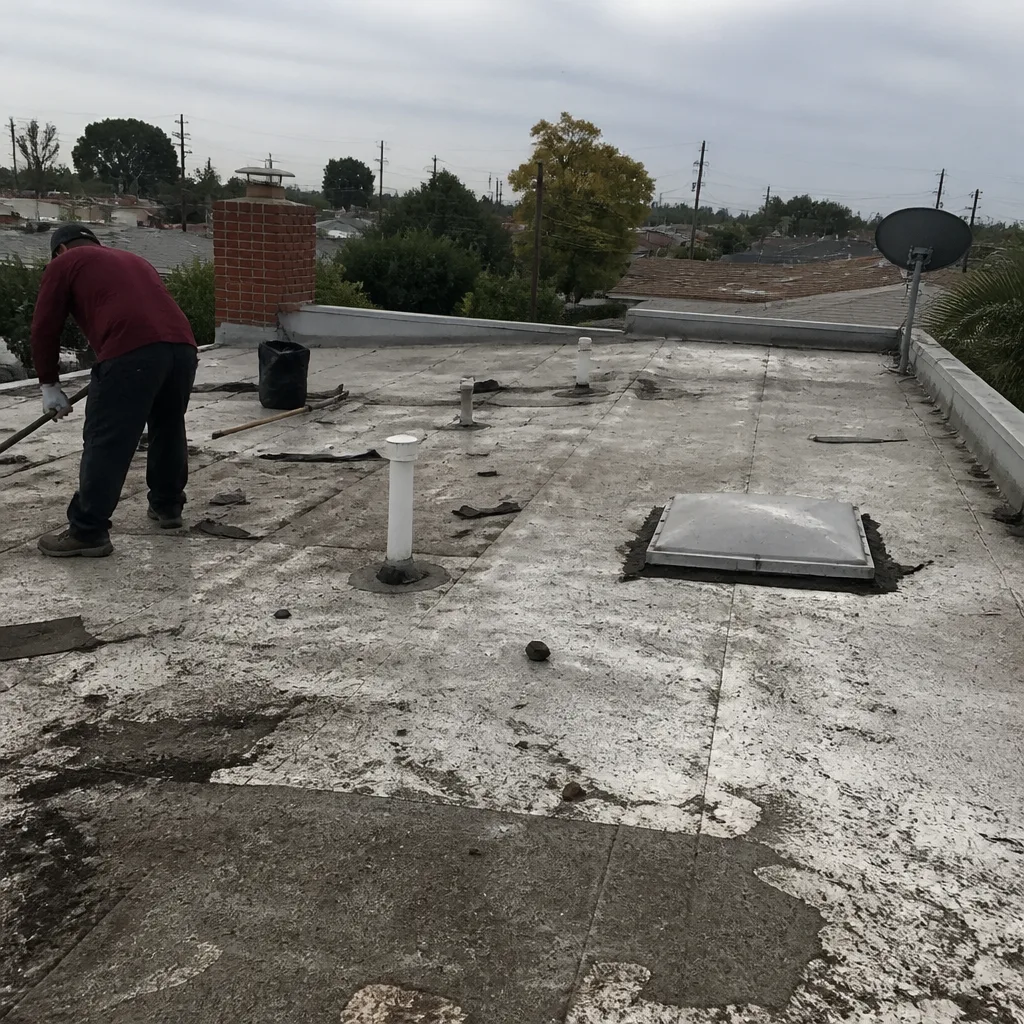 Before
 After
After Before
 After
After