
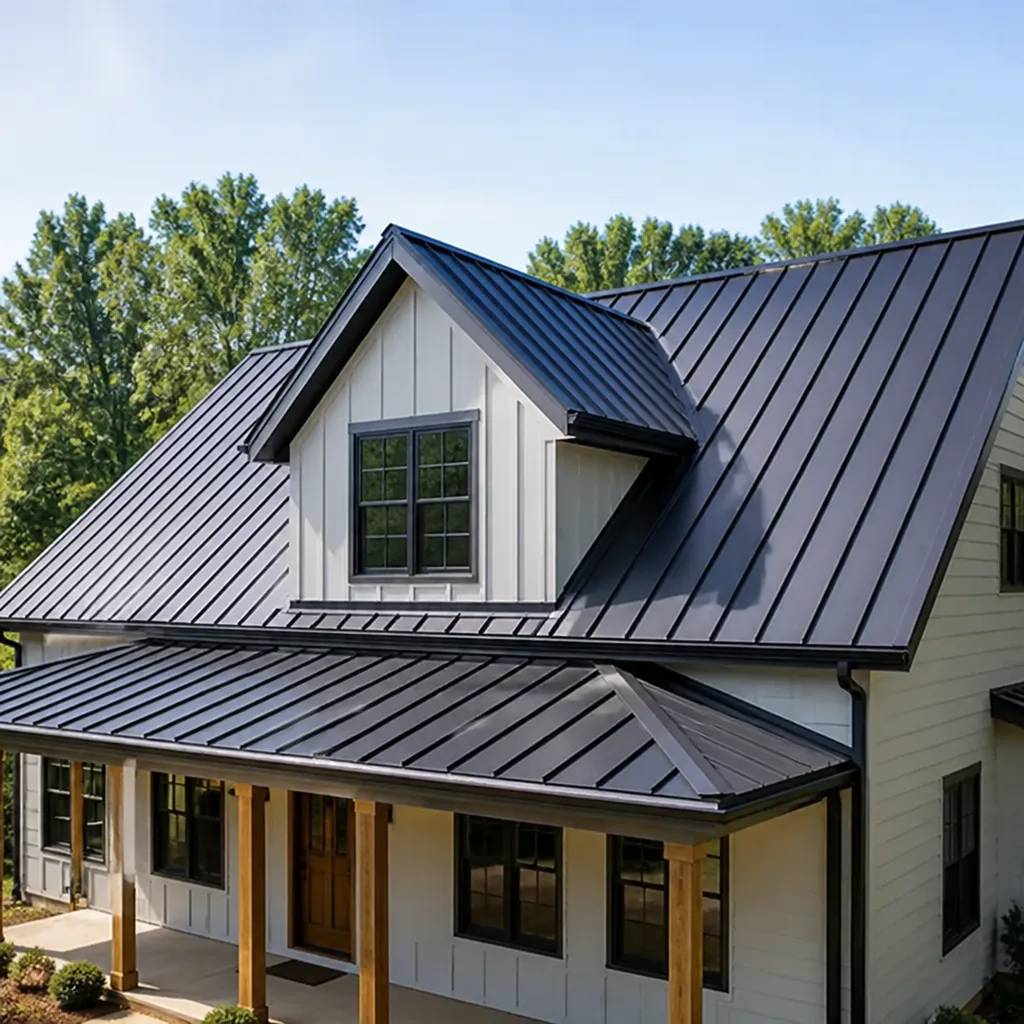
 Metal roofing
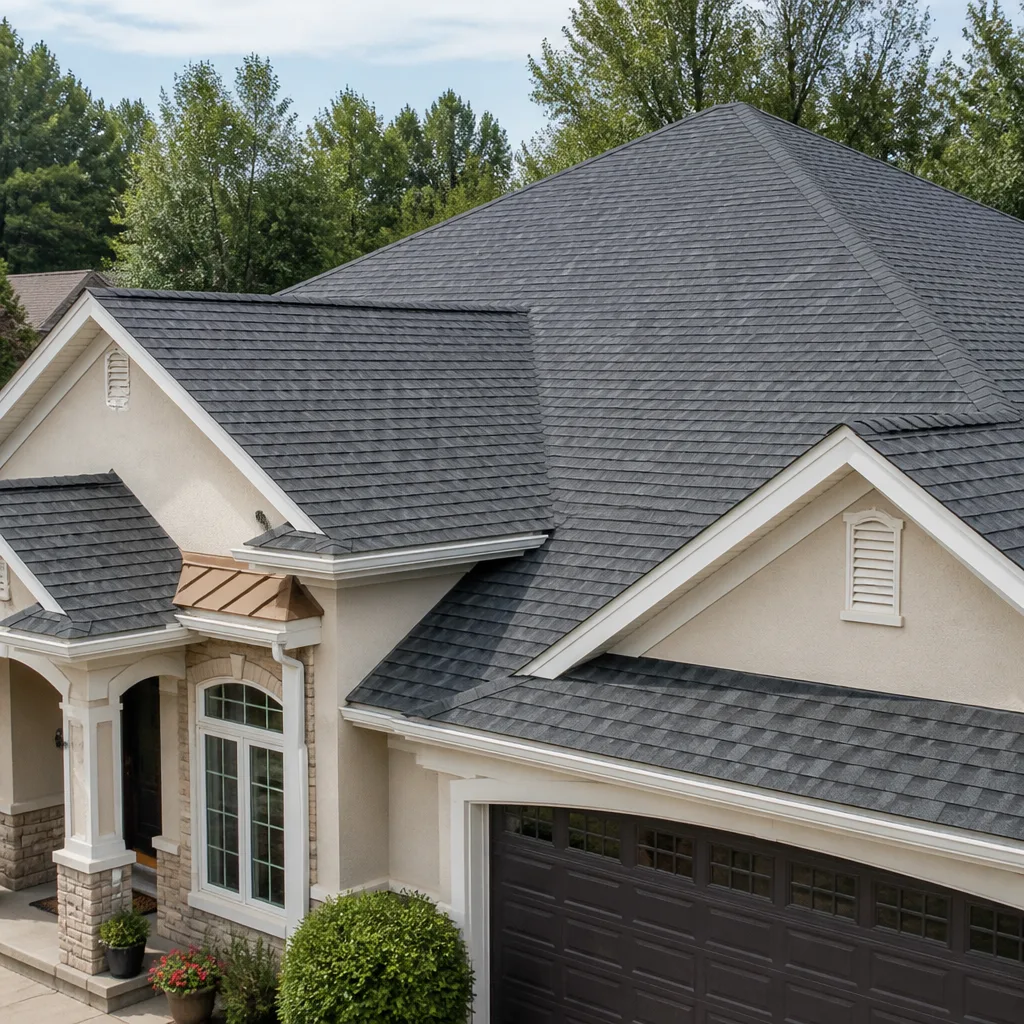 Architectural shingles
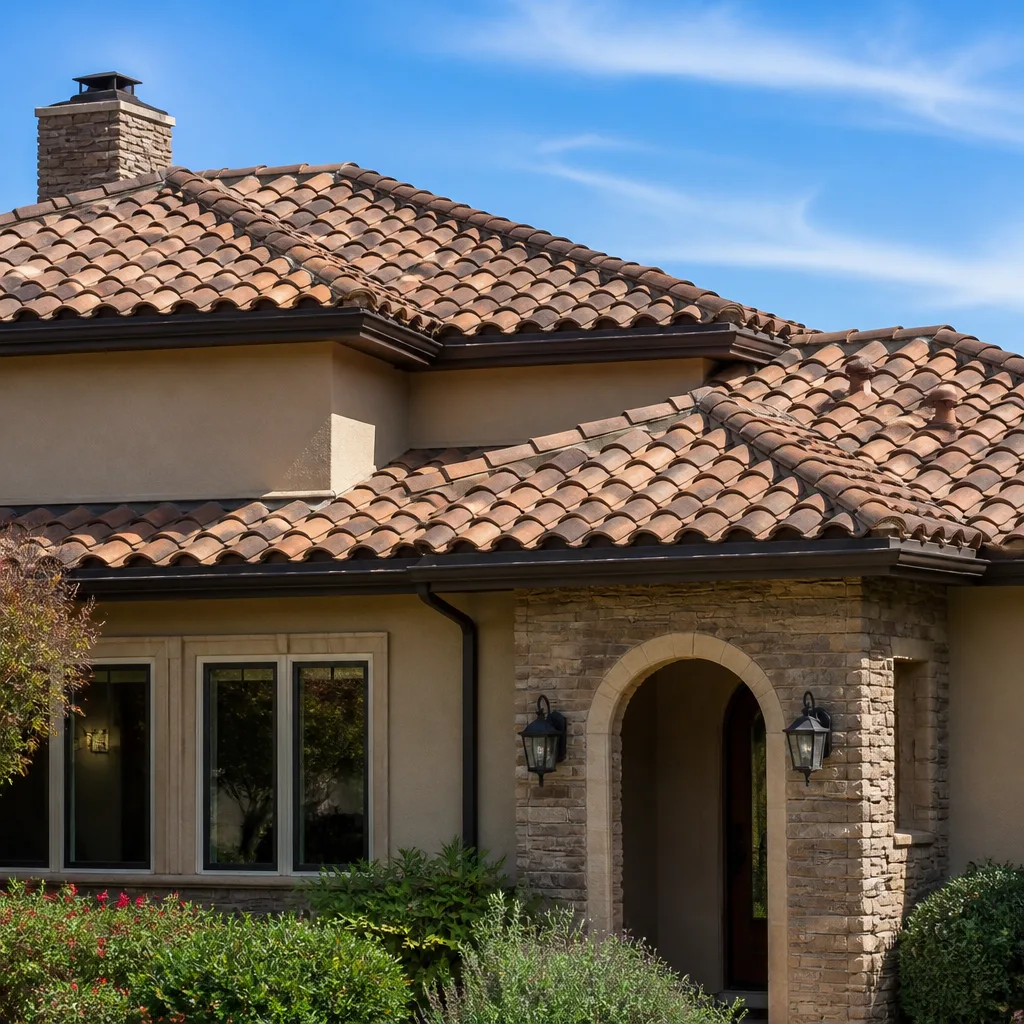 Tile roofing
 GAF
GAF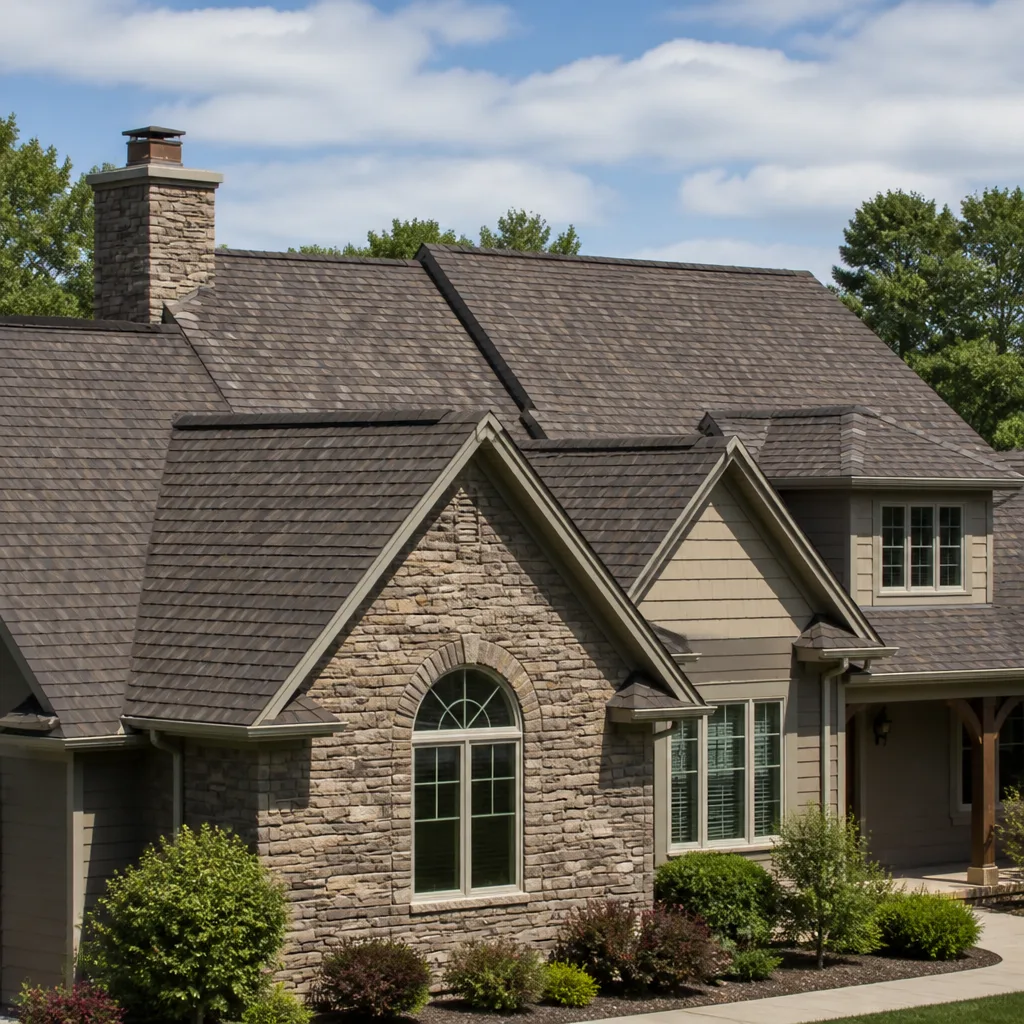 Owens Corning
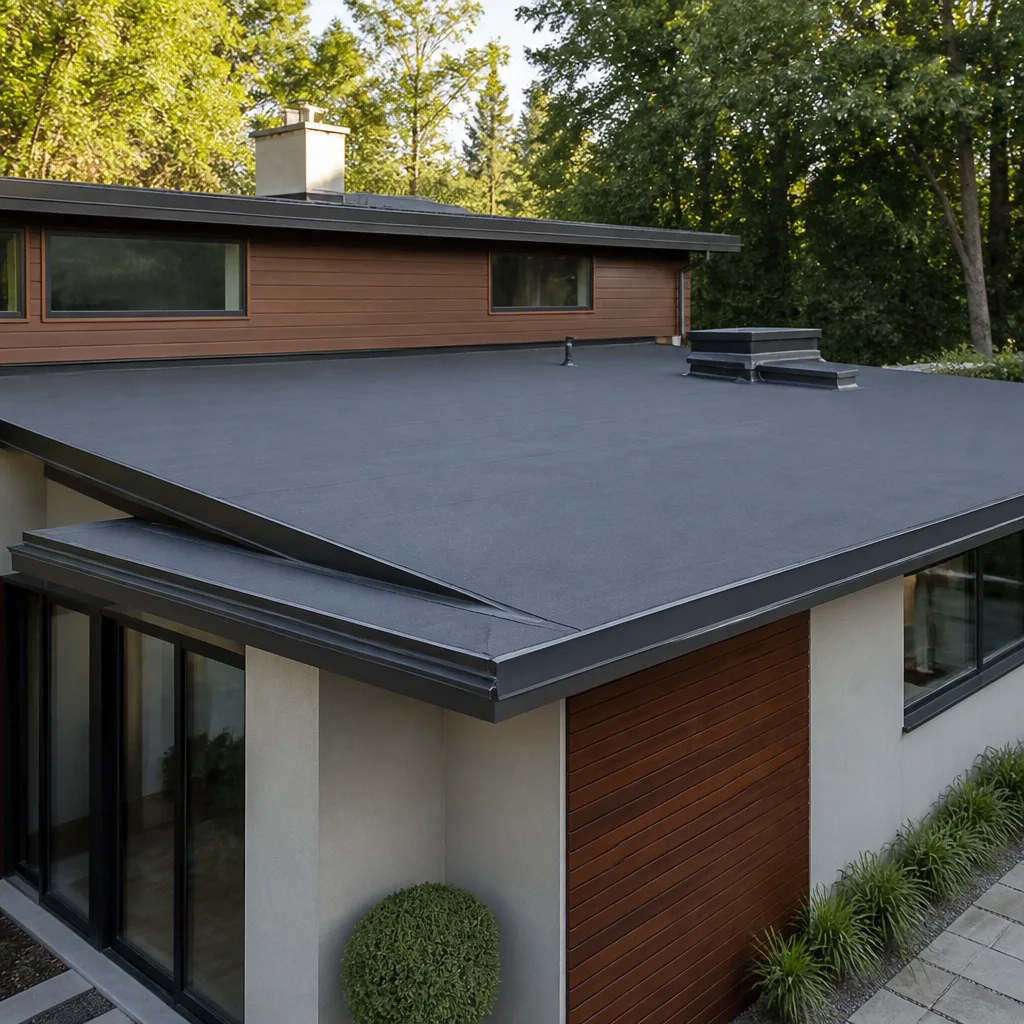 Flat & low-slope
Free roof inspection with deck photos before we talk money - GAF and Owens Corning certified installation
IKO Flashing Replacement: The Los Angeles Owner’s Guide
IKO flashing replacement in Los Angeles typically runs $350 – $900 installed, depending on how much flashing needs replacing and where it sits on your roof. We stock IKO-compatible flashing on our trucks and can handle most replacements in a single visit. Most homeowners discover failed flashing the same way: a water stain on the ceiling after a rain, or granules collecting in a gutter below a valley, or a drip near a chimney that wasn’t there last winter.
Flashing is the metal, usually galvanized steel or aluminum, that seals the joints where your roof meets a wall, chimney, skylight, or valley. IKO shingles perform well in Los Angeles, but the flashing that protects the transitions around them takes a beating from our sun and the occasional heavy downpour. When it fails, water gets behind the shingles and into the decking. That’s the problem we solve, and we solve it with written pricing before any work starts.
Which IKO Models This Applies To
Flashing replacement isn’t tied to a single IKO shingle line. Whether you have IKO Cambridge, Dynasty, Nordic, or Royal Estate shingles, the flashing is a separate component. What matters is the flashing type and location: step flashing along sidewalls, L-flashing at dormers, valley flashing where two roof planes meet, or pipe boot flashing around vents.
Here’s the compatibility gotcha most homeowners don’t know: IKO’s installation specs call for specific flashing dimensions depending on the roof pitch and shingle exposure. A valley on a low-slope LA roof (think 3:12 or 4:12) may need wider flashing, often 24 inches wide, while a steeper pitch can use standard 18-inch. If flashing is too narrow, water overshoots it during a heavy storm. That’s the kind of detail we check before quoting a price.
On the OEM-versus-aftermarket question: IKO doesn’t manufacture its own flashing. The industry standard is galvanized steel or aluminum flashing meeting ASTM and code requirements, including Los Angeles Building Code Chapter 15. We use code-compliant flashing that matches or exceeds what was originally installed. For coastal neighborhoods like Playa del Rey or San Pedro, we recommend a heavier gauge or aluminum where salt air accelerates corrosion. For most of the LA basin, standard 26-gauge galvanized steel does the job and lasts decades.
How to identify what you have: look for the flashing visible at the roof edge, around pipes, or where the roof meets a wall. If you can safely access it, measure the exposed width in inches. That measurement, plus the roof pitch, tells us what replacement is needed. If you’re not comfortable on a ladder, we’ll measure it during the estimate.
Styles & brands we work with
Signs Your IKO Flashing Replacement Is Failing
- Stains on ceilings or walls below a roof transition. This is the most common first sign. Water follows the failed flashing, travels along a rafter, and shows up somewhere interior. By the time you see the stain, the flashing has been leaking for a while, so the decking underneath needs a check too.
- Rust or corrosion visible on metal flashing. Los Angeles gets less rain than most of the country, but our UV exposure and the occasional marine layer near the coast still degrade flashing over time. Rust means the protective zinc layer is gone and the steel is oxidizing. That rust eventually becomes a hole.
- Lifted or separated flashing at walls and chimneys. Our temperature swings, especially in the Valley, cause repeated expansion and contraction. Over years, that can break the sealant bond and let flashing pull away from the wall. You’ll see a visible gap from the ground.
- Granules from shingles collecting in gutters near valleys. When flashing fails in a valley, water runs under the shingles, loosening them and washing granules downhill. If one section of gutter fills with granules after every rain, that’s a flashing problem upstream, not just old shingles.
- Damp spots on the underside of eaves or fascia boards. Water that gets past flashing doesn’t always show up inside right away. Sometimes it runs to the roof edge and soaks the wood there first. Soft or discolored fascia is a clue that water is escaping somewhere it shouldn’t.
See the difference
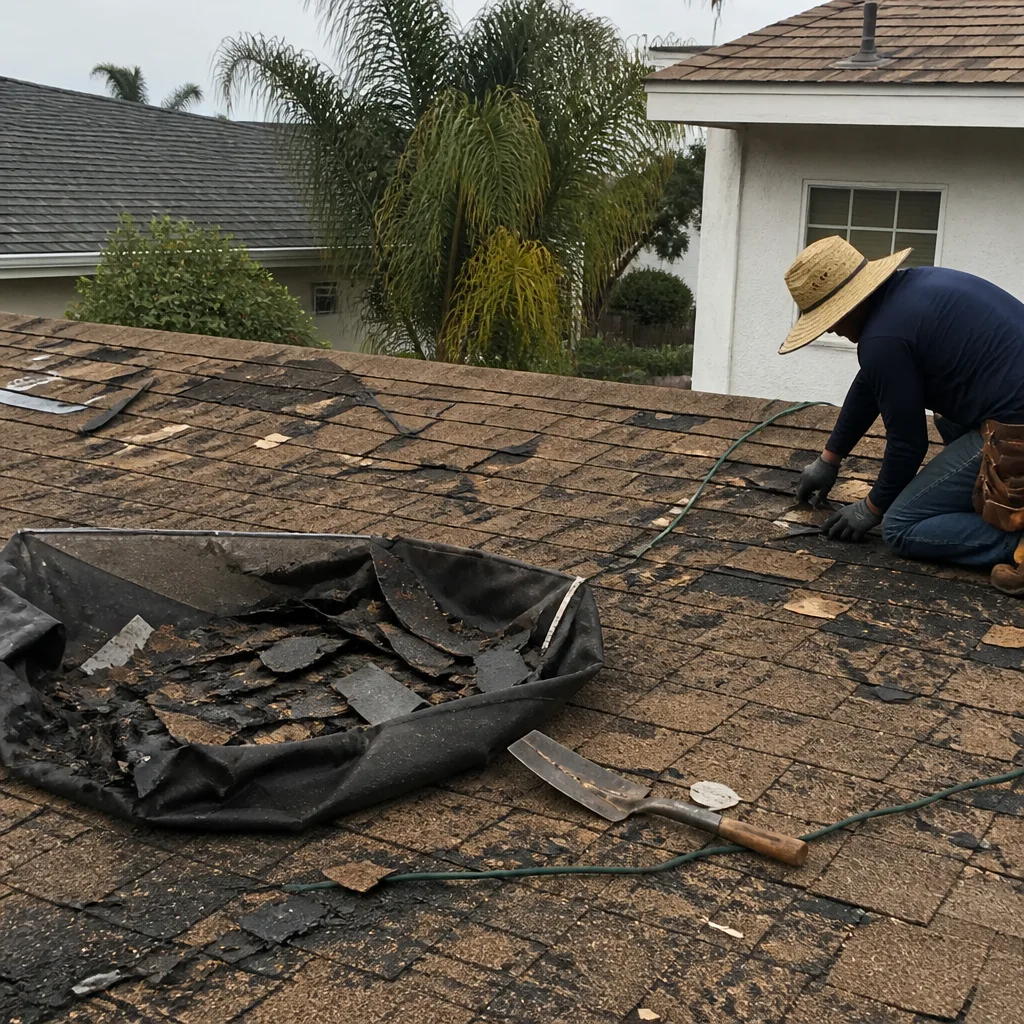 Before
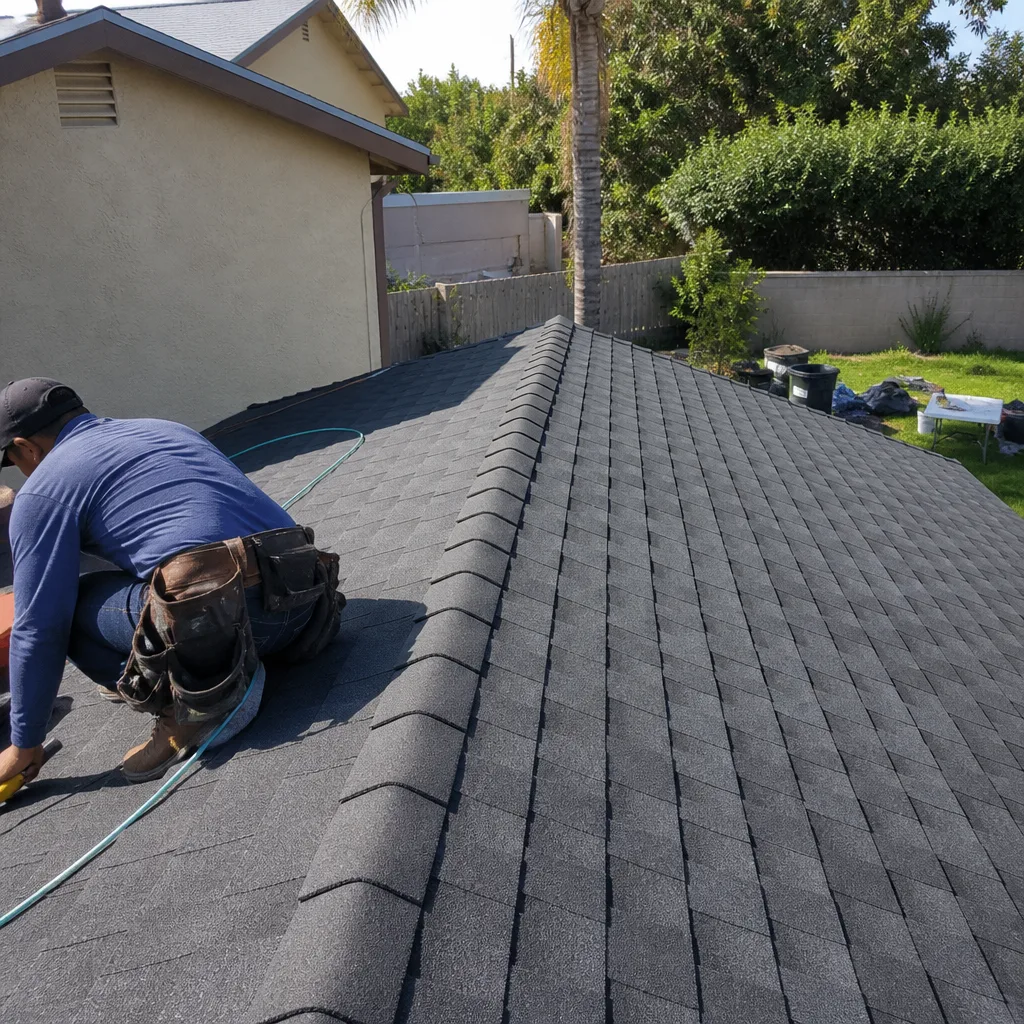 After
After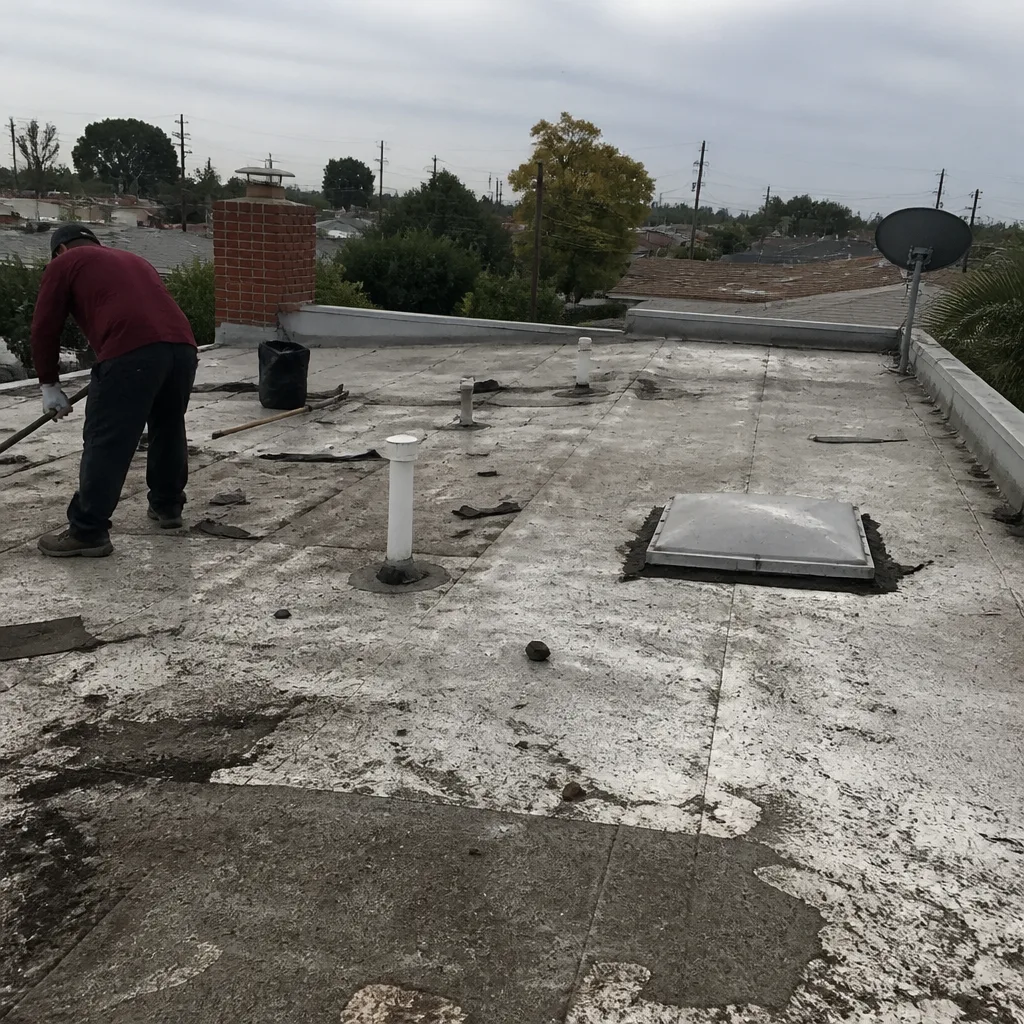 Before
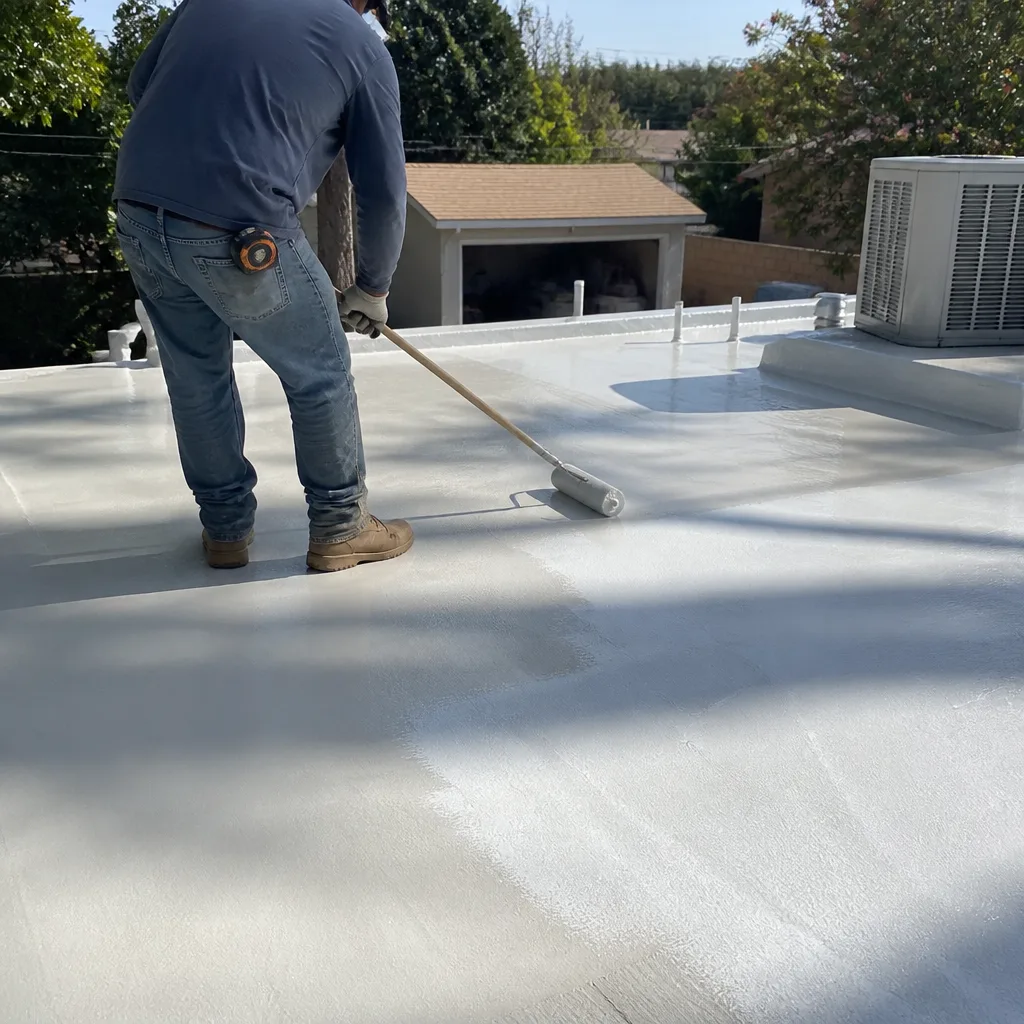 After
After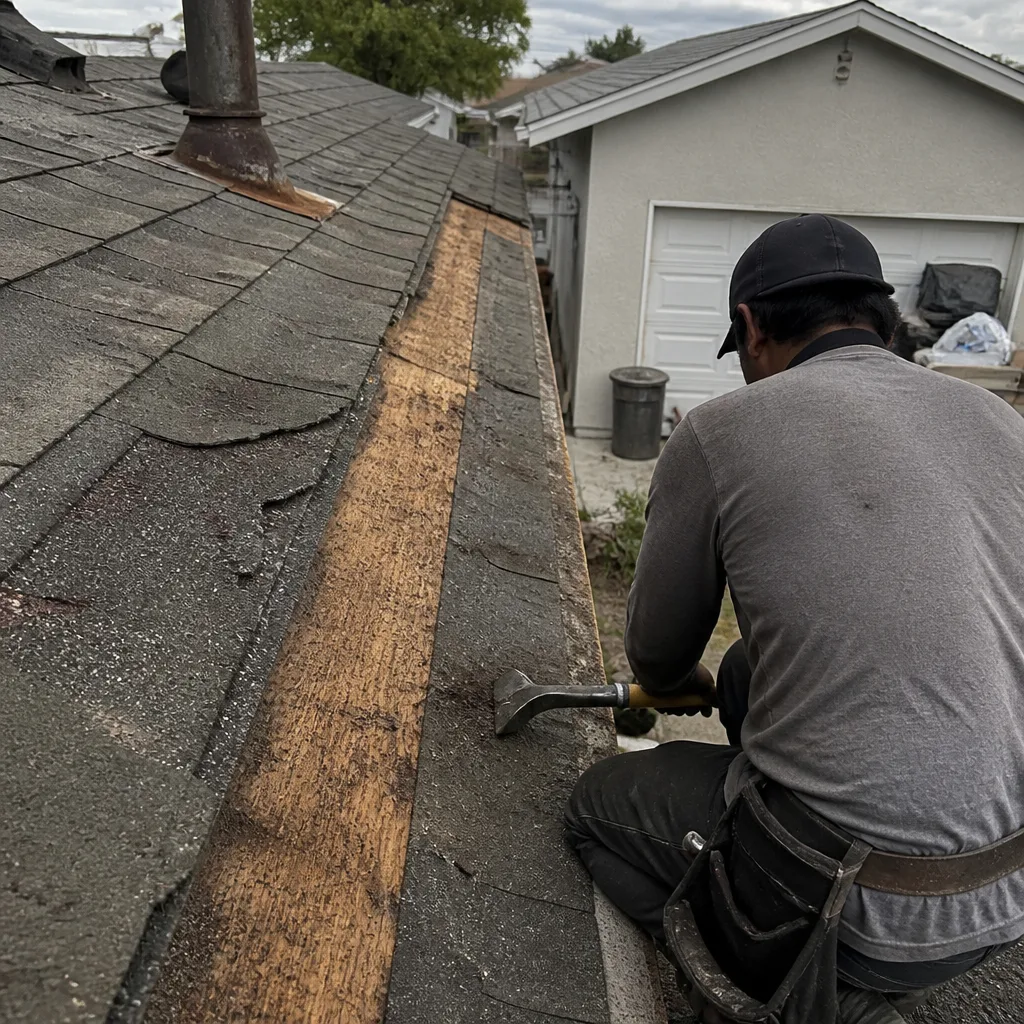 Before
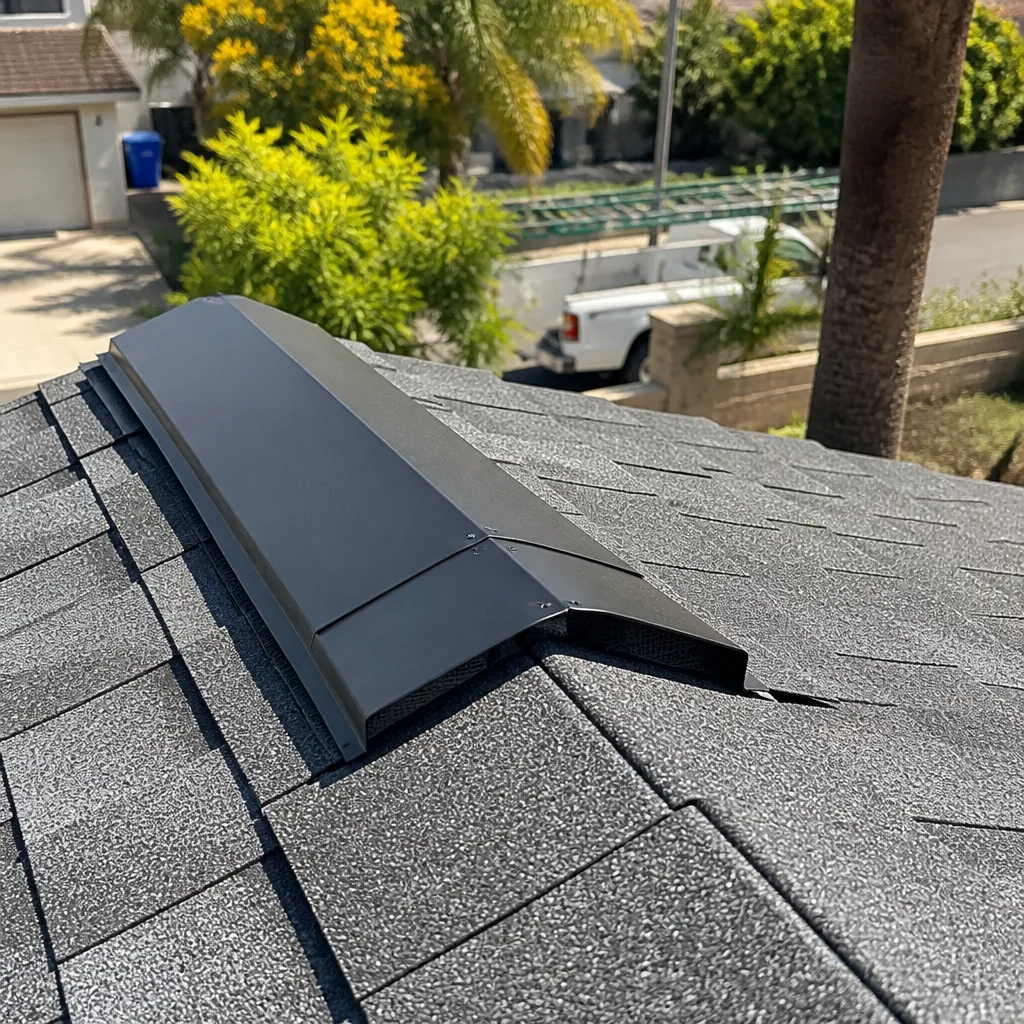 After
AfterReplacement Cost & What’s Included
In Los Angeles, IKO flashing replacement ranges from $350 for a simple pipe boot or small step flashing section up to $900 for a full valley flashing replacement with decking inspection and repair. The range comes down to three things: how many linear feet of flashing, whether the roof pitch makes access slower, and whether the underlying decking needs patching.
Here’s the breakdown we give every homeowner:
- Step flashing (sidewall): $18 – $28 per linear foot installed
- Valley flashing: $22 – $35 per linear foot installed
- Pipe boot replacement: $180 – $280 per unit installed
- Chimney flashing (front and sides): $400 – $850 depending on chimney size and access
- Decking repair (if needed): $3 – $5 per square foot, only done if we find rot during the job
Every price is written before any work starts, and that written price is what you pay. No change orders unless you approve them in writing first. Every flashing replacement is covered by the 365-Day Done Right Promise: if it’s not right within a year, we make it right at no cost to you. That’s a written guarantee, included with every repair, with a free second visit if anything fails.
DIY or Call Us?
You can safely do two things yourself: spot-check visible flashing from the ground with binoculars, and note where interior stains appear so you can describe the likely leak location when you call. That’s genuinely useful information for us.
What you should not do is get on the roof and pull up flashing. Flashing replacement means lifting shingles, cutting and bending metal to fit, and resealing with the correct sealant. On an LA roof in summer, the surface temperature can hit 150°F or more, and a slip on a sloped surface isn’t worth the money saved. If the flashing is near a chimney or a second-story wall, the risk goes up from there. A roof should be the last thing on your mind, let’s keep it that way. Call (213) 521-8272 and we’ll send a technician whose name and photo you’ll have before they arrive.
FAQs
Galvanized steel flashing on an IKO roof in Los Angeles typically lasts 20 – 30 years, while aluminum flashing can go 30 – 40 years, because our dry climate and moderate rainfall extend metal life. Coastal areas like Venice or Playa del Rey shorten that timeline due to salt air, so those homes may need replacement closer to the 15-year mark. If your flashing is original to a roof installed before 2005, it’s worth a professional inspection. Call (213) 521-8272 to have it looked at.
Small gaps at flashing joints can sometimes be resealed, but once metal is rusted through, bent, or separated from the wall, repair is a temporary patch that will fail again, and replacement is the honest call. We’ll tell you which option makes sense for your roof, and we’ll give you a written price either way before any work starts.
A typical flashing replacement takes 2 – 4 hours, including removing the old flashing, installing the new metal, re-securing the shingles, and sealing the transitions. Larger jobs like full chimney flashing or multiple valleys can run 4 – 6 hours. You’ll know the timeframe before we start, and it’s included in your written estimate.
Our Los Angeles trucks carry standard step flashing, valley flashing, pipe boots, and the sealants needed for IKO roof systems, so most replacements happen on the first visit. We also work with GAF, Owens Corning, and CertainTeed systems, but if a specific flashing profile needs to be ordered, we’ll tell you that upfront and include the lead time in your written quote. Call (213) 521-8272 for a free estimate.
Written by Grant Whitlock, Owner, Mercer Roofing Co at Mercer Roofing Co Los Angeles, serving Los Angeles and nearby areas.