

Last updated October 17, 2026
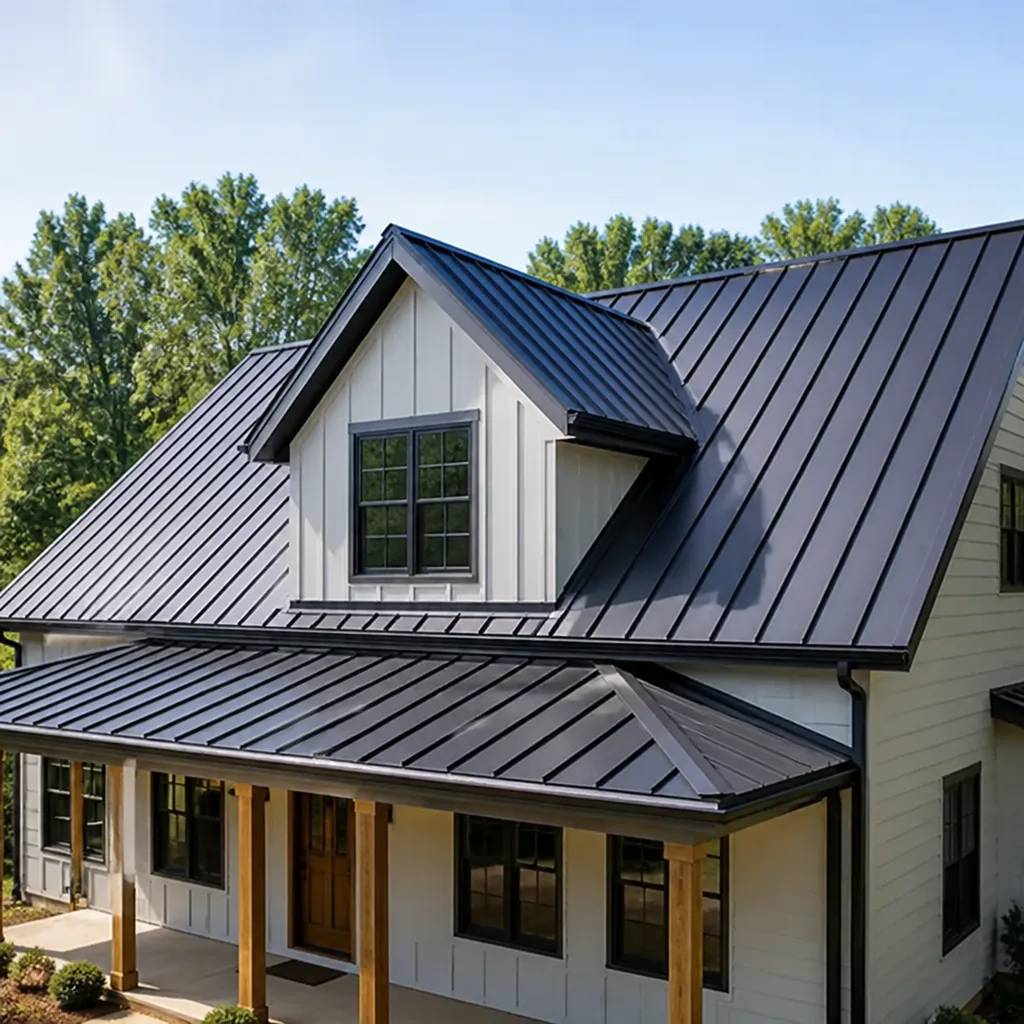 Metal roofing
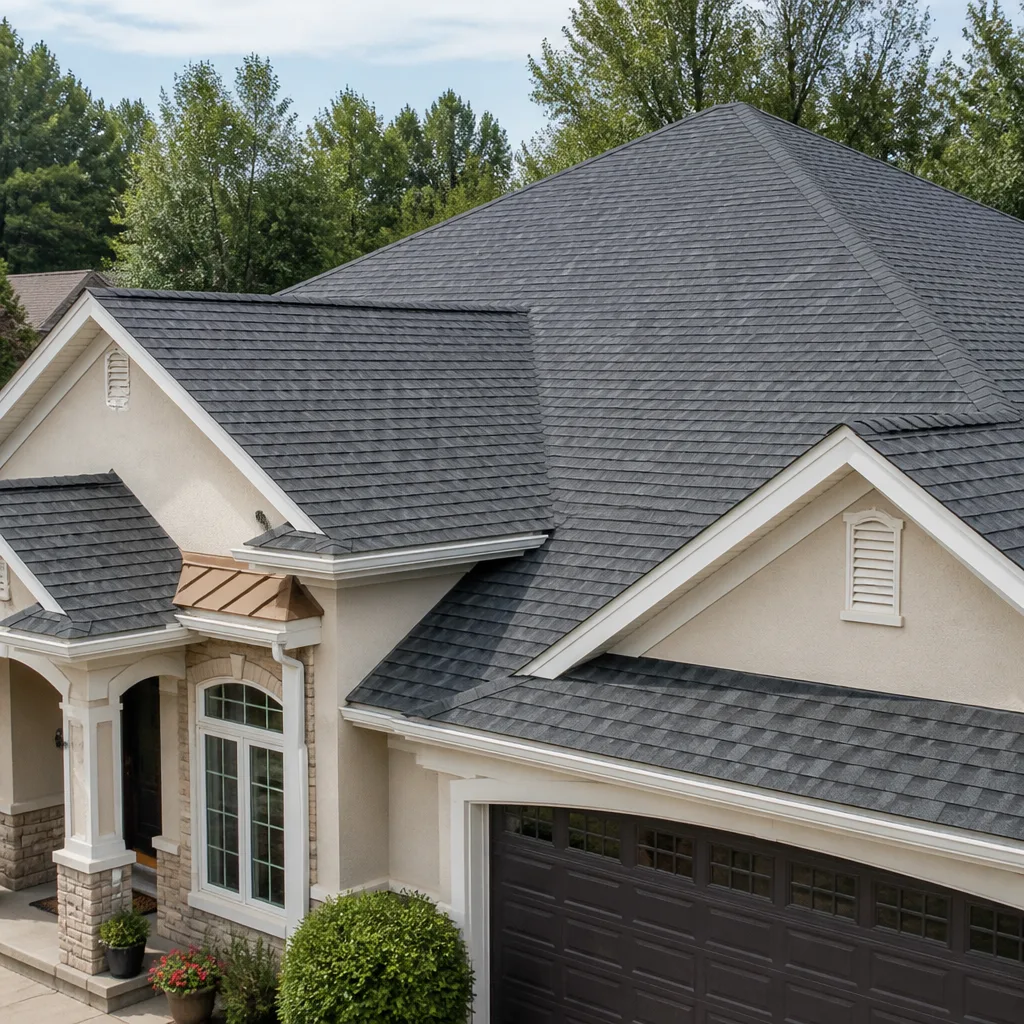 Architectural shingles
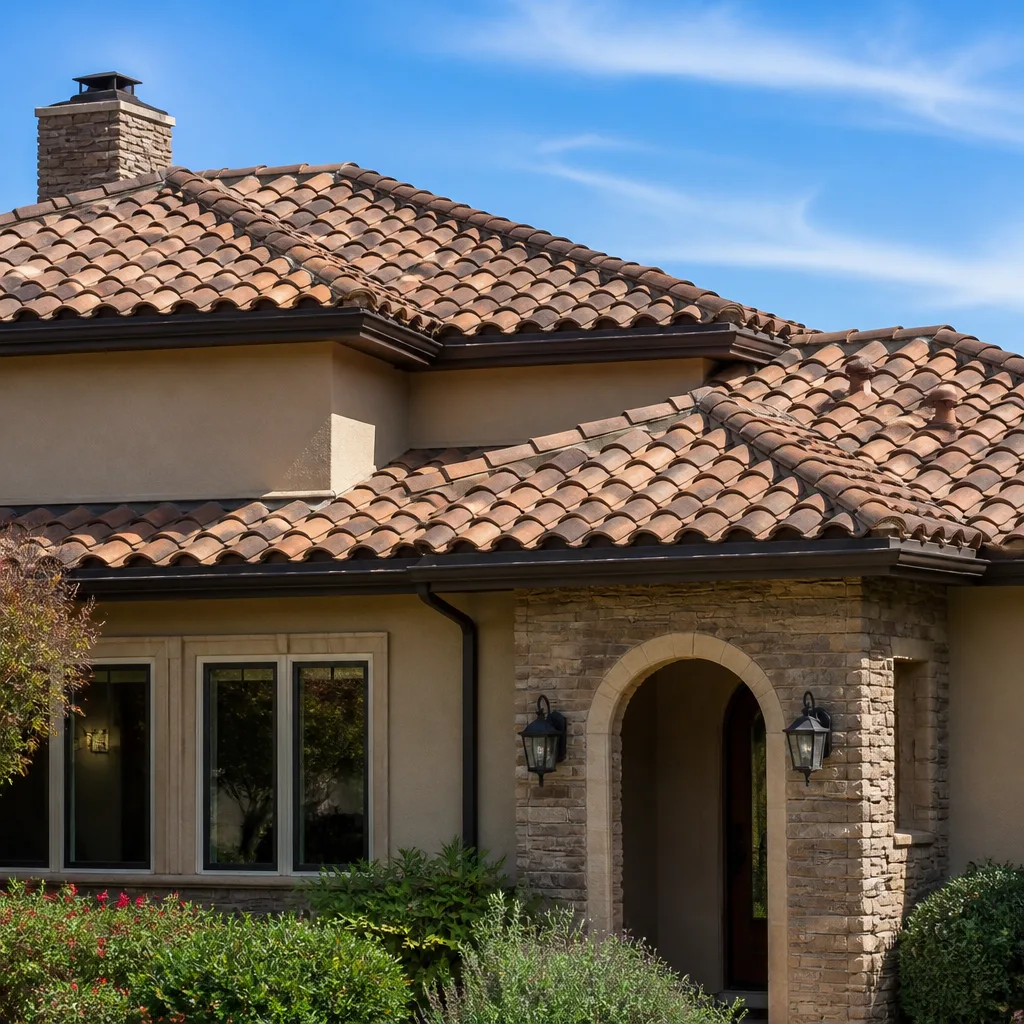 Tile roofing
 GAF
GAF Owens Corning
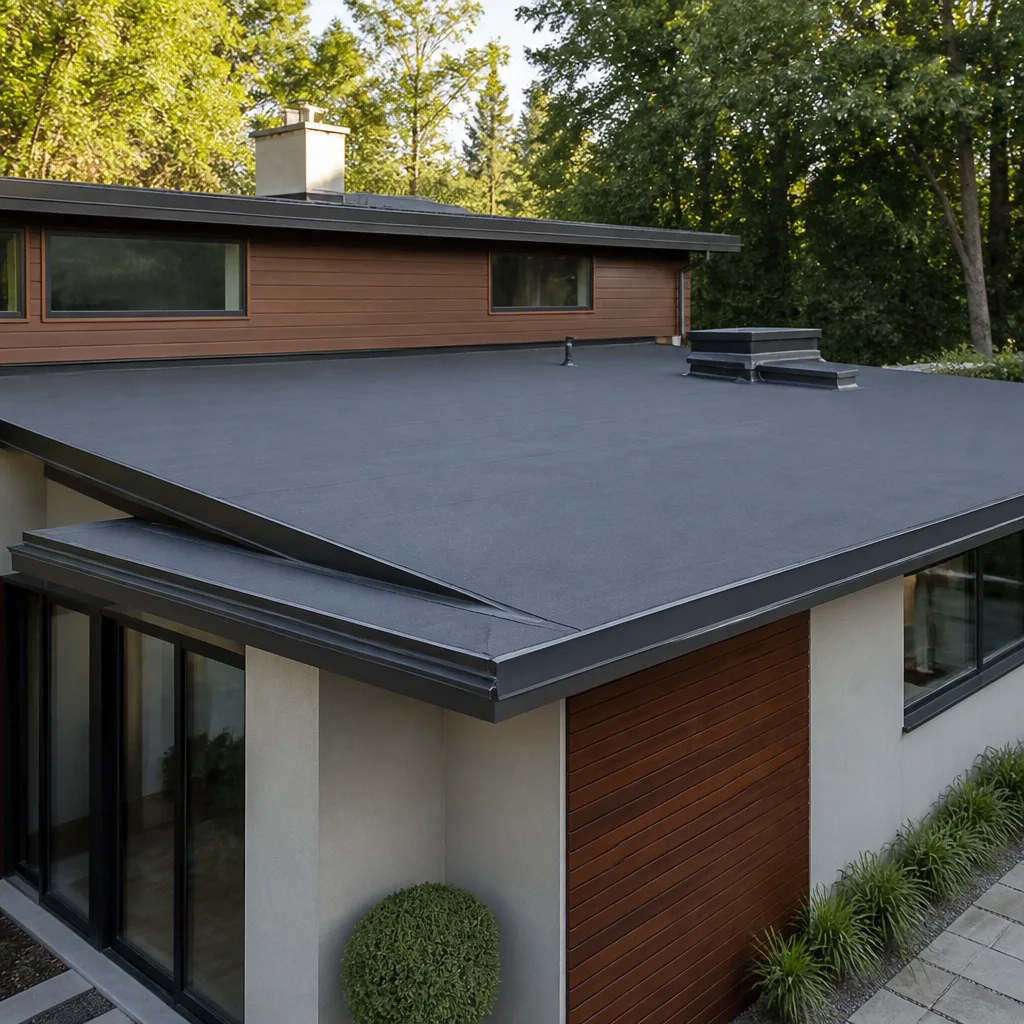 Flat & low-slope
Free roof inspection with deck photos before we talk money - GAF and Owens Corning certified installation
Seasonal Roofing Care for Los Angeles: Year-Round Homeowner’s Guide
Your roof in Los Angeles absorbs more cumulative UV radiation in a single July than a Chicago roof absorbs all year. That invisible, relentless oxidation is the real story of roofing here, and it’s exactly what fails when November rain finally arrives. This guide explains the two-season cycle that actually governs LA roofs, what to check at the end of each season, and how to stay ahead of damage that most homeowners never see until water is already inside the house. For a deeper dive, see The Complete Guide to Roofing in Los Angeles. You’ll learn what UV does to different roofing materials, how Santa Ana winds create a specific checklist, and why February is the second inspection window most people in Los Angeles miss entirely.
Styles & brands we work with
Quick Answer
Seasonal roof care in Los Angeles comes down to two cycles: a long UV-oxidation season from roughly April through October, and a concentrated rain season from November through March. The right maintenance schedule is a thorough end-of-summer inspection in October (before first rain) and a post-storm check in February or March (after the heaviest downpours). Expect to budget $150 – $450 for a professional seasonal inspection and minor maintenance, and $300 – $900 if a year of UV exposure has created the need for resealing or small repairs.
Table of Contents
- Why UV Radiation, Not Rain, Is Your Roof’s Biggest Enemy in Los Angeles
- Preparing Gutters and Downspouts for LA’s Flash-Rain Season
- The February Inspection Window Most LA Homeowners Miss
- The Santa Ana Season Checklist: Wind-Specific Roof Prep
- How Solar Panels Change Your Seasonal Roof Maintenance
- What Each Roofing Material Needs at Season’s End
- Common Mistakes to Avoid
- When to Call a Professional
- Frequently Asked Questions
- The Bottom Line
Why UV Radiation, Not Rain, Is Your Roof’s Biggest Enemy in Los Angeles
Here’s the counterintuitive truth about roofing in Los Angeles: the sunny days do more cumulative damage than the rainy ones. UV radiation breaks down the chemical bonds in roofing materials at the molecular level. For asphalt shingles, that means the oils that keep them flexible slowly cook off, leaving the surface brittle, faded, and prone to cracking. For TPO membranes (common on flat commercial and some residential roofs in LA), UV exposure breaks down the plasticizers, causing the surface to become chalky and eventually split at the seams. For clay tile, the tile itself is UV-resistant, but the underlayment beneath it is not.
We’ve seen roofs in places like Sherman Oaks or the San Fernando Valley where summer temperatures regularly exceed 95°F show measurable granule loss on south-facing slopes by late September. Those granules aren’t cosmetic. They’re the shingle’s UV shield. Once they wash off, the asphalt layer underneath is directly exposed, and the clock starts ticking much faster.
Visible Signs That a Summer of UV Has Done Damage
- Granule accumulation in gutters: If you clean your gutters in October and find a heavy layer of gritty black or gray granules, that’s not normal wear. That’s UV-oxidized shingle surface washing away. A small amount is expected. A thick paste of granules means the shingle is degrading faster than it should.
- Curling or cupping shingle edges: Losing oils from UV exposure makes shingles shrink. When they shrink unevenly, the edges lift. You’ll notice this first on south and west-facing slopes, where afternoon sun hits hardest.
- Fading or “bald spots” on the roof surface: Look for areas that appear lighter in color or visibly patchy. That’s typically where afternoon sun has concentrated the most UV load, often near reflected glare from neighboring windows or white walls.
- Chalky residue on flat roof membranes: If you have a TPO or modified bitumen flat section and you can wipe a white, powdery substance off with your finger, the membrane’s UV inhibitors are degrading. Left unaddressed, this leads to seam failure and leaks.
- Brittle flashing sealant: The caulk and sealant around vents, skylights, and chimneys hardens and cracks under UV exposure. Run your finger along a bead of sealant. If it feels like hard plastic instead of slightly pliable rubber, it’s done.
What to Do at the End of the UV Season (October)
- Inspect the south and west slopes first. These get the most direct afternoon sun in Los Angeles. If there’s damage, it will show here first.
- Check every flashing point. That means the metal or rubber seals around the chimney, plumbing vents, skylights, and any roof penetrations. If the sealant has cracked, has gaps, or has pulled away from the surface, it needs scraping and resealing before rain arrives.
- Clear the valleys. The V-shaped channels where two roof planes meet collect leaves, dust, and debris all summer long. In Los Angeles, that’s frequently a mix of eucalyptus bark, bougainvillea petals, and dust. When rain comes, a clogged valley diverts water sideways under the shingles instead of down the valley to the gutter.
- Document what you see. Take photos from a ladder or the ground with a zoom lens. Having a record from October makes the February inspection much more useful, because you’ll be able to compare and see what changed.
If any of this sounds like more than you want to handle from a ladder, that’s exactly what a professional seasonal inspection is for. A qualified roof repair specialist in Los Angeles will spend 60 to 90 minutes walking the roof, documenting conditions, and producing a written report. At Mercer Roofing Co Los Angeles, we provide that written report with photos and a written price for any recommended work before anything is scheduled. You decide what gets done and when.
Preparing Gutters and Downspouts for LA’s Flash-Rain Season
Los Angeles doesn’t get gentle, all-day soaking rains. It gets flash events: short, intense downpours where a significant percentage of the season’s total rainfall can fall in a few hours. A February 2024 storm dropped more than 4 inches of rain on parts of Los Angeles in under 24 hours. For a roof drainage system sized for a dry climate, that’s a stress test, not a normal rain event.
The difference matters because gutters and downspouts in LA are often undersized for the intensity of the rain they actually receive. A system that handles a slow Chicago drizzle just fine will overflow, back up, and send water where it doesn’t belong during a Pacific atmospheric river event.
Gutter Prep for Flash Rain: A Numbered Checklist
- Clean gutters twice per season minimum, not once. October before the rains start, and again in January. The second cleaning catches whatever the early storms pushed down from the roof. In the hills around Laurel Canyon or the Hollywood Hills, fire-season ash mixes with water and forms a cement-like sludge that’s harder to remove if it sits for weeks.
- Check downspout discharge points. The water needs to exit at least 3 to 5 feet away from the foundation. If a downspout dumps right at the base of a wall, a flash-rain event will push water against the foundation and potentially into the crawlspace or basement (yes, some LA houses have them). Extend or redirect as needed.
- Test the system with a hose. After cleaning, run water through the gutters and watch what happens at each downspout. A slow trickle at the bottom when you’re spraying full force means there’s a partial clog somewhere in the vertical run. In our experience, it’s usually a tennis ball, a bird’s nest, or a rusted-out joint from the rust belt of your roof’s least-sunny corner.
- Check gutter slope. Gutters should slope about 1/4 inch per 10 feet toward the downspout. Over time, hangers loosen and sections sag. A sagging gutter becomes a pond, and a pond becomes a mosquito breeding ground in Los Angeles – another reason this matters outside of leak prevention.
- Inspect the drip edge. The metal strip that runs along the roof edge should overhang into the gutter by about 1/2 to 3/4 inch. If it’s been pulled back by wind or was never installed correctly, water can run behind the gutter and down the fascia board, rotting it from the inside.
Downspout Upgrades Worth Considering
- Leaf guards and gutter guards: In canyons with heavy tree cover (Studio City, Beachwood Canyon, parts of Pasadena), guards reduce the frequency of clogs. But they don’t eliminate the need for cleaning. Fine debris and pine needles still get through most systems.
- Wider downspouts: If your home was built in the 1960s or 1970s with 2×3-inch downspouts and you experience overflow during heavy rain, upgrading to 3×4-inch downspouts is one of the highest-value drainage improvements a Los Angeles homeowner can make. This is a straightforward retrofit for any roofing company in Los Angeles and typically costs less than a repair bill after a major overflow event.
The February Inspection Window Most LA Homeowners Miss
Here’s the seasonal pattern we see at Mercer Roofing Co Los Angeles every single year: October inspections are common, because the first rain is coming and people are paying attention. February and March inspections are rare. And that’s a mistake, because by February, the roof has already been through the thing the October inspection was preparing it for. The stresses are no longer hypothetical. They’ve happened. The February inspection is when you find out what actually failed, not what might fail.
In Los Angeles, the heaviest rain tends to arrive between late December and late February. By early March, the atmospheric river events are usually winding down. The roof has taken its maximum seasonal water load. That’s the moment to assess what happened.
What to Look For in the Post-Storm Inspection
- Interior ceiling stains: Check every room, including closets and the garage. A small water stain often means a small leak that will get bigger next season if the root cause isn’t addressed. Don’t paint over a stain until the source is found. The stain will come back.
- Tile slippage on clay roof systems: Heavy rain saturates the underlayment, which softens the soil-like bedding that holds clay tiles. When things dry out, tiles can shift. A shifted tile on a post-storm roof is a direct warning that the underlayment is compromised beneath it.
- New granules in the gutter or at downspout exits: Compare the volume to what you saw in October. If you’re seeing heavy granules in February, the shingles are degrading during the rain season, not just the UV season. That suggests advanced age or a defect that’s accelerating wear.
- Soft spots or “spongy” decking: If water has gotten past the roofing material and sat on the wood decking for even a few weeks, the wood begins to rot. A soft feel underfoot (if you’re walking the roof) or visible sagging between rafters from inside the attic is a sign you have a decking replacement issue, not just a surface repair.
- Mold or mildew in attic insulation: This is the quiet one. A slow leak that never shows up as a visible interior stain can still be humidifying your attic enough to grow mold on the insulation. If you notice a musty smell in the attic in February, call a professional. Don’t wait for a stain.
Our recommendation: set a calendar reminder for the first week of March. If you have an October inspection report, use it as a baseline and compare. If you don’t, now is the time to start the cycle. A roof repair in Los Angeles that’s caught in March is almost always cheaper than the same repair caught as an emergency in December of the following year.
The Santa Ana Season Checklist: Wind-Specific Roof Prep
Santa Ana winds are a Los Angeles roofing condition that most national seasonal maintenance guides never mention. They blow from the desert toward the coast, typically between September and January, with the strongest events in October and November. Gusts regularly exceed 40 mph, and in the canyons and passes (the 5 corridor through Sylmar, the 118 through Porter Ranch, the 210 through the San Gabriel foothills), gusts of 70 mph or more are not unusual.
Wind damage on roofs doesn’t happen the way most people think. It’s rarely a single dramatic event where a whole roof peels off. More commonly, wind gets under a slightly loose edge and works it back and forth over hours, gradually breaking the seal and allowing more wind underneath. Each Santa Ana event creates small failures that the next rain event exploits.
Santa Ana Season Checklist: Step by Step
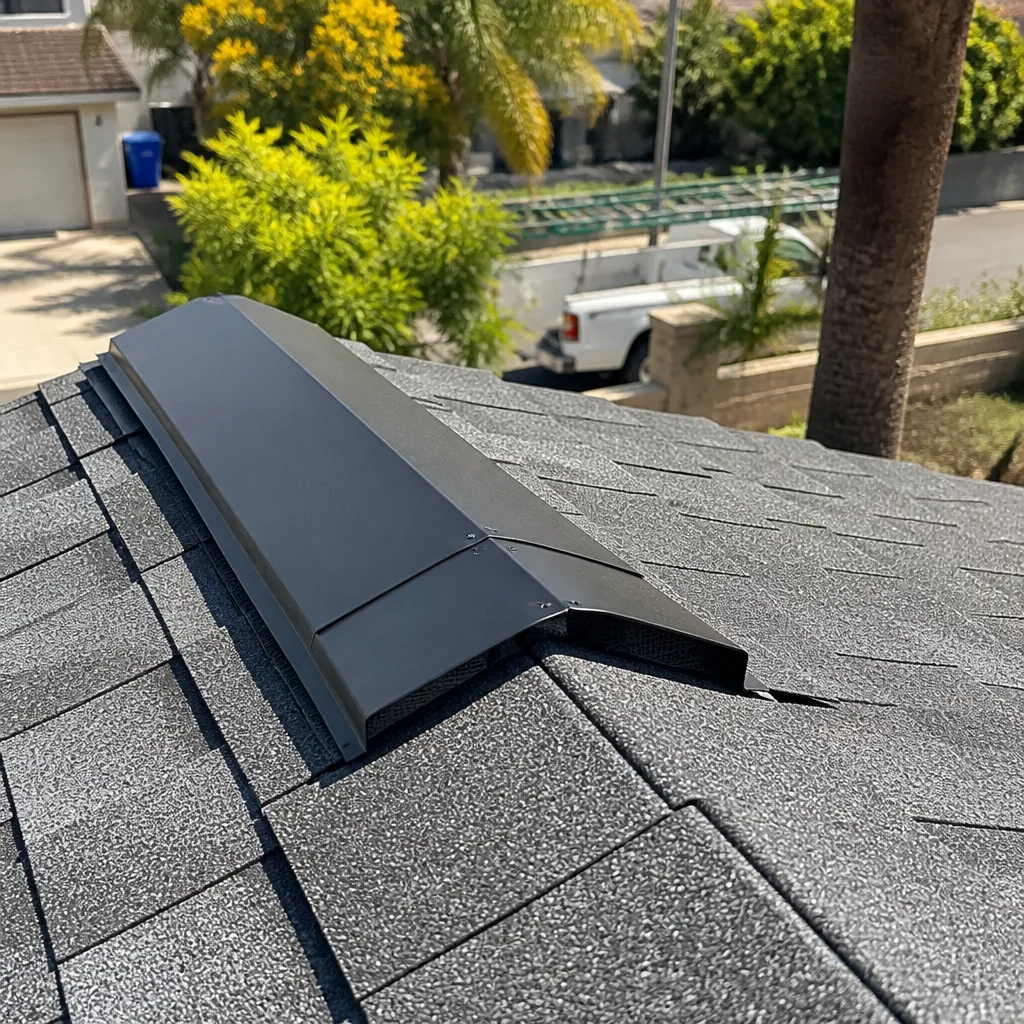
- Secure or note loose ridge caps. Run along the peak of your roof (from a ladder, if safe to do so) and press gently on each ridge cap. If any move independently of the shingle below, the seal is broken. In a Santa Ana event, a loose ridge cap becomes a sail. Once it goes, it usually takes a section of shingles with it.
- Clear debris from valleys. During Santa Ana season, debris accumulation isn’t just from trees overhead. Wind carries debris sideways, including palm fronds, tumbleweed-like brush, and plastic debris from bins. Anything sitting in a valley becomes a dam when rain follows the wind event.
- Check flashing adhesion at every penetration. The combination of high wind and low humidity dries out sealants faster than UV alone. If a piece of flashing is loose enough to lift in a 50 mph gust, it will. And it will leave a gap that becomes a leak during the next rain.
- Look for lifted shingle edges after each major wind event. If you can see shingles that appear “ruffled” or lighter at the edges from the ground, get a closer look. The seal strip has likely broken. This is a quick fix in October and a much bigger repair in January if it’s ignored.
- Check for impact from windborne debris. After a Santa Ana event, look for things that hit the roof. Neighbor’s roof tiles, small branches, even plastic furniture. What looks like no big deal from the ground may have cracked a tile or punched through a shingle. If you hear something hit the roof during a wind storm, make a note and check it after.
For homes in wind-exposed locations (the Hollywood Hills, the Verdugo foothills, the western edge of the San Fernando Valley), we recommend scheduling a fall inspection specifically focused on wind resistance. That’s not a standard part of every seasonal checkup, but it is exactly the kind of thing that separates a roof that survives Santa Ana season from one that needs an emergency roof installation in Los Angeles before winter’s first big rain.
How Solar Panels Change Your Seasonal Roof Maintenance
Solar panels are the fastest-growing roof modification in Los Angeles. The city has led California in residential solar installations for years, and the percentage of homes with panels continues to climb. What most homeowners don’t realize until they have them: solar panels fundamentally change how you inspect, maintain, and repair your roof. The roof doesn’t stop needing attention. It needs a different kind of attention.
Panels create three new conditions on a roof that didn’t exist before installation. First, they shade the roof surface beneath them, which changes the UV exposure pattern. The shaded area ages differently than the exposed area. Second, they collect debris underneath the panel edges and around the mounting feet, creating areas where moisture sits longer after rain. Third, each mounting point is a roof penetration, and each penetration is a potential leak point that needs the same flashing inspection as a vent or chimney.
Seasonal Solar-Specific Maintenance Steps
- Inspect the areas around mounting feet twice per year. The mounting feet are sealed with flashing and sealant at installation. UV and heat cycles degrade that sealant. By the end of year three, many installations we see in Los Angeles have at least one mounting foot that’s begun to show sealant cracking.
- Clear debris from under and around panel edges. Palm fronds, eucalyptus leaves, and roof granules accumulate where the panel’s bottom edge meets the roof surface. That debris holds moisture against the roofing material and accelerates degradation in that specific spot, creating a weak point directly beneath the panel.
- Check the wiring conduit runs. Solar conduit lines run across the roof, clipped to the surface every few feet. Each clip is a penetration. Loose conduit that flaps in Santa Ana winds will eventually work a clip loose, and the clip hole becomes a leak point.
- Document your roof condition before installation. If you’re considering solar and your roof is more than 10 years old, you want a roof assessment before panels go on. Replacing a roof with panels already installed adds $1,500 – $3,000 to the job, because the panels must be removed and reinstalled. In some cases, it makes more sense to replace the roof first. A Mercer Roofing Co Los Angeles home inspection includes exactly this kind of forward-looking assessment.
- Schedule visual checks from the ground or via drone. Panels make walking the roof harder and sometimes unsafe. A roof inspection can still be comprehensive without putting a foot on the surface. We regularly use drone photography to document paneled roofs in Los Angeles, capturing conditions under and around the array that would otherwise be invisible from the ground.
Solar panels are a fantastic investment in Los Angeles, and they can extend the life of the roof surface beneath them by shading it from UV exposure. But they also concentrate moisture in new ways and create new penetration points. Treat a paneled roof as a roof that needs more attention to specific details, not less attention overall.
What Each Roofing Material Needs at Season’s End
Los Angeles rooftops carry a wider mix of materials than almost any other major US city. Asphalt shingles dominate the hills and canyons, flat membranes cover much of the mid-century housing stock, and clay tile is everywhere in the Spanish and Mediterranean styles that define entire neighborhoods. Each material responds to the LA two-season cycle differently, and each requires a slightly different end-of-season check.
Asphalt Architectural Shingles
- What the UV season does: Dries out volatile oils, accelerates granule loss on south and west slopes, causes fading and eventual brittleness.
- What the rain season does: Washes off released granules, exposes the asphalt layer, creates conditions for algae growth in shaded, moisture-prone areas (especially canyon homes under heavy tree cover).
- End-of-season check: Granule volume in gutters, curling at edges, broken seal strips after wind, algae staining that’s more than cosmetic.
- Long-term strategy: In Los Angeles, asphalt shingle roofs typically last 18 – 25 years depending on slope orientation. South-facing slopes may need replacement 3 – 5 years before the north-facing slope on the same house. Ask any contractor to assess slopes separately, not the roof as a whole. Brands like GAF and CertainTeed publish LA-specific oxidation test data worth reviewing before choosing a replacement product.
Clay and Concrete Tile
- What the UV season does: Very little to the tile itself. Tile is fired at 2,000°F. LA sun does not bother it. But the underlayment beneath the tile takes direct UV exposure at the open gaps and edges where tiles meet ridges, hips, and valleys.
- What the rain season does: Saturates the underlayment’s exposed edges. Repeated wet-dry cycles cause the underlayment to crack and pull away from flashing points, which is when water gets under the tile system and into the decking.
- End-of-season check: Look for tiles that have shifted or slipped, cracked tiles (from impact or thermal stress), missing mortar at ridge and hip joints, and visible gaps where the underlayment has pulled back at tile edges.
- Long-term strategy: A clay tile roof on a Los Angeles home should outlast the underlayment beneath it. Expect to replace the underlayment (a “lift and relay” project) every 30 – 50 years. If you own a 1960s Spanish-style home in neighborhoods like Hancock Park or the flats of Beverly Hills, and the underlayment has never been replaced, you’re likely due. Boral tile is a common replacement or supplement product we work with for exactly this kind of project.
TPO and Flat Membrane Roofs
- What the UV season does: Breaking down the membrane’s UV inhibitors, causing the surface to chalk and eventually crack at stress points like seams, penetrations, and clamping rings.
- What the rain season does: Exposes any seam failure or puncture with a vengeance. Flat roofs hold water by design (they have ponding areas), but if the membrane below the ponding area has a crack, the water finds it quickly.
- End-of-season check: Walk the flat section (or have it inspected) and look for chalking, visible seam separation, standing water that doesn’t drain within 48 hours, and any spot where the membrane has lifted away from the decking or flashing.
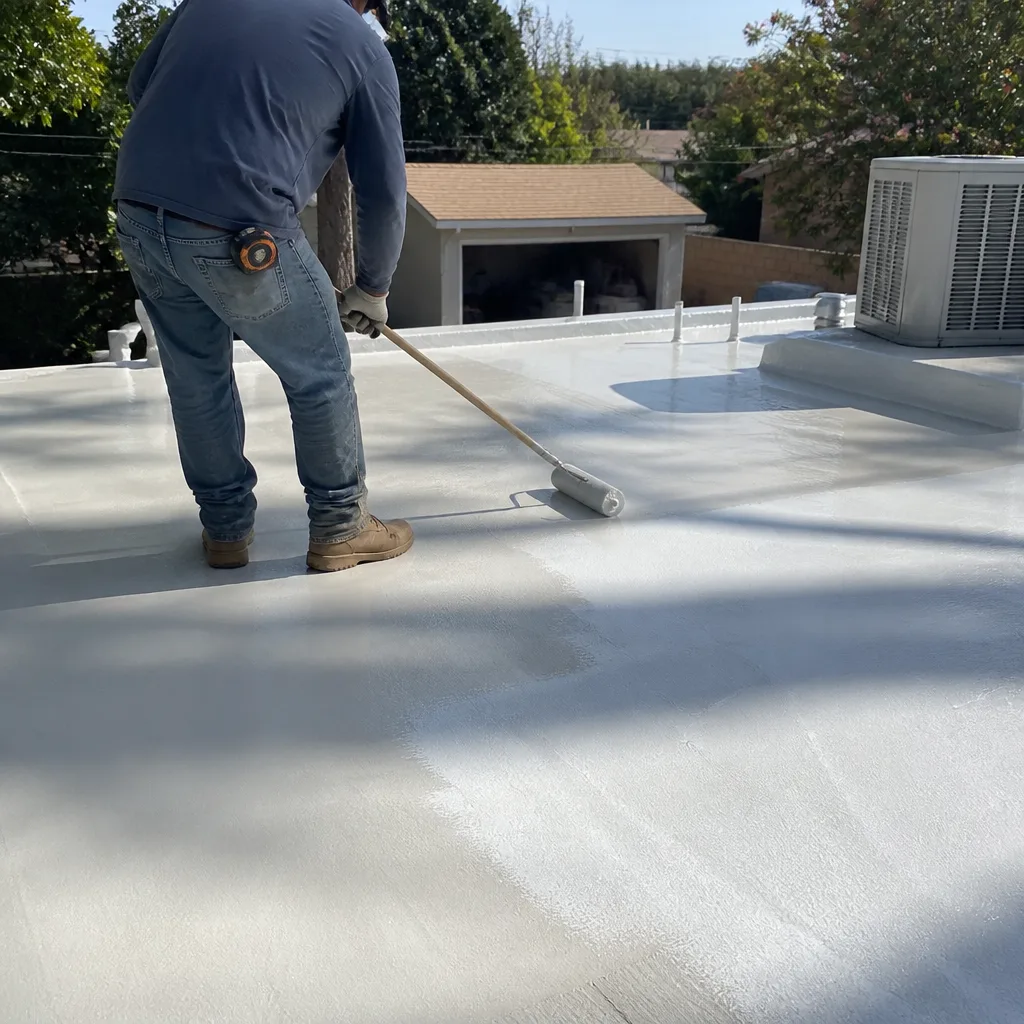
- Long-term strategy: TPO membranes in Los Angeles typically last 15 – 25 years depending on installation quality and UV exposure. Reflective coatings can extend life by reducing surface temperature, and they’re worth considering on roofs with full sun exposure. When a TPO roof fails in Los Angeles, it’s almost always at the seams, not in the field of the membrane. Seam inspection is the single most valuable thing you can do seasonally.
Mod-Bit and Built-Up Roofs
- What the UV season does: Dries out the surfacing layer (gravel, coating, or cap sheet), exposing the asphalt layers below to direct UV damage.
- What the rain season does: Forces water into any crack or gap in the surfacing, causing blisters and delamination.
- End-of-season check: Look for visible blistering or “alligatoring” of the surface, areas where the gravel has washed away leaving bare asphalt, and cracking around roof drains and scuppers (the openings that let water drain from a flat roof).
- Long-term strategy: These older systems are common on 1920s – 1950s homes in Los Angeles. Many are at or past their design life. When they need replacement, a modern TPO or modified bitumen system from a brand like Tamko provides better UV resistance and simpler repairs.
Common Mistakes to Avoid
- Following a four-season maintenance calendar from another climate. A Michigan roof care schedule tells you to worry about ice dams and freeze-thaw cycles. None of that applies in Los Angeles. If you’re Googling “roof winterization” and following advice about snow removal, you’re using the wrong playbook entirely.
- Cleaning gutters only once per year in late fall. In LA’s two-season cycle, gutters fill with summer dust and debris by October, then fill again with rain-pushed material by January. Two cleanings, minimum.
- Assuming clay tile needs no maintenance. The tile doesn’t, but the underlayment beneath it does. A $400 inspection that catches underlayment failure early can prevent a $15,000 lift-and-relay later.
- Ignoring the south and west slopes because “the roof looks fine from the front.” The street-facing slope in Los Angeles is often the north slope. The south and west slopes are where UV damage concentrates, and they’re also the slopes least visible from the curb. Check them specifically.
- Painting over a ceiling stain without investigating the roof. The stain is the roof’s way of telling you something. If you cover it with Kilz and paint, the roof will find another way to tell you, and next time the message will be more expensive.
- Waiting until the first big rain to check for leaks. By the time a roof leak is visible inside the house during a storm, it’s been developing for months. The leak you see in January started as a small gap in October. Catch it in October.
- Not documenting your October inspection findings. The February comparison is only useful if you have a baseline. Photos and a written report make the post-storm check a comparison exercise, not a guessing game.
When to Call a Professional
Some seasonal roof care tasks are safely DIY: cleaning twigs and leaves from valleys you can reach from a ladder, documenting visible conditions with photos, checking gutter slope with a level. Others involve risks that aren’t worth taking. See DIY vs Professional Roofing: The Los Angeles Homeowner’s Decision Guide for help deciding which is which. If you’re not comfortable on a ladder, every roof task is a professional task. If the roof has a steep pitch (common in the Hollywood Hills and parts of Silver Lake and Echo Park), walking it without fall protection is dangerous. If you see signs of decking rot or structural sag, that’s not a maintenance issue; it’s a repair call. If your roof is more than 15 years old and you’ve never had a professional inspection, start there. Mercer Roofing Co Los Angeles offers free estimates in Los Angeles, with written pricing before any work starts, and every technician arrives in uniform with a photo ID badge. Call (213) 521-8272 to schedule your seasonal inspection.
We follow the same standard for every visit: background-checked technicians, written reports with photos, and written pricing for any recommended work. Grant Whitlock and the team at Mercer Roofing Co Los Angeles have been serving Los Angeles homeowners since 2000, and the 365-Day Done Right Promise means that if the work isn’t right within a year, we make it right. That guarantee is written, not verbal.
Frequently Asked Questions
Twice per year: once in October before the rain season starts, and once in February or March after the heaviest storms have passed. In Los Angeles’s two-season climate, these are the two moments when inspection findings will be most actionable. Between inspections, do visual checks from the ground after major Santa Ana wind events and any unusually heavy rain. Call (213) 521-8272 to schedule a free estimate with Mercer Roofing Co Los Angeles.
A professional seasonal roof inspection in Los Angeles typically costs $150 – $450 depending on roof size, pitch, and accessibility. Minor maintenance (resealing flashing, securing loose shingles, clearing debris) typically runs $200 – $600 total. Larger repairs discovered during inspection – resealing a valley, replacing a section of flashing, repairing underlayment at tile edges – range from $500 to $2,500. We always provide a written price before any work begins, and you’ll never see a surprise line item on the invoice.
Yes, for most homes. The combination of summer dust and Santa Ana debris fills gutters by October. The first few rain events then push roofing granules, leaves, and fine debris downward, and much of it stops in the gutter rather than continuing through the downspout. A January cleaning catches that second wave. Homes in canyon areas with heavy tree cover (Laurel Canyon, Runyon Canyon, parts of Bel Air) may need three or four cleanings per year. Homes in flat, treeless areas like the Westchester flats may get by with one. Call (213) 521-8272 to assess your specific situation.
In our practice, no. We provide a written price before work begins and that’s the price you pay. If we discover something unexpected once the roof is opened up (hidden decking rot, for example), we stop, document it with photos, show you what we found, and provide a written price for the additional work before proceeding. You approve everything in writing first. That’s been the Mercer Roofing Co Los Angeles standard since we were founded in 2000.
Heavy granule accumulation in gutters, curling shingle edges that look like the corners of a book, chalking on flat roof surfaces, cracked sealant around vents and flashing, and visible fading or patchiness on south and west-facing slopes. Any of these signs means the roof has absorbed enough UV radiation that a professional assessment is warranted. If you’re seeing them on a roof that’s 15 years old or more, don’t wait for a leak. Call (213) 521-8272 for a free estimate.
A thorough inspection takes 60 – 90 minutes for a typical Los Angeles single-family home. Our inspections include walking the roof (when safe), documenting conditions with photos, checking every flashing point and penetration, evaluating valley and gutter function, and examining the underside of the roof from the attic where accessible. You receive a written report with photos and a written price for any recommended work. The written price is provided before any work starts, every time.
The Bottom Line
Los Angeles has two roof seasons: a long UV-oxidation season that does invisible damage, and a short rain season that reveals it. Your maintenance calendar should match that reality. Inspect in October before the first rain, and again in February after the last big storm. Pay particular attention to south and west slopes, flashing sealant, gutter function during flash-rain events, and wind-secured ridge caps before Santa Ana season. Document everything with photos. Don’t follow a four-season calendar from another climate. And when you need a professional set of eyes, get one that shows up with a name and photo and a written price. For more guides & resources on protecting your Los Angeles home, visit our blog. Grant Whitlock and the Mercer Roofing Co Los Angeles team have been doing exactly that for Los Angeles homeowners since 2000. Call (213) 521-8272 to schedule your free estimate.
Written by Grant Whitlock, Owner at Mercer Roofing Co Los Angeles, serving Los Angeles since 2000.
See the difference
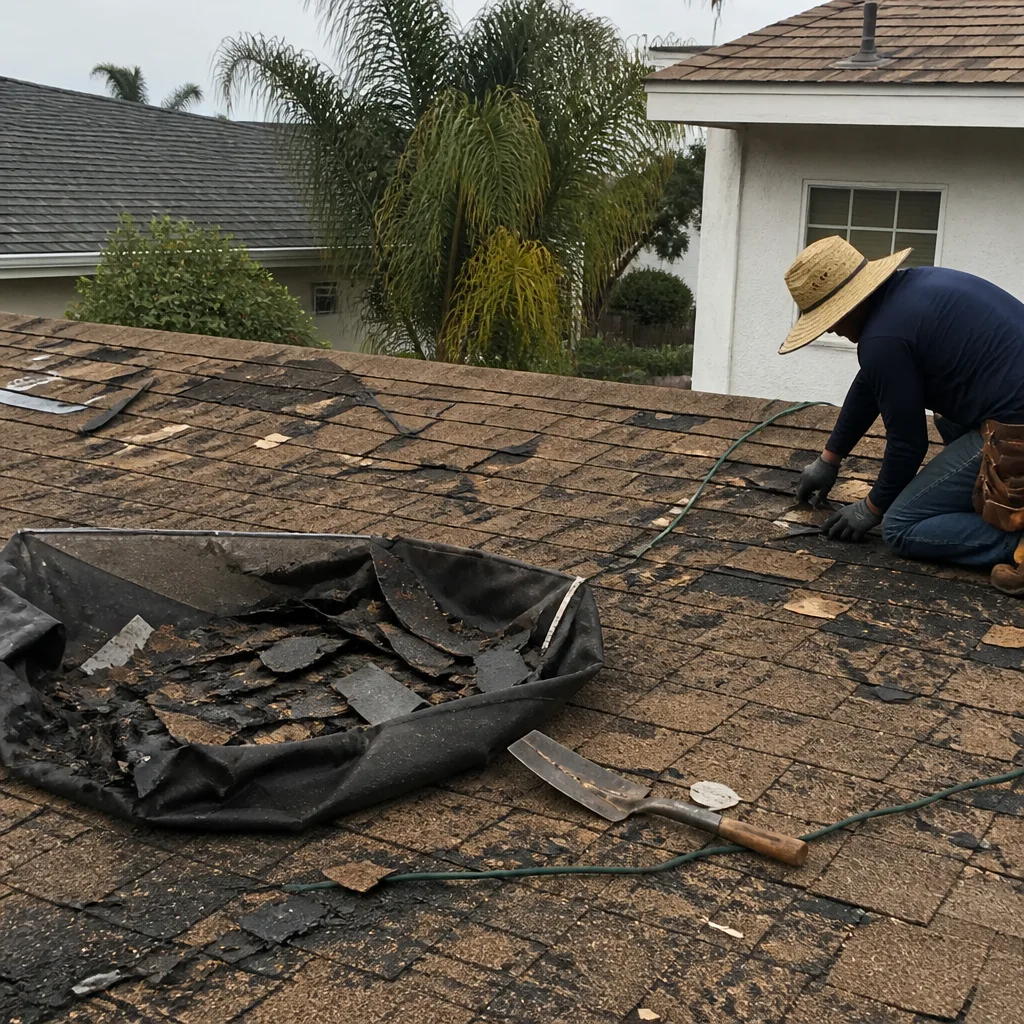 Before
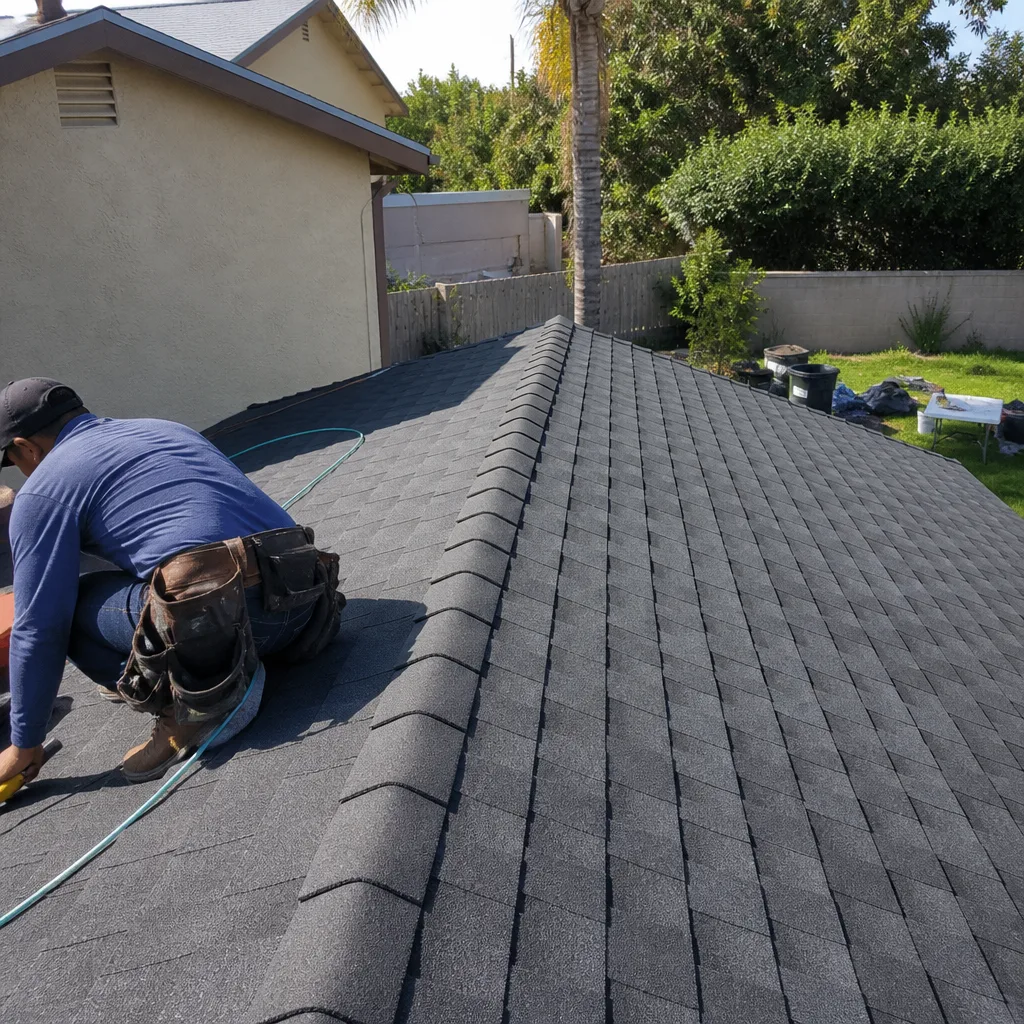 After
After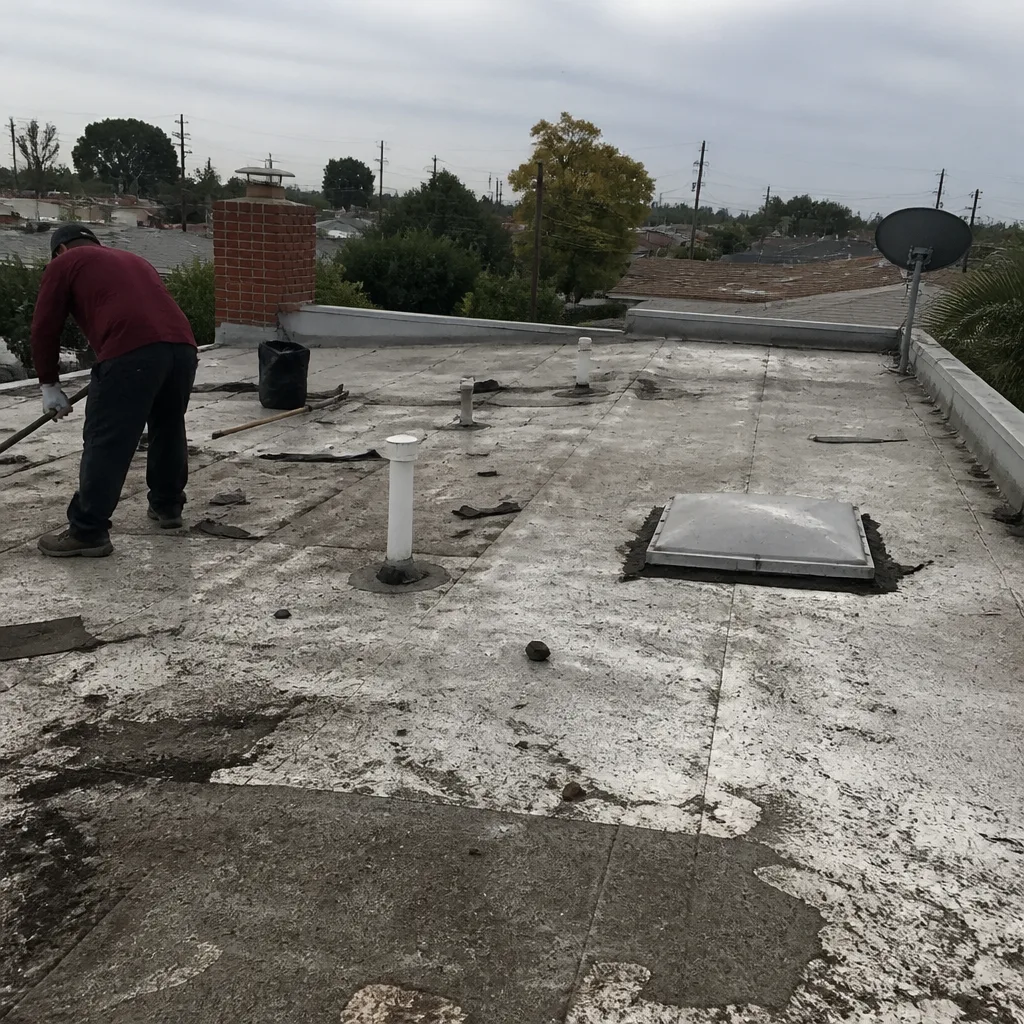 Before
 After
After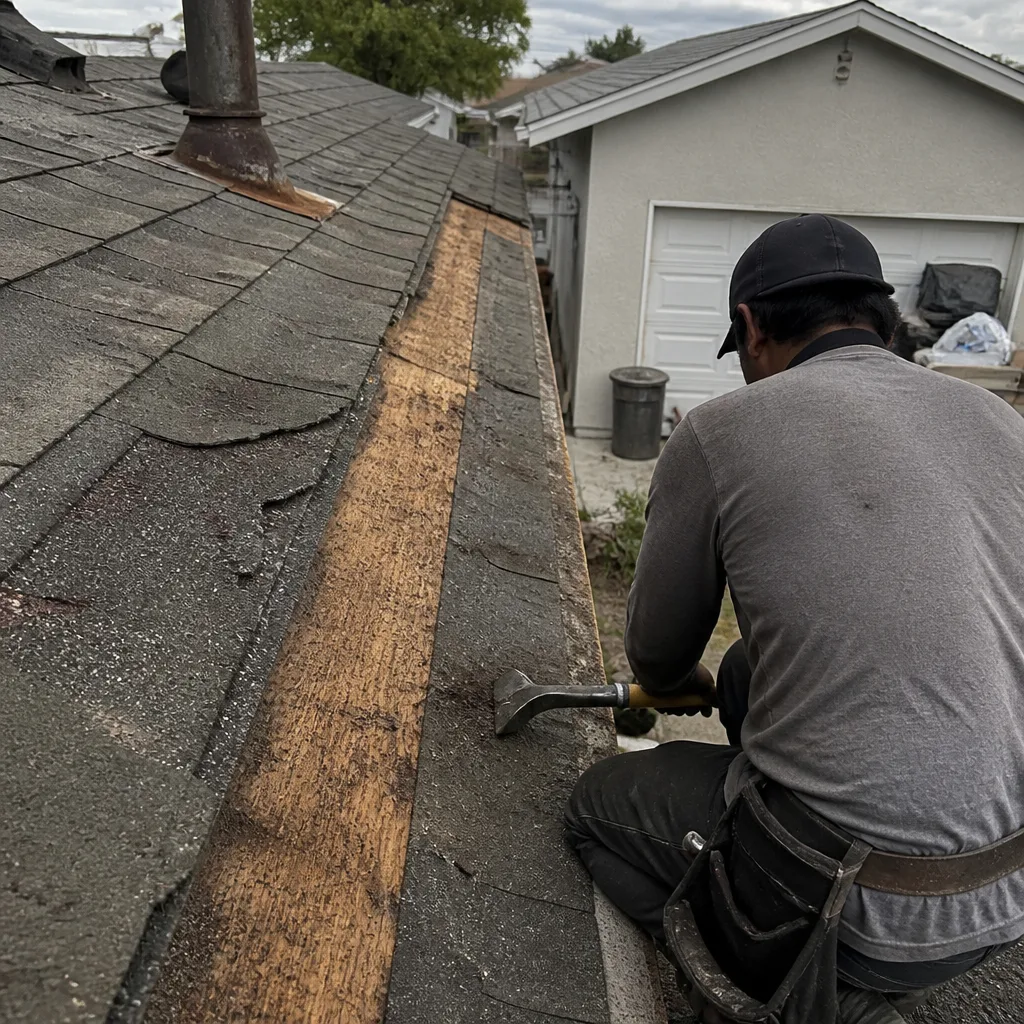 Before
 After
After