

Last updated October 17, 2026
 Architectural shingles
 Metal roofing
 Tile roofing
 GAF
GAF Owens Corning
 Flat & low-slope
Free roof inspection with deck photos before we talk money - GAF and Owens Corning certified installation
Roof Repair Maintenance Checklist for Los Angeles Homeowners
Most roof maintenance guides you’ll find online were written for places like Chicago or Minneapolis, where winter snow and ice drive the inspection calendar. Los Angeles roofs fail on a different schedule. October – not February – is when we discover the most leaks across Los Angeles, because five months of dry summer heat baked the sealant brittle, and nobody thought to look up before the first rain arrived. This guide replaces the generic month-by-month logic with an LA-specific stress calendar, so you can catch the exact failure points our climate creates. You’ll learn what to check before the rain, what Santa Ana winds actually do to your flashing, and which parts of this checklist you can safely handle from the ground with a pair of binoculars.
Styles & brands we work with
Quick Answer
A Los Angeles roof maintenance checklist should be built around two LA realities: the long, dry, UV-heavy summer that cracks sealant and lifts flashing, and the short winter rain season that exposes every one of those failures at once. The most important single action is a September pre-rain inspection that focuses on sealant, flashing, valleys, and drains, followed by a post-Santa-Ana-wind check for lifted shingles and bent metal. From there, bi-annual professional inspections in spring and fall-ideally through our Roof Repair services-keep small failures from becoming interior water damage.
Table of Contents
- Why LA Roofs Fail on a Different Schedule Than Everywhere Else
- The September Pre-Rain Checklist: What Actually Breaks During an LA Summer
- The Santa Ana Wind Checklist: Damage Rain Never Causes
- Flat Roof vs. Pitched Roof: Two Completely Different Checklists
- What You Can Check From the Ground with Binoculars (and What You Shouldn’t)
- How to Document Roof Condition with Dated Photos
- The Seasonal Rhythm: A Simple Four-Point Year for LA Roofs
- Common Mistakes to Avoid
- When to Call a Professional
- Frequently Asked Questions
- The Bottom Line
Why LA Roofs Fail on a Different Schedule Than Everywhere Else
Los Angeles gets roughly 14 inches of rain per year, nearly all of it between November and March. That means your roof spends about seven months fully exposed to sun and heat with zero rain to keep materials supple. UV radiation breaks down asphalt shingle granules at an accelerated rate compared to northern climates, and it does the same to the mastic sealants around flashing and vent pipes. We regularly see sealant that has pulled away from a pipe boot by a full half-inch by October, which is more than enough for wind-driven rain to find its way inside.
Then there’s the temperature swing. Los Angeles roofs routinely go from 50 degrees at night to 90-plus degrees during the day in summer, sometimes more on dark-shingled roofs. Materials expand and contract with every cycle. Metal flashing fastened with exposed nails moves the most, and after enough cycles, those nail heads work loose and pop up. The first real rain then flows right under the lifted flashing and into the decking. This is why a pure “winter is coming” checklist misses the point here. The damage was done in July and August. The rain just reveals it.
Humidity plays a role too. Coastal Los Angeles neighborhoods like Playa del Rey, San Pedro, and Venice deal with morning marine layer moisture that encourages algae and mildew growth on north-facing slopes, especially on shingles from lower-cost brands. The same roofs just five miles inland in neighborhoods like Eagle Rock or Sherman Oaks stay dry and instead battle more direct heat. Homeowners in Los Angeles need a maintenance approach that accounts for which of those microclimates their specific roof sits in.
Our team at Mercer Roofing Co Los Angeles home has worked on roofs across Los Angeles for over two decades, and the pattern is consistent: the homes that get a September check catch $200 sealant issues before they become $2,000 decking repairs. The homes that wait until the first heavy rain of November find out about the damage at 2 a.m. with water dripping through the dining room ceiling.
The September Pre-Rain Checklist: What Actually Breaks During an LA Summer
September is the single most important month on the Los Angeles roof maintenance calendar. The summer has finished baking everything, the first significant rain is still four to eight weeks away, and the weather is cool enough for adhesives and sealants to cure properly if you need a repair. Here is the specific pre-rain checklist we recommend for every Los Angeles homeowner, ordered by how often we see each failure cause leaks in this city:
- Pipe boot sealant check. The rubber boots around plumbing vent pipes crack in heat faster than any other roof component. Look for visible gaps, cracks, or sealant that has pulled away from the pipe. These cost under $50 to reseal and prevent the most common leak source we see in Los Angeles.
- Chimney counterflashing inspection. The metal step flashing and counterflashing where the roof meets a chimney moves with every temperature swing. After one dry LA summer, the sealant joints are frequently dry and brittle. Press gently – if the metal moves and the sealant doesn’t flex with it, you have a separation.
- Valley debris clearing. Los Angeles yards are full of eucalyptus, pepper trees, oaks, and bougainvillea, and their leaves collect in roof valleys all summer. Blocked valleys create dams that hold water against shingles that were only designed for runoff. Clear them now, before the first rain.
- Gutter and downspout flush. Even if you cleaned gutters in spring, the dry Santa Ana winds of fall will fill them again with dust, seeds, and small leaves. A clogged gutter during an LA storm sends water cascading over the fascia board and down into wall cavities.
- Dry rot surface check. Look for visibly warped, soft, or discolored areas on eaves, fascia, and rafter tails. The dry heat doesn’t cause wood rot – it just lets the previous winter’s moisture intrusion sit unseen and spread. By September, any rot from last winter has had seven months to grow, and you want it addressed before this winter adds more.
- Skylight sealant inspection. Skylight flashings on Los Angeles homes face extreme UV exposure. The manufacturer sealants dry out and crack in direct sun. Run a bead of roof-approved sealant around the perimeter if you see hairline gaps, or call a pro if there are visible cracks.
If you do only one thing this year, make it the pipe boot check. In our experience across Los Angeles neighborhoods from Woodland Hills to Silver Lake, poorly sealed pipe boots account for more preventable roof leaks than shingle failure, flashing failure, and skylight failure combined. For a full breakdown of common repair costs, see our Roof Repair in Los Angeles page.
The Santa Ana Wind Checklist: Damage Rain Never Causes
Santa Ana wind events, typically peaking from September through November and again in March, damage Los Angeles roofs in a way that northern storm seasons simply don’t. These winds come from the high desert to the east, meaning they hit homes from the opposite direction of the prevailing Pacific breeze. Roof eaves, corners, and ridge lines that never see strong wind from the ocean side get hammered from the mountain side. Here is what to inspect after any Santa Ana advisory with gusts above 40 mph:
- Lifted or creased shingles at roof edges. Santa Ana winds hit the eave edges first and create uplift pressure. Walk the perimeter with binoculars and look for shingle tabs no longer sitting flat against the decking. A lifted tab acts like a sail in the next wind event and can peel an entire section back.
- Bent or displaced flashing. Wind-driven debris – branches, seed pods, sometimes entire bougainvillea bracts – slams into metal flashing with surprising force. Check the chimney flashing, the sidewall flashing where roof meets a stucco wall, and the drip edge for dents or separation.
- Debris loading in valleys and behind chimneys. The same wind deposits leaves, twigs, and dry seed pods into every horizontal and semi-horizontal plane on your roof. These dry loads are also fire ignition points, which is a uniquely Los Angeles concern given our wildfire risk.
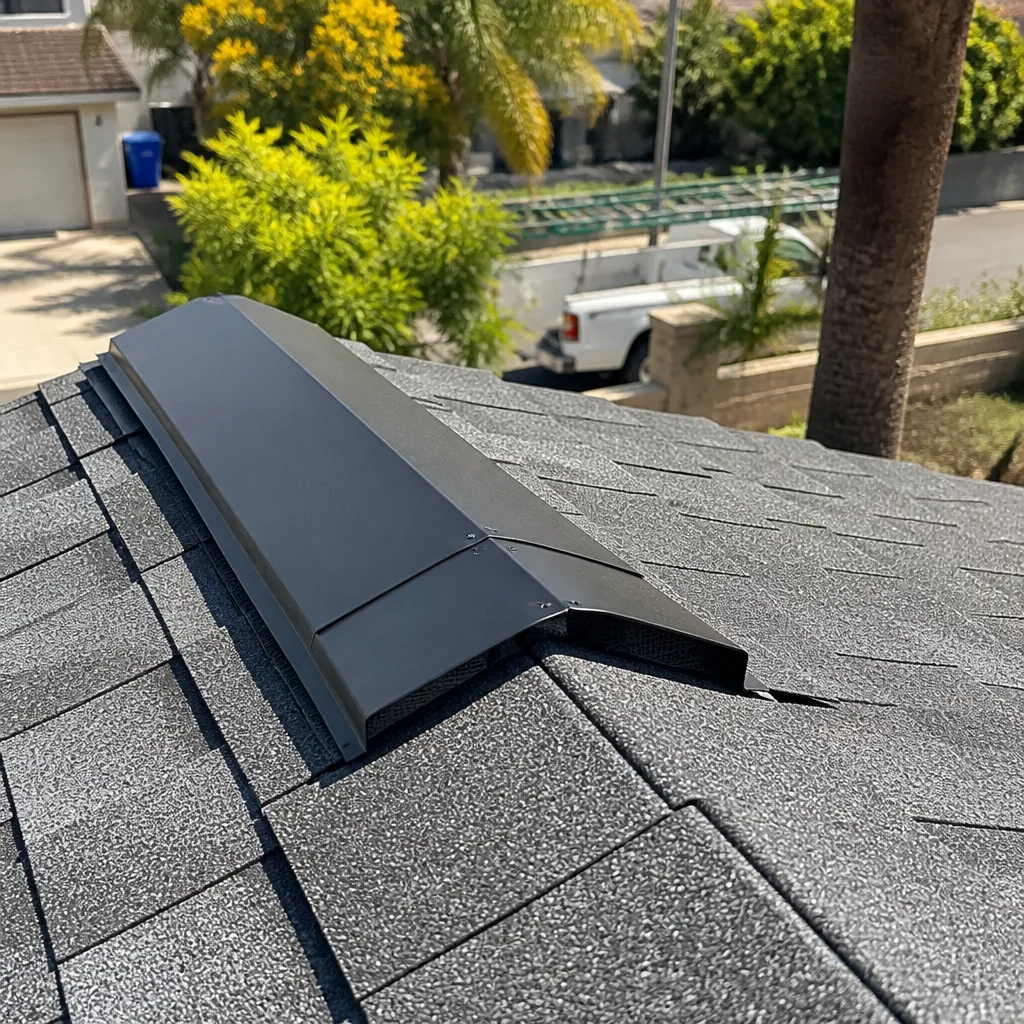
- Ridge cap shingle condition. Ridge caps are the most wind-exposed shingles on any roof. After a strong Santa Ana, check that no ridge caps are missing, cracked, or unsealed. Missing ridge caps allow wind-driven rain directly into the attic.
- Solar panel mounts and roof penetrations. Homes across Los Angeles, from the Valley to the Westside, have solar panels. Wind loads transfer through the mount brackets into your roof decking. Look for signs of movement around the mounts and any cracked sealant at penetration points.
One thing to understand: wind damage and storm damage often look identical in photos, but the insurance implications are different. Document everything with dated photos, especially after a wind event, before making any claims. If you find lifted shingles or displaced flashing, call for a repair estimate sooner rather than later. The next Santa Ana arrives in weeks, not months. Our Roofing Company in Los Angeles page details what a full repair visit includes.
Flat Roof vs. Pitched Roof: Two Completely Different Checklists
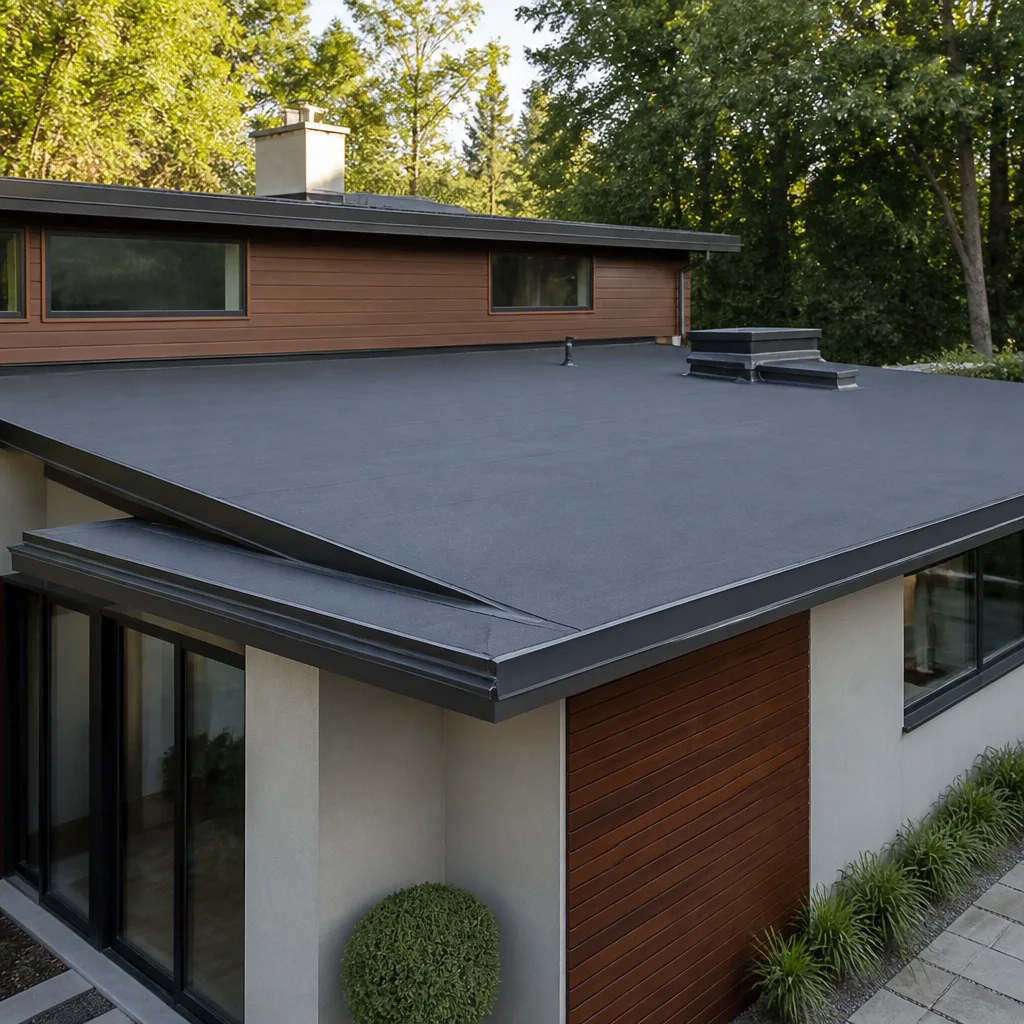
Los Angeles has an unusually high percentage of flat and low-slope roofs on residential properties compared to the rest of the country. Mid-century moderns in the hills, Spanish-style homes with parapet walls, and countless 1950s and 60s ranch houses across the Valley were built with built-up asphalt roofs, modified bitumen, or single-ply membranes. If your home has a flat roof, the generic “check your shingles” checklist is nearly useless. Here is what matters for each roof type:
Flat Roof Checklist (Los Angeles specific)
- Ponding water inspection. Any area where water stands for more than 48 hours after rain is a structural and membrane concern. Flat roofs in Los Angeles frequently have poor drainage because original designs assumed less rain than we get in wet El Niño years.
- Membrane cracking at seams and corners. LA sun breaks down single-ply membranes at seams and parapet corners first. Look for cracking, peeling, or blistered areas from the ground with binoculars, then have a pro walk the roof.
- Drain and scupper clearing. Flat roofs don’t have valleys to carry water away; they have drains and scuppers, and one clogged drain means the entire roof becomes a shallow pond. Check these after every significant wind event.
- Parapet wall flashing condition. The metal cap on top of parapet walls takes brutal direct sun and wind. If the cap separates or lifts, water goes straight into the wall cavity and down into the house.
- Blisters and alligatoring. Built-up asphalt roofs in Los Angeles develop surface cracks that look like alligator skin after decades of UV exposure. Blisters form where moisture is trapped inside. Both need professional evaluation before winter rain.
Pitched Roof Checklist (Los Angeles specific)
- Shingle granule loss at sun-facing slopes. South and west-facing slopes in Los Angeles lose granules to UV faster than north slopes. Check gutters for accumulated granules, which signals advanced shingle wear.
- Curled shingle tabs. Shingles that curl upward at the edges expose the sealant strips and allow wind uplift. This is especially visible after a hot summer in the San Fernando Valley or Inland-facing areas.
- Missing or broken shingle tabs. Even one missing tab opens the underlayment to direct sun and water.
- Flashing at sidewalls and dormers. As with the September checklist, all step flashing and counterflashing at roof-to-wall transitions needs sealant inspection.
- Ridge cap condition. Check the full ridge line after any wind event and every fall inspection.
Manufacturers like GAF, CertainTeed, and Tamko all publish inspection guidelines for their specific shingle lines, and we have worked with all three on Los Angeles roofs. The common thread is that the Los Angeles sun will shorten the life of any roofing material, regardless of brand. The inspection schedule matters more than the manufacturer’s national warranty assumptions.
What You Can Check From the Ground with Binoculars (and What You Shouldn’t)
You don’t need to get on your roof to complete most of this checklist. A decent pair of 10×42 binoculars from your yard, your neighbor’s yard, or the upper window of your house will reveal 80% of what needs revealing. Here is how to do a thorough ground-level inspection in Los Angeles without ever setting foot on a ladder:
- Start with the roof edges. Stand directly below each eave edge and look up with binoculars. You want to see whether every shingle tab sits flat against the decking. Lifted edges at the eave are the first sign of wind damage or sealant failure, and they’re visible from directly below.
- Move to roof valleys from two angles. Valleys are the V-shaped channels where two roof planes meet. View each valley from both sides so the angle of the sun shows you whether debris is resting in the channel. Debris in a valley is visible as a visible dark line or lumpy shadow from any elevation.
- Check every pipe boot and vent. The rubber boots around plumbing vents are visible as small dark domes protruding from the roof. Look closely for cracks or separation around the pipe. A cracked pipe boot looks like a dark ring that has pulled away from the metal base.
- Scan the ridge line from a distance. Stand across the street or at a distance where the roof’s highest horizontal line is silhouetted against the sky. Missing ridge caps show as gaps in that silhouette.
- Inspect chimney and sidewall flashing corners. Chimney flashing failures happen at the corners where vertical metal meets horizontal shingles. Use binoculars to get close on those corners from multiple angles.
- Check the underside of eaves and fascia. Walk around the full perimeter looking up at the underside of roof overhangs. Water stains, dark spots, or peeling paint on fascia boards signal drainage problems or flashing failures above.
What you should not do is walk the roof yourself. Los Angeles roofs get dangerously hot in summer, and the surface temperatures on asphalt shingles can exceed 160 degrees, which makes them soft and easy to damage just by walking. Steep pitches common in the hills above Studio City or Mount Washington are genuinely dangerous without proper safety equipment. And walking on any roof causes some level of granular wear. If you see something from the ground that concerns you, call a professional who is trained to walk the surface safely and knows what pressure to apply.
For homeowners who want professional help with this inspection, our roof repair service in Los Angeles includes a full written inspection report with dated photos of every concern we find.
How to Document Roof Condition with Dated Photos
Dated photos are the most underused roof maintenance tool in Los Angeles. They serve three specific purposes: they create a baseline for how your roof looked before damage, they make insurance claims dramatically easier to process, and they let you compare contractor quotes accurately because every contractor is looking at the same documented conditions. Here is a photo documentation system that works:
- Set a repeating calendar reminder. Choose the first weekend of March and the first weekend of September every year. That’s your photo documentation weekend. The timing matches the end of winter rain season and the end of the dry summer. Mark it in your phone and don’t let it slide.
- Stand at the same four corners of your property. Take wide shots from each corner that show the entire roofline from that angle. Use the same four positions every time so the photos are comparable year over year. A mailbox, tree, or fence post makes a good reference marker.
- Photograph every roof plane individually. Move around the house and capture each individual roof slope, including overhangs, dormers, and any area where a chimney or skylight penetrates the roof. Label the photos by which side of the house they show.
- Get close-ups of every penetration. Use your phone’s zoom to capture close shots of every pipe boot, vent pipe, skylight corner, chimney flashing corner, and valley. These are the areas where failures start, and close-up photos let you compare condition between inspection dates.
- Date the photos in the filename. When you save or store them, rename with the address, date, and what the photo shows. Something like “1234-Fairfax-2024-09-01-west-slope.jpg” takes ten seconds to type and saves real headaches later.
- Store them in the cloud. Use Google Photos, iCloud, or Dropbox so they’re accessible from anywhere. Insurance adjusters and contractors can view them remotely, and the metadata timestamps provide proof of when the photo was taken.
- Take extra photos after any wind event. If a Santa Ana wind advisory hits, take photos of the roof edges, ridge, and any areas where you’ve previously documented damage. The post-wind photos give you the evidence you need for an insurance claim if the wind caused new damage.
Dated photos also settle the “was it already there?” question that comes up in insurance claims. When you can show that a specific crack or lifted flashing did not exist in March but appeared in September, the claim goes through far more smoothly. When every contractor that gives you a quote sees the same photos showing the same conditions, you get apples-to-apples comparisons.
If you’re preparing to get a new roof installed, having a complete photo history helps the estimator and the installation crew understand exactly what your current roof’s problem areas are. Our Roof Installation in Los Angeles page covers what a full replacement includes, and a good photo history shortens the initial assessment considerably.
The Seasonal Rhythm: A Simple Four-Point Year for LA Roofs
Here is what a complete year of Los Angeles roof maintenance looks like when you’re doing it right. Notice the rhythm: two hands-on checks per year, two awareness windows, and nothing inside the hottest months.
- September (the critical one): Full pre-rain checklist. All the items in the September section above. This is when you clear valleys, check sealant, inspect flashing, and photograph everything. Do not skip this. If you have any concerns, schedule a professional inspection before the first rain.
- November through March (rain season awareness): During and after every significant rain, pay attention to your ceilings, attic, and walls. Water spots, peeling paint, or musty smells are early signs of a leak. Document them with photos. Also check gutters after each heavy rain to make sure downspouts are flowing.
- March (post-rain inspection): As the rainy season winds down, do your second full photo documentation walk of the year. Check for damage the winter brought: lifted flashing, granule wash into gutters, new cracks in sealant. Schedule repairs during the spring dry season when working conditions are best and the roof has time to cure before summer.
- September through November (Santa Ana wind awareness): Monitor wind advisories. After any advisory with gusts above 40 mph, do the post-wind inspection covered above. Keep an eye on your phone’s weather alerts, especially in wind-prone areas like the foothills above Pasadena, the Cajon Pass corridor, and the western San Fernando Valley.
This four-point year covers the specific ways Los Angeles weather stresses roofs: heat cracking in summer, wind damage in fall, rain intrusion in winter, and damage assessment in spring. It’s simple enough to remember and specific enough to work.
Common Mistakes to Avoid
- Waiting until you see water inside the house. By the time a leak reaches your ceiling, the water has been inside your roof assembly for days or weeks. The water you see is the end of the process, not the beginning. Regular inspections catch failures while they’re still surface-level.
- Using the wrong sealant. Not every tube of caulk is a roofing sealant. Hardware-store silicone caulk fails on Los Angeles roofs within a single summer because it cannot handle UV exposure or the expansion and contraction of flashing metals. Roofers use specific asphalt-based mastics or polyurethane sealants for a reason.
- Cleaning gutters once per year. In a city with this much leaf debris and wind, once a year isn’t enough. The Santa Ana winds refill gutters between summer and winter. Check after any significant wind event, not just in spring and fall.
- Ignoring small granule wash. Finding shingle granules in your gutters is normal for the first year or two. Finding consistent granule wash after year five means your shingles are aging, and in Los Angeles’s UV climate, that aging happens faster than manufacturers’ national averages suggest.
- Assuming a new roof means no maintenance. Even a brand-new roof has pipe boots, flashing, valleys, and gutters that require the same annual inspection. New roofing materials don’t eliminate Los Angeles weather; they just have more life left before the weather wins. Every repair and installation we complete is backed by our 365-Day Done Right Promise, but the homeowner’s maintenance responsibility starts the day the crew leaves.
- Skipping the post-wind check because “it looked fine.” Santa Ana wind damage is incremental. Lifted shingles today become full-blown water intrusion next month. The check costs 20 minutes from the ground with binoculars. The repair is cheaper if caught early.
When to Call a Professional
Some roof concerns can wait for the next inspection, and some need attention this week. Call a professional if you see any of these: visible water stains on your ceiling or attic that appear or grow after rain; lifted or missing shingles after a wind event; cracked or separated pipe boots; any sign of sagging in the roof deck; persistent dampness or moss growth on any roof surface; or if you simply can’t safely get a clear view of a concern from the ground. Walking a roof in Los Angeles heat, on a steep pitch, or without proper fall protection is genuinely dangerous, and the cost of a professional inspection is a fraction of a fall or a missed leak. Mercer Roofing Co Los Angeles offers free estimates across Los Angeles. Every visit includes a written condition report with dated photos, so you have documentation whether or not you decide to proceed. Call (213) 521-8272 to schedule yours.
Frequently Asked Questions
Twice a year, in September and March, plus a quick visual check after any Santa Ana wind event with gusts above 40 mph. The September check is the most important because it catches summer damage before winter rain. The March check assesses what the winter did and lets you schedule repairs during the dry spring season. Call (213) 521-8272 to add a professional inspection to your rotation.
Pipe boot sealant failure is the most common preventable leak source we see across Los Angeles. The rubber boots around plumbing vents crack in the dry summer heat, and the first winter rain drips through. The fix is simple and inexpensive, but only if you catch it before the rain. In our experience repairing roofs from Santa Monica to Pasadena, cracked pipe boots account for more interior water damage than any other single cause.
Most minor repairs run between $250 and $750, including things like pipe boot replacement, valley clearing, flashing resealing, and single shingle tab replacement. More extensive flashing work or decking repair ranges from $1,000 to $3,500. A full roof replacement typically falls between $9,000 and $20,000 depending on size and materials. Call (213) 521-8272 for a written quote – every estimate is itemized and free, and the price we put in writing is the price you pay.
Minor repairs like resealing flashing, replacing a few shingles, or fixing a pipe boot typically do not require a permit. Repairs involving structural decking, major flashing replacement at walls or chimneys, or any work that changes the roof’s drainage may require a permit through the Los Angeles Department of Building and Safety. A qualified contractor will tell you definitively before work begins. When we’re in doubt, we pull the permit; it’s the only way to guarantee the work meets Roofing Permits, Codes & Inspections in CA: What You Need to Know.
Flat roofs cost about 20 to 40 percent more to maintain over their lifetime compared to pitched shingle roofs, as detailed in our Roofing Cost Breakdown: The Los Angeles Homeowner’s Reference for 2026, mostly because flat roofing materials degrade faster under direct UV and any drainage failure affects the entire surface at once. The maintenance is also different – you’re checking membranes, seams, drains, and scuppers instead of shingles and flashing. But a flat roof that’s inspected twice a year and repaired promptly can match the lifespan of an average shingle roof in Los Angeles.
You can do the ground-level inspection, clearing of gutters from a safe ladder, valley debris removal using a roof rake, and all the photo documentation described in this guide. What you should not do is walk on the roof surface, attempt sealant repairs on steep pitches, or remove debris from valleys while standing on the roof. The heat-softened surface and the fall risk make that work better left to a professional. Call (213) 521-8272 for help with anything beyond ground-level work.
The Bottom Line
A Los Angeles roof lives or dies by the September inspection. The summer heat does the damage, the Santa Ana winds spread it, and the winter rain reveals it. If you remember nothing else from this guide, remember the rhythm: check pipe boots and flashing in September, do a post-wind visual after every Santa Ana, document everything with dated photos, and schedule professional inspections every spring and fall. For more guides & resources, visit our blog. The difference between a roof that reaches its full lifespan and one that fails early is rarely the materials – it’s the timing of when problems get caught. Los Angeles weather is predictable. Your maintenance schedule should be too.
Written by Grant Whitlock, Owner at Mercer Roofing Co Los Angeles, serving Los Angeles since 2000.
See the difference
 Before
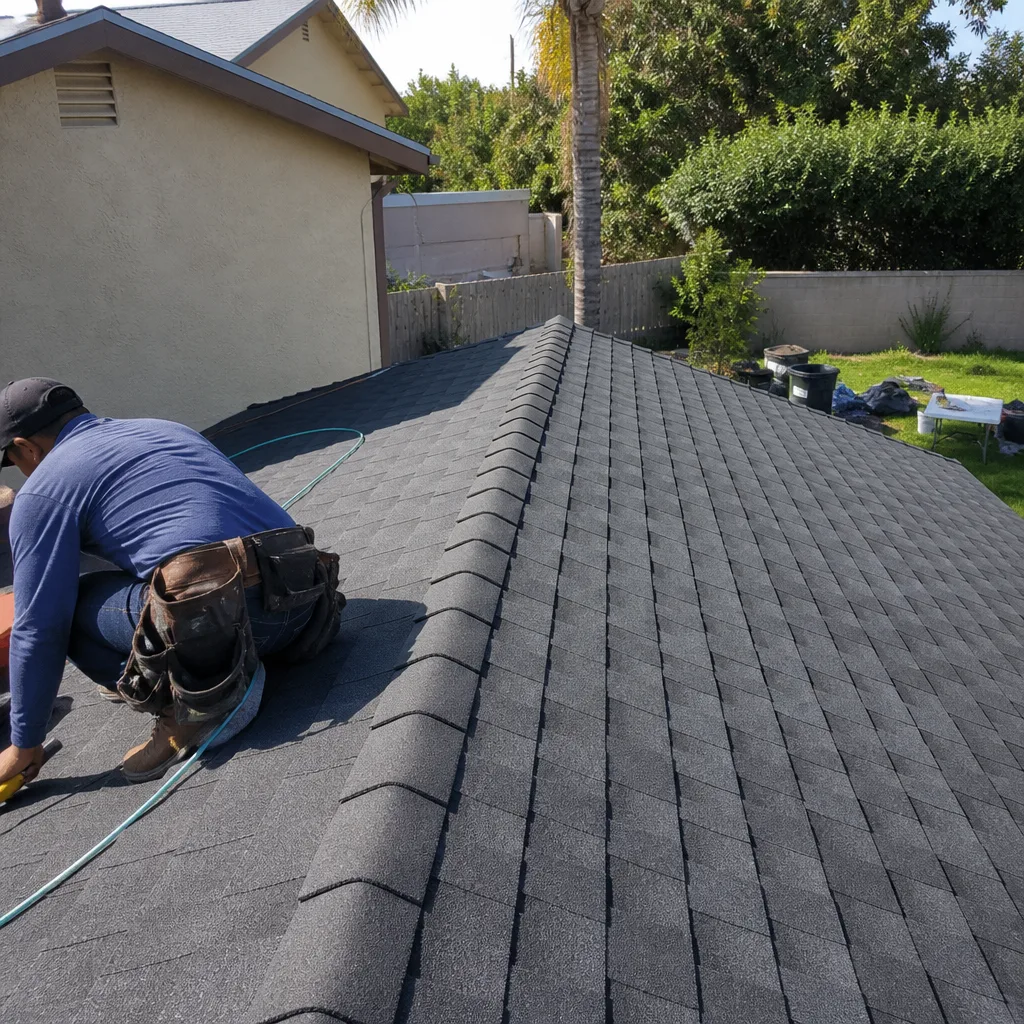 After
After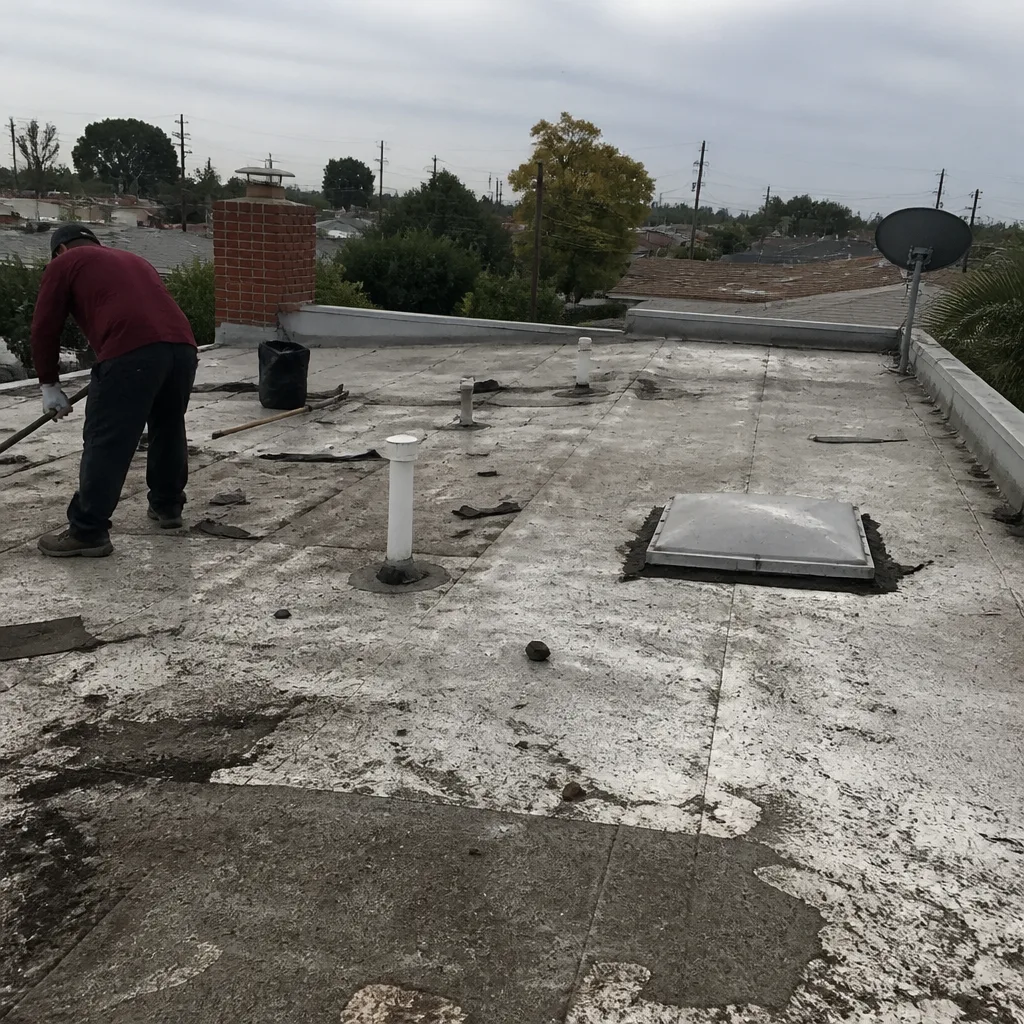 Before
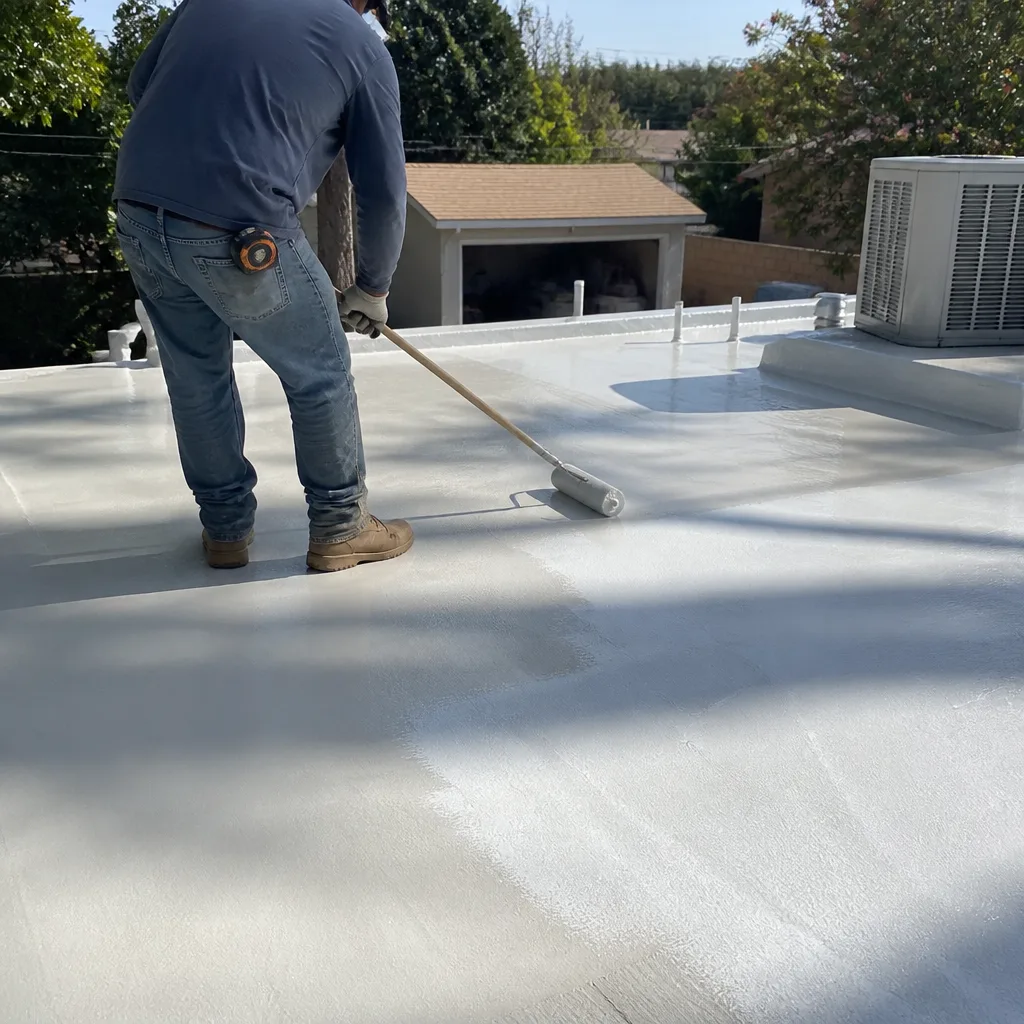 After
After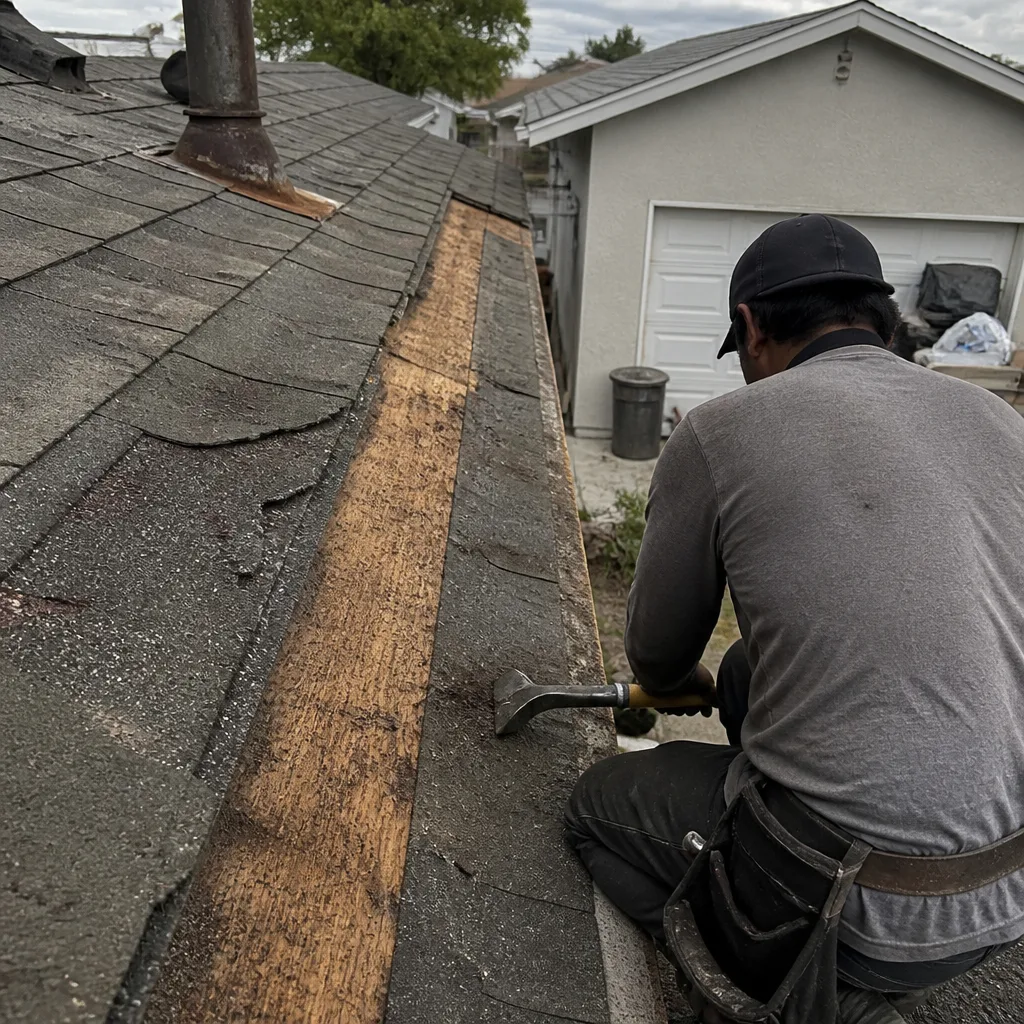 Before
 After
After